
- The meeting brings together the country’s film and audiovisual communities, which engage in dialogue with the aim of promoting the development and strengthening of the industry in Mexico and the region
- Presentations address topics such as the use of artificial intelligence, challenges in developing new audiences, decentralization of film production, and incentives, among others
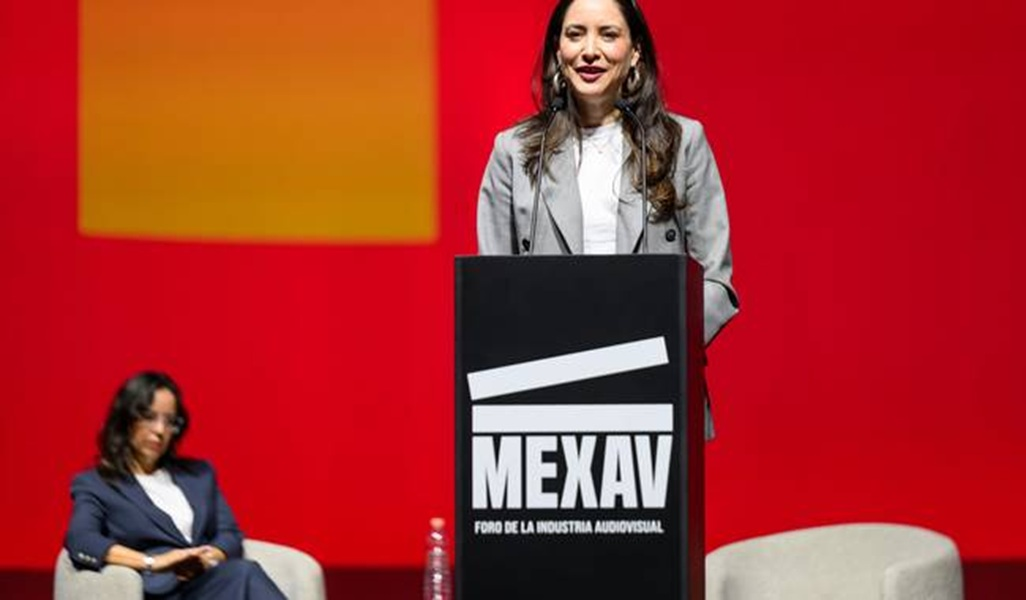
Mexico’s Ministry of Culture, through the Mexican Institute of Cinematography (IMCINE), inaugurated today, Wednesday, September 9, 2026, at Estudios Churubusco Azteca, the second edition of MEXAV Audiovisual Industry Forum, a space that brings together leaders, professionals, and institutions from the film and audiovisual sectors.
For two days, September 9 and 10, attendees are taking part in conferences and panels focused on promoting regional audiovisual development and strengthening collaboration among Mexico’s various film communities.
Mexico’s Secretary of Culture, Claudia Curiel de Icaza, highlighted the presence at MEXAV of more than 700 participants, including IMCINE, Estudios Churubusco, the Cineteca Nacional, the Centro de Capacitación Cinematográfica (CCC), the National Chamber of the Cinematographic Industry (Canacine), the Mexican Academy of Cinematographic Arts and Sciences (AMACC), the Mexican Federation of Cinematographic and Audiovisual Producers (FMPC), and the Mexican Association of Independent Producers (AMPI), which, with the support of Netflix, are also participating in the forum.
“I want to thank you very much for helping us continue shaping public policy for the benefit of our country’s creators and the cinematographic and audiovisual history that continues to be built day by day, which is key to ensuring that what we do has a long-term impact,” Curiel de Icaza said regarding the importance of MEXAV.
The Secretary of Culture of the Government of Mexico highlighted the progress experienced by the film and audiovisual sector during the first two years of President Claudia Sheinbaum Pardo’s administration, such as the creation of the Fiscal Incentive for Cinematographic and Audiovisual Production (EFICA), the increase in IMCINE’s budget and support for creative work, as well as efforts to promote the training and professional development of people who are interested in and work throughout the cinematographic industry’s production chain.
EFICA, she pointed out, provides a tax credit of up to 30 percent of production expenses, particularly benefiting Mexican production companies and productions carried out outside metropolitan areas.
She highlighted the 25 percent increase in IMCINE’s budget, which made it possible to support more than 330 projects across the 32 states. Meanwhile, in the area of arts education, 1.8 billion pesos were allocated over the past two years to strengthen the entire network of schools affiliated with Mexico’s Ministry of Culture. In the case of the Centro de Capacitación Cinematográfica, in addition to infrastructure improvements, its Chapultepec campus was inaugurated, allowing enrollment to increase by more than 200 percent.
For her part, film director and producer Patricia Riggen said: “I see a Mexico bursting with talent, eager to continue growing, reinventing itself, and facing new ways of telling our stories and bringing them to audiences. I think we have never had so many possibilities before us, and this forum is proof of that. I know it will bear much fruit.”
In a video message, actor, director, and producer Diego Luna agreed that holding MEXAV is essential because “the film and audiovisual industry deserves a deep and urgent analysis; the changes and transformation that are needed will not come unless we are willing to enter into a plural dialogue that includes all sides.”
A forum for multiple topics
Among the speakers participating in the two-day Forum are IMCINE Director General Daniela Alatorre Benard; media industry analyst, consultant, and author of Infinite Content, Doug Shapiro; associate professor in the Department of Media and Communication at Korea National Open University, Sungmin Lee; VFX supervisor for the series Mal de amores, Cyntia Navarro; YouTube Mexico’s Head of Creators and Responsibility for YouTube Hispanoamerica, Daniela Guerra; and Cinépolis Vice President of Global Programming and Content, Miguel Rivera, among others.
The topics to be discussed include the use of artificial intelligence at different stages of film creation, challenges in developing new audiences, decentralization of film production, tax incentives, film and audiovisual criticism, among others. Successful cases will also be analyzed, and networking spaces will be opened to encourage collaboration and the exchange of knowledge.
With the MEXAV Forum, Mexico’s Ministry of Culture recognizes the film and audiovisual sector as an industry of strategic importance to the country’s cultural life and strengthens its development, sustainability, and public profile.
Source: billiparkernoticias