
The drought pushes the Zumpango lagoon and the Cuitzeo and Chapala lakes to the limit

Currently at least four aquatic reserves are at risk of disappearing due to the droughts that in recent years have impacted the national territory, which has affected the inhabitants of the surrounding areas of these places, as well as the ecosystems that surround them.
Mexico City, March 17 (However).- At least four aquifer reserves, on which millions of people depend, are currently at risk of disappearing due to the drought they are going through.
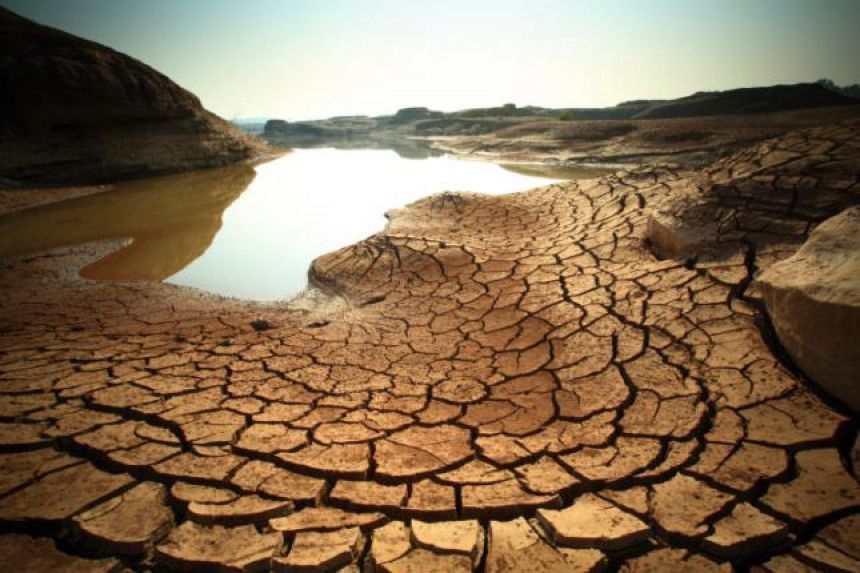
Created in 1989, and despite the fact that the State of Mexico declared it in 2003 as a protected natural area, the Zumpango lagoon now looks deserted, without water, without nature, or visitors, which has impacted the economy of the people who depended on this reserve and those who have had to go look for other sources of income.
Added to this are the health effects reported by the surrounding inhabitants, who point out that the hot seasons have become more intense, due to the lack of water in the lagoon, which, however, at its best years was not the cleanest, since, according to the results of investigations, 30 percent of its content came from sewage.
Dead fish in the Zumpango Lagoon. Photo: Cuartoscuro, archive.
In addition to the droughts, specialists have also pointed out that an important factor that caused the drought of the Zumpango lagoon was the introduction of the water lily and the neglect of the federal government, so now residents and researchers are waiting for The rainy season arrives so that this space is filled again.
Something similar happens in Lake Cuitzeo, the second largest in Mexico with an area of 306 square kilometers, according to data from the National Water Commission (Conagua), it is another one that is in danger of drying out.
Since the end of 2023, national media warned that it had a level of less than 50 percent of its capacity despite the rains that brought with them natural phenomena such as hurricanes.
Just at the beginning of this month of March, it was announced that the lake, which is located in the state of Michoacán and extends to Guanajuato, is going through a water crisis, which has caused there to be no water in, approximately, 70 percent of the extension of that reserve, which has also generated a crisis in the population near it.
This is because many residents of municipalities such as Álvaro Obregón, Churintzio, Santa Ana Maya, Huandacareo, Copándaro and Cuitzeo itself depend on the fishing generated by the lake, as well as the tourism that existed there, in which there was also a great diversity of species.

Illustrative photo: Gabriela Pérez, Cuartoscuro
In addition to these direct benefits of the lake to the communities, and that they had to look for other sources of income, this was also a key factor in regulating the climate in the region, in which now only a desolate landscape with stranded boats can be observed.
In 2021, activists and academics launched a petition through the Change.org platform, in which they asked the federal government to carry out both ecological restoration and economic recovery of Lake Cuitzeo, a request that had accumulated 32 to date. thousand signatures of support.
Although during the nineties, approximately five thousand tons of fish were extracted from this lake, in recent years it became a factor for the spread of various diseases, due to the viruses and bacteria that have dispersed in the face of the drought that was affecting the aquifer, and which has not received attention to date.
The above, despite the fact that in 2021, the Government of Michoacán, headed by Silvano Aureoles, said that it would seek to rescue the lake, for which, he detailed, around three billion pesos would be needed, a figure that only the federal government could provide. .
According to the National Water Commission (Conagua), Lake Cuitzeo is the second largest in the country with an area of 306 square kilometers. Photo: Archive, Cuartoscuro.
Last February it was announced that Lake Chapala, considered the largest in Mexico, was at risk of disappearing, because it had 45 percent of its capacity, as a result of the drought caused by the that crossed a large part of the national territory.
According to the local press, the lake, which supplies drinking water to the Metropolitan Area of Guadalajara, Jalisco, is at its lowest level, which even prevents boat navigation, which has already triggered the alerts of the Jalisco authorities, but so far they have not presented any measures to rescue the most iconic lake in that state.
Since mid-2022, it was warned that the Colorado River, on which 40 million people depend, was drying up as a result in part of climate change. Even that same year, Conagua declared an emergency in four states in northern Mexico, because a strip of more than 2,400 kilometers, running from Tijuana to Matamoros, was completely dry.
Tijuana, a city bordering the United States with two million inhabitants, relies heavily on the Colorado River, which supplies approximately 90 percent of the water it uses. However, they are running out of water, this, according to researchers, due to poor management by the authorities that is linked to the drought.
Starting in 2021, the United States announced that it would cut water supplies to Mexico for one simple reason: there was less tributary in the Colorado River due to drought and climate change. The decision was historic and affected both Mexican and American territory and things were expected to get worse.

“With climate change and long-term drought continuing to affect the Colorado River, the federal government declared this Monday, for the first time, a water shortage in Lake Mead, one of the river’s main reservoirs. . The declaration causes water supply cuts that, for now, will mainly affect Arizona farmers,” says The New York Times.
The New York Times noted that the cuts would be mandatory. They are called “Tier 1 reductions” and are part of a contingency plan approved in 2019 after long negotiations that use water from the Colorado River: California, Nevada and Arizona in the lower basin, and New Mexico, Utah, Colorado and Wyoming in the upper basin.
In 2022, for the second consecutive year, it was announced that Arizona and Nevada would have to use less water from the Colorado River due to the intense drought that was overwhelming the American West, according to US authorities. Mexico will also have to use less water.
“We are taking steps to protect the 40 million people who depend on the Colorado River for their lives and livelihoods,” said Camille Touton, commissioner in charge of those resources.
Source: sinembargo