
In the state, it is necessary for bilingual teachers to know the culture and worldview of the regions to which they are sent to do their work.
Members of the Mexican Indigenous Intercultural Collective considered that the lack of adequate bilingual education is one of the problems in the extinction of native languages in the state.
Gerardo Cortés Hernández, coordinator of the collective, said in a press conference, within the framework of the International Day of Indigenous Peoples, that in the state there is a presence of 13 cultures according to the Law of Rights and Indigenous People for the State of Veracruz.
“And precisely that has to be the watershed for the attention of these cultures. It is necessary that the affirmative actions that have been talked about so much are carried out, that the legislative representation is fully fulfilled, that the state public administration and all those where there is interference of the rights of indigenous peoples, it is precisely the indigenous people who also take the flag, that they take the positions and all the functions that are carried out within this public administration at the three levels, at the local level, at the state level and obviously also at the federal level.”
How many people in Veracruz speak an indigenous language?
According to data from INEGI, he explained, Veracruz is the third entity with the greatest presence of indigenous peoples at the national level.
There are 663,503 people over three years of age who speak an indigenous language, he said, the language with the greatest presence is Nahuatl, with a total of 365,915 speakers, followed by Totonac, with 122,595 and Tenek with 46,236.
“And well, the Popoluca of the mountains, these languages are the four most spoken in the State of Veracruz and therefore, that forces our authorities to be more inclusive, to be more considerate in all this that we are exposing.”
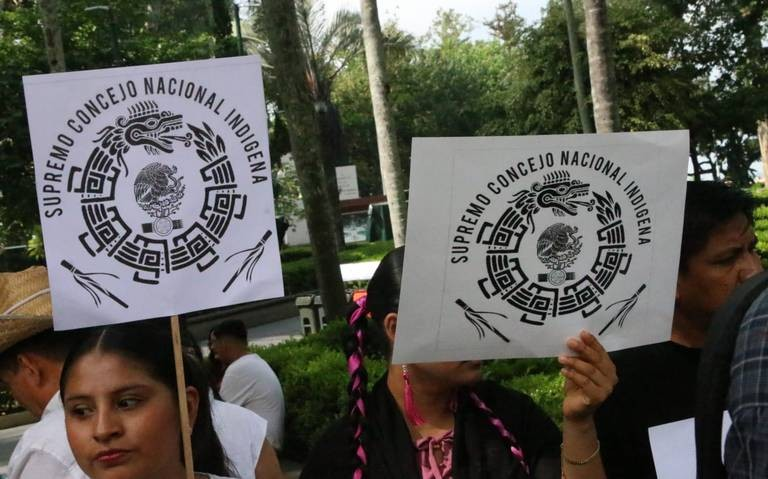
In the framework of this commemoration, members of the National Council of Indigenous Peoples were also in Juarez Park to make a statement and point out that remembering this date is insufficient because the traditions of the native peoples must be taken into account because they are unknown.
“This commemoration can be seen as insufficient, what we are trying to do is address real problems that indigenous communities face. “We aim to create critical reflection and to encourage people to take the necessary actions to improve the situation of indigenous peoples,” said Nissi Abundis.
Source: diariodexalapa