The Business Coordinating Council (CCE) considered that the redensification of Puebla’s Historic Center with investments to recover unused properties to convert them into restaurants, hotels, residential buildings, and Airbnb rentals does not pave the way for gentrification.
Héctor Sánchez Morales, president of the organization, explained to El Economista that while gentrification is occurring in Mexico City, which is why protests took place weeks ago, this phenomenon is not necessarily occurring in Puebla, although there is a global trend.
Gentrification in Puebla is beginning in a “slow-moving” manner, warn hoteliers and business owners.
He indicated that investments to restore deteriorated mansions are welcome and that these will help strengthen commercial, tourist, and social activity, the latter with the return of families who migrated from the downtown area in the 1980s.
However, he acknowledged that foreigners will come to live in the area because their jobs allow them to perform their duties remotely, for which they will rent a space for a long period, which can be up to a year.
He considered that in Puebla, the terms redensification and gentrification should not be confused, “because they are two different issues.”
The CCE leader emphasized that Puebla is not exempt from investments in the recovery of properties, with the aim of using them for various types of businesses.
A thousand abandoned mansions
At the beginning of last July, the Association of Construction Companies (AECO) presented a report indicating that 1,100 mansions in the Historic Center are abandoned, making it urgent to request the owners to be willing to recover these properties and put them to proper use.
Sánchez Morales commented that the Historic Center should always be a magnet for investment, and it is up to municipal authorities to contribute to this by ensuring the conditions are in place to attract local, national, and foreign businesspeople.
He mentioned that there are a large number of unused properties in the center of Angelópolis, which can be recovered by the owners or, at least, sold to entrepreneurs interested in opening a business or occupying the land for housing development.
He hoped that there would not be a short-term displacement of the families who still live in the neighborhoods near the city’s main square, but that depends on the usefulness of the property.
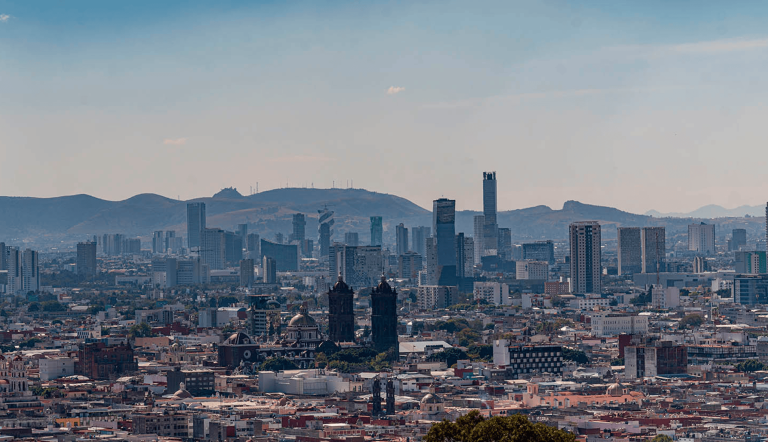
Source: eleconomista