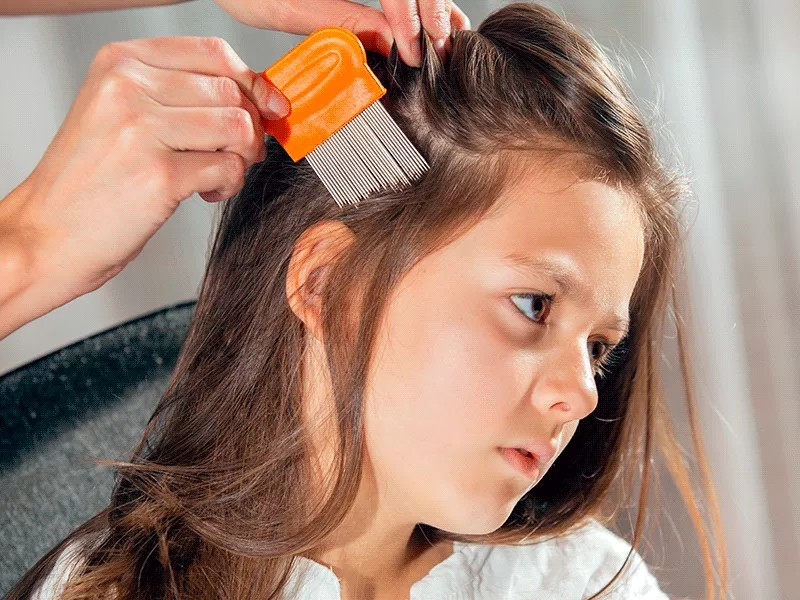

This summer, a notable increase in cases of pediculosis, or head lice infestation, has been detected in various municipalities in Tlaxcala, primarily among children and adolescents attending summer classes, recreational activities, or in spaces with a high concentration of children.
Juan Ocomatl Velázquez, a specialized stylist and formulator of organic hair care products, warns that the problem has reached epidemic levels. “I have been developing organic scalp products for ten years, and this summer sales of anti-lice shampoo tripled compared to last year. Most of my clients are mothers and fathers of children between the ages of 6 and 18,” he explained.
According to his testimony, girls and adolescents are the most likely to experience infestations, due to factors such as sharing brushes, headbands, group selfies, and direct contact during play. Juan points out that in his hair diagnoses, he has identified extreme cases: “I’ve heard from girls who have had head lice for one or even three years without receiving effective treatment.”
The chemical and environmental engineer also explains that his shampoo contains honey, rosemary, hawthorn, wheat germ, and collagen, with a natural additive that eliminates parasites without damaging the scalp. “Many commercial products are too harsh. I wanted to create an effective yet organic option that is both preventative and corrective,” he emphasizes.
The situation, he warns, worsens in vulnerable areas where, for economic, cultural, or social reasons, hair hygiene is not prioritized or the problem is not normalized. “I have tried to approach state and municipal authorities with proposals to implement preventive campaigns in schools, but the issue has not yet been taken seriously enough.”
His proposal includes distributing the shampoo in schools as part of the school supplies list, or launching a statewide campaign to promote detection, prevention, and timely treatment. “My dream would be to achieve zero infections in Tlaxcala. This issue is talked about with shame, but it shouldn’t be: it’s a public health issue,” he emphasizes.
During this season, municipalities such as the capital of Tlaxcala, Apizaco, and Huamantla have reported recurring cases. According to Juan’s experience, infection occurs through head-to-head contact and is not exclusively linked to cleanliness: “Lice feed on blood, not dirt. That’s why they can live on clean or not-so-clean heads,” he concludes.
Given the lack of institutional attention and the stigma that still surrounds the topic, the specialist insists that talking about head lice shouldn’t generate discomfort, but rather raise awareness. “It’s time to break the taboo, address the problem at its root, and protect our children.”
Source: sintesis