

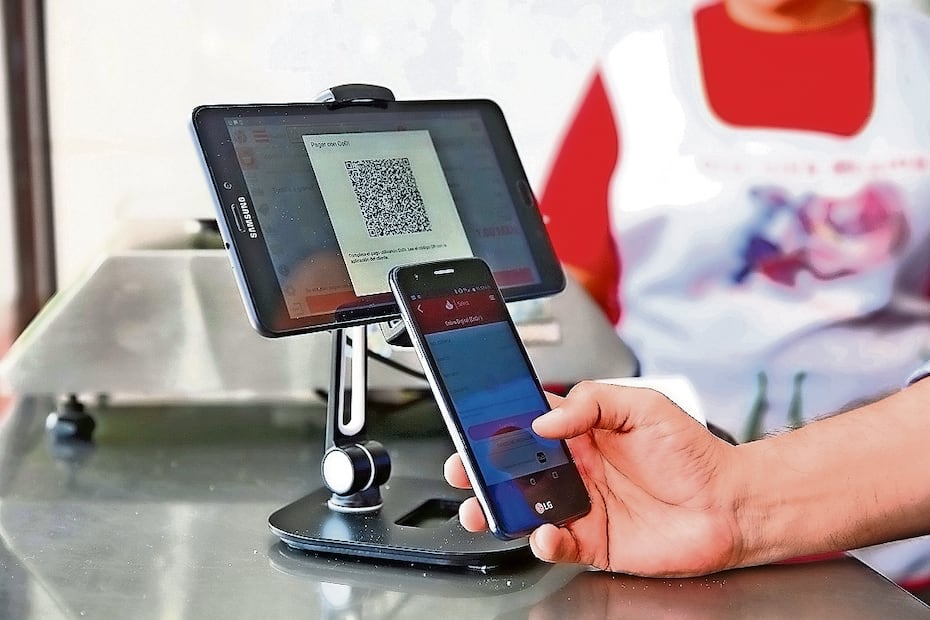
Former Brazilian Central Bank President Roberto Campos Neto stated that Mexico is in the process of developing an inclusive digital payment system, very similar to the South American country’s Pix, which is used by virtually the entire population.
The specialist highlighted the role of Pix, the Brazilian payment system, which has experienced accelerated growth, reaching everyone from the unbanked population to small businesses, accelerating the emergence of micro and small enterprises.
“In terms of numbers, approximately three million companies have been created due to the ability to do business with Pix. We believe that a good system plays an important role in achieving banking. It’s accelerating in Mexico, but the truth is that Brazil has done so more quickly, but we believe Mexico has all the conditions to create a system with the same characteristics,” he said.
Campos Neto said that during the development of Pix, whose planning began in 2018, he held discussions with the former governor of the Bank of Mexico, Alejandro Díaz de León, since the Interbank Electronic Payment System (SPEI) was considered very advanced at the time and served as a benchmark for the development of the Brazilian payment system.
“Mexico was much further ahead than Brazil because SPEI had been around much longer, and we didn’t yet have a platform like SPEI, so we started from scratch.
It’s a matter of getting some points right, and I believe Mexico has all the conditions to have significant banking penetration and a payment system that will grow significantly,” he emphasized.
Further Growth in Mexico Possible, Says Former Brazilian Official
Roberto Campos Neto, who has served as vice president and global director of public policy at Nubank since last July, emphasized that the financial firm will grow even further in Mexico, having reached more than 12 million clients. This model has brought credit and deposits to the underbanked population, similar to what the firm experienced in Brazil.
“We believe we have a credit model and a service model for the base, which has a clear comparative advantage over larger banks, with lower costs and a better quality digital experience. It’s a replicable model, but also understanding that Mexico is not Brazil and that there are many differences in the way of doing business, in the form of financial intermediation,” he explained.
He also explained that plans to expand Nu to other markets remain, amid the strong growth they are experiencing in Mexico and the good performance the firm has achieved in Colombia, amid the digitalization process underway in Latin America.
“We’re going to expand in Latin America, but there’s a very clear trend toward accessing more efficient payment systems. At some point, this will affect a large number of countries, with clearer data openness. There, it will be called open banking in some places, open finance in others, like Brazil. But I believe that at some point, we’ll have a combination of a more efficient, more digital, more instant payment system, along with this data ecosystem, where people will be able to choose to open their data, enjoy more tailored services, and better prices for more segmented services,” he said.
Source: eluniversal