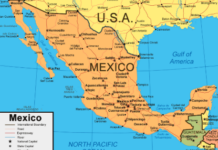

Mexico has the opportunity to position itself as a key bridge in the global value chain, contributing to shared economic growth in the region.
In the current context, Mexico is facing a historic juncture that could redefine its role in the global technology ecosystem. Transformations in migration dynamics have created new challenges for highly qualified professionals in the technology sector. Thus, our country can become a strategic partner, supporting cutting-edge companies while strengthening its own innovation ecosystem.
The ability to attract international talent represents a unique opportunity for Mexico. If we design efficient, agile, and reliable mechanisms, we can offer a welcoming and development space for engineers, programmers, data scientists, and creators seeking to remain close to the North American technological heartland. This strategy would not only benefit professionals who find growth in Mexico, but also US companies that need to maintain their talent in close geographical proximity to ensure continuity in their operations and services.
A program jointly designed by the National Institute of Migration and the Ministry of Economy could become an express channel to address the needs of technology companies. Through this scheme, Mexico would provide rapid and transparent solutions to facilitate the installation of highly specialized workers. In this way, we would not only support the dynamism of the North American economy, but we would also consolidate a relationship of positive and constructive interdependence with our main trading partner at a time when the world requires conciliation and teamwork.
At the same time, this effort would strengthen the Mexican technological ecosystem. The arrival of top-level professionals would open spaces for collaboration with local talent and boost processes for knowledge transfer, innovation, and the creation of new companies. Mexico has the potential to position itself as a key bridge in the global value chain, contributing to shared economic growth in the region.
An inspiring example for considering this strategy is the concept of the Biometropolis project, designed in 2007 by the visionary Indian entrepreneur Sam Pitroda for Mexico City. Although at the time it was a project ahead of its time, its spirit can guide us today: to envision territories where science, technology, and innovation become engines of social well-being.
In this sense, the Baja California Peninsula has privileged conditions to host centers of technological settlement and development. Its proximity to California, its business dynamism, and its geographic location make it a natural territory for integrating innovation communities.
By opening its doors and designing proactive policies, Mexico can consolidate itself as an indispensable ally for the North American technological ecosystem. At the same time, it has the opportunity to cultivate a network of diverse, multicultural, and highly skilled talent that nourishes its own development projects. This is a hopeful and pragmatic vision: a path that deepens the bilateral relationship with the United States, strengthens our competitiveness, and places the country at the forefront of the knowledge economy.
In short, the current moment invites us to act with strategic vision and optimism. Turning Mexico into a hub for technological talent is not only possible, but also one of the smartest and most generous decisions we can make toward a shared future of prosperity.

Source: elsoberano