
Jazz is preparing to take over iconic venues in the city at the first edition of the Mérida Jazz Festival, which will take place from today through next Saturday. This is not just a concert program, but a comprehensive cultural event that invites you to listen, discuss, and experience music from different angles.
The festival will take place at various venues, including Santa Lucía, the Gastronomic Tourist Corridor, the Museum of Light, and the Olimpo Cultural Center. The city will be filled with jazz not only with recitals but also with parades, master classes, and gatherings. More than 60% of the program features local musicians, making the event a showcase of Yucatán talent alongside national and international figures.
Additionally, vocal jazz will be featured every night, with artists such as Elizabeth Meza and Magos Herrera, renowned for their international careers.
One of the most important highlights of the edition will be the discussion that will take place tomorrow, Thursday, at 10:00 a.m., at the UNAM Cephcis. Titled “Jazz, Human Rights, and Society,” it will bring together voices from the fields of music, academic research, and cultural management.
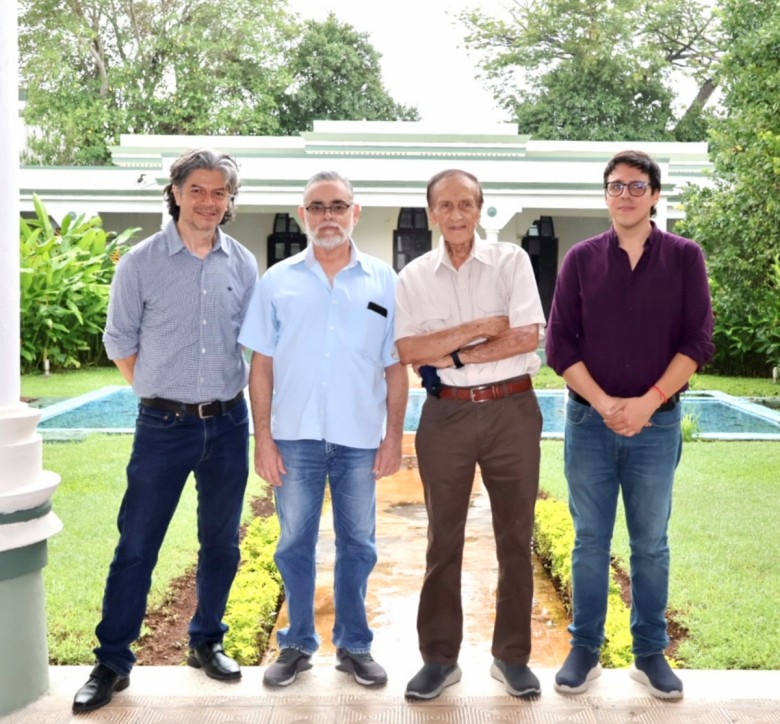
Participants include Edgar Cruz, guitarist; Emmanuel Mora Toraya, a musician and teacher with extensive experience; Rodrigo Llanes Salazar, a researcher at Cephcis; and Mario Esquivel Ríos, a pianist and entrepreneur linked to jazz.
This event aims to discuss how jazz, historically linked to social movements and the fight for civil rights, continues to be a vehicle for freedom and diversity today.
Rodrigo Llanes emphasizes that this relationship is not anecdotal, but constitutive: “Jazz has always been a space for questioning. From its roots in marginalized communities to its global expansion, it has accompanied social struggles, exposed inequalities, and opened debates about gender, inclusion, and artistic freedom. It is no coincidence that this discussion takes place on October 2nd, a date that reminds us of the importance of discussing human rights in Mexico.”
Emmanuel Mora emphasizes that jazz is, above all, an experience of discovery: “The public sometimes thinks it is necessary to understand something to enjoy it, when in reality, all it takes is to feel it. Jazz is music that happens in the moment, that is built with courage and allows one to express the deepest part of oneself. For those who come to the festival, the invitation is to open their minds, their hearts, and let themselves go.”
Mario Esquivel, who has transitioned from rock and roll to jazz in a career marked by improvisation, believes that this festival marks a new chapter for the city. “Jazz is democracy in music: each instrument dialogues, responds, and proposes. Seeing Mérida back on the national map with its own festival is fabulous, because it shows that there are skilled musicians, an interested audience, and a society committed to culture.”
“I would tell young people to study, prepare, and live jazz as a lifelong passion, even though it is still difficult to depend on it financially in Mexico.”
Ricardo Martínez, the festival’s promoter and curator, explains that the event was born from a collective process, fueled by conversations, coffees, and shared experiences between musicians and cultural organizers. “This festival is not an individual idea; it is the combined will of those who have seen Mérida grow as a cultural city.”
“In the last 10 or 15 years, many musicians trained in places like Veracruz or Mexico City and returned with an artistic maturity that we can now enjoy. Mérida has the audience, the artists, and the necessary spaces. This generates a cultural, social, and economic impact that will benefit everyone.”
The program isn’t limited to the strictly musical. Coinciding with Restaurant Week 2025, the festival also aims to become a culinary showcase, with participating restaurants offering special menus at affordable prices. The idea is for visitors and locals alike to enjoy music in the plazas and, at the same time, experience the city’s culinary richness at its finest tables.
For the organizers, this strategic timing will strengthen Mérida’s tourist and cultural appeal during those days.
“We want people to feel that jazz is present everywhere: in concerts, at breakfasts, in cafes, in conversations. It’s a festival that is embedded in the city’s daily life, in its gastronomy, in its social movement. And it’s precisely this integration that gives it meaning,” says Ricardo Martínez.
The spirit of the festival is summed up in the words of Emmanuel Mora: “I was going to be a scientist, but when I discovered jazz, I knew it was my path. It’s a genre that has the power to transform lives.” That transformative power, now in the hands of musicians, academics, and the public, will be the driving force behind what seeks to become an annual tradition for the Yucatecan capital.

Source: yucatan