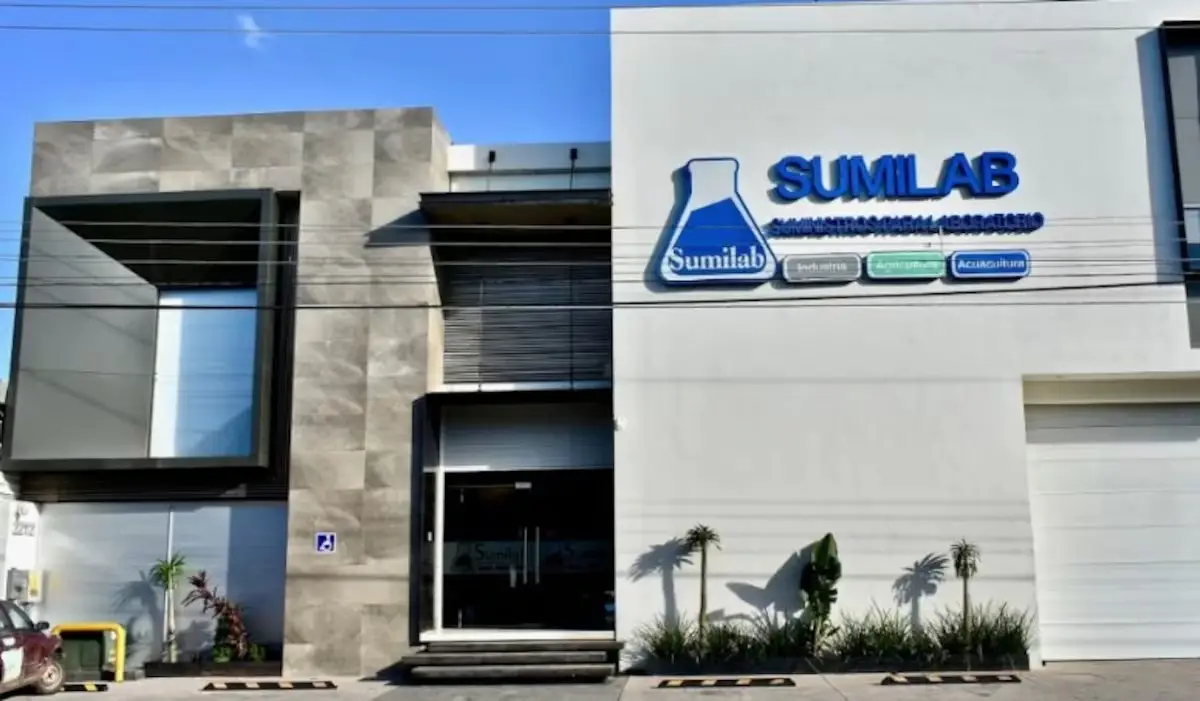

On May 9, 2023, the United States Department of the Treasury targeted the company Sumilab for supplying chemical precursors to the Sinaloa Cartel. It sanctioned it in the same batch as Joaquín López Guzmán, alias El Güero, one of El Chapo’s sons. The Office of Foreign Assets Control (OFAC) reported that both were designated “for having participated in activities that have significantly contributed to the international proliferation of illicit drugs.” Since then, the owners of Sumilab—which the US identifies as the heart of a fentanyl trafficking network—have received more than three million pesos in direct contracts for the rest of their companies. In total, in just over two years, this network has obtained more than 190 public contracts from the federal government, hospitals, and state universities in the north of the country.
“A family affair.” This week, the Treasury Department defined the network that the Favela López family had set up in Sinaloa to assist Los Chapitos and their intermediaries in the production of fentanyl and methamphetamine. Seven of its members—Jorge Luis, Francisco, Víctor András, and Gabriela Favela, Guillermo Gallardo, Jairo Verdugo, and César Elías López—and seven of their companies—Favela Pro, Agrolaren, Storelab, Qui Lab, Viand, Favelab, and Marcerlab—were exposed this Monday for forming “a network of chemical, laboratory equipment, and agricultural-related companies” serving the Sinaloa Cartel. While OFAC has been tracking this network for years, following the sanction of the main company, these businesses in Mexico continued to receive public funds until June of this year.
The story begins in the past. In 2001, Jorge Luis Favela, along with his twin brothers Francisco and Víctor Andrés, and his brothers-in-law Guillermo Gallardo and Jairo Verdugo, founded Sumilab. The company’s purpose was to distribute reagents, chemicals, and any other material a laboratory might need. Over the years, the brothers recruited their wives, children, nephews, and cousins to expand the family empire. Thus, Favela Pro, Agrolaren, Storelab, and Qui Lab (all headed by Jorge Luis Favela), Favelab (directed by Francisco), and Viand (directed by Víctor Andrés) were born.
All were in operation when Sumilab was sanctioned by the United States. Up until that point, the company had received nearly 15 million pesos in contracts from the Sinaloa government alone between 2018 and 2022. The OFAC blow was brutal. Public funding for the parent company evaporated, as can be seen on the National Transparency Platform. In the following days and weeks, the brothers who led Sumilab began to leave their positions as directors and presidents of the other companies in the network. They transferred their shares to their children, sisters, or wives. They also transferred them to front men, such as César Elías López, who is the head of Marcerlab, according to the Treasury Department.
“Víctor Andrés, Francisco, and Jorge Luis removed themselves from numerous corporate registrations—including Agrolaren, Viand, Favelab, and Fagalab—and placed front men in their place,” the US agency noted. However, the scare was short-lived. In the summer of 2024, the brothers returned to many of their positions.
With the parent company blocked, public contracts trickled down to a lesser extent to the rest of the network. Of the entire network, only Agrolaren has not received any awards in recent years. According to the National Transparency Platform, Favelab receives the largest amount, receiving 1.32 million pesos (approximately $70,000) from July 2023 until this June; half of this comes from the State University of Sonora (for the supply of chemical, medical, and laboratory products), but also from other centers such as the Autonomous University of Baja California Sur, the Technological Institute of Sonora, and the DIF of Sinaloa. For its part, Storelab receives almost one million pesos from the Center for Food and Development Research (CIAD), which belongs to the federal government.
The largest number of contracts goes to Qui Lab, which receives almost 120 direct contracts from the Technological Institute of Sonora, some for the paltry sum of 540 pesos, for the purchase of, for example, two glass test tubes. In total, all of this institution’s purchases in the last two years total 555,000 pesos for the company (just over $30,000). The only contractor for Favela Pro and Viand is the Colegio de la Frontera Sur, which chooses these companies to send filter paper, detergent, potassium chloride, and bicarbonate, despite being thousands of miles away.
Marcerlab’s contracts come from the Civil Hospital of Culiacán. The purchase of materials from this company began just as the war in Sinaloa began. In July 2024, a bizarre operation ended with Joaquín Guzmán López and Ismael El Mayo Zambada in the hands of US authorities, leading to the bloody fight between the two factions of the Sinaloa Cartel. This struggle, which is now bleeding the state dry and has already left more than 1,800 dead—several of them even at the doors of the Culiacán Civil Hospital—is accompanied by the arrival of public funds for this company, now accused of also working for Los Chapitos.
Source: elpais