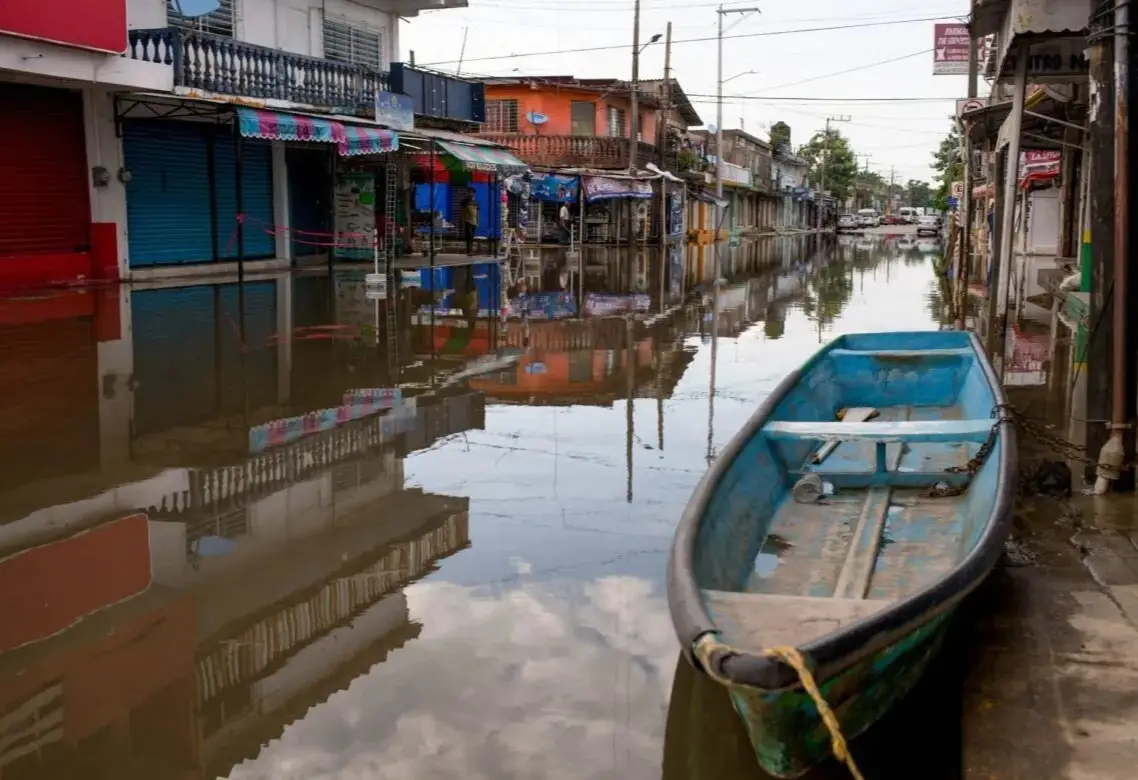

No natural disaster justifies canceling or postponing political rights. No overflowing river or fallen wall can silence the citizen. Tragedy demands empathy, not propaganda; solidarity, not manipulation.
The State’s duty is to attend to the victims; the citizenry’s duty is to ensure that the pain is not turned into a political spectacle. When aid becomes a stage for self-promotion, tragedy is degraded into political calculation.
Exercising political rights—demanding the recall of elected officials, requesting accountability, demanding consistency—is not being a vulture or right-wing. Calling critical citizens “vultures” or “right-wing” is authoritarianism: it infantilizes the people, denies their moral maturity, and treats them as subjects. Such disqualification does not seek debate: it seeks submission. Those who need to insult to maintain their power lose the moral authority to govern.
The Morena governments promised transformation and engage in mere pretense; they promised justice and reproduce authoritarianism; they promised transparency and perpetuate corruption; They promised accountability and maintain opacity; they promised dialogue and respond with silence or censorship. All while Veracruz continues to bleed. We do not forget the families of victims of enforced disappearance, ignored by the authorities; the disappearances that become mere statistics; the clandestine graves that mark open wounds. The UN has indicated that these disappearances persist in the state. Veracruz currently ranks as one of the states with the most cases of enforced disappearance in Mexico.
We do not forget the official tribute to Fidel Herrera, a symbol of a political class that should have been held accountable before the law and, instead, is celebrated by those who swore to eradicate impunity. We do not forget the corruption and negligence of the state Attorney General’s Office, the repression and deception of retirees, nor the arrogance of the new political class that confuses authority with hubris. We do not forget the extortion and violence that persists throughout the state, nor the criminalization of students from the University of Veracruz, reducing their legitimate protest to a mere act of violence by thugs.
We do not forget the cultural imposition, the contempt for dialogue with the artistic community, the censorship of dissenting voices; the corruption and authoritarianism within the Ministry of Education; nor the censorship of 50 community radio stations, academics, and citizens who showed solidarity with Radio Teocelo under distorted accusations of gender-based political violence. We do not forget the forced disappearance of environmental activist María Amparo Salinas Hernández, nor the indifference shown toward the case of teacher Irma Hernández de la Cruz, kidnapped and tortured, reduced to a fleeting news item. We do not forget the coffee growers imprisoned on fabricated evidence, the repression and murder of water and land defenders in Totalco, nor the torture and extrajudicial execution of Gregorio de la Cruz and the imprisonment without due process of farmer Higino Bustos. The current government’s shared responsibility with previous governments is reflected in the obstruction of the investigation and the persistent impunity.
Meanwhile, the refrain is: “Veracruz must be respected, and so must its governor, do whatever you want.” Confusing respect for the people with reverence and submission to power is a moral inversion. Respect is not imposed: it is earned through truth, diligence, humility, and transparency. Respecting Veracruz is not demanding obedience; it is listening to its voice, even when it is inconvenient.
By postponing the legislation on the recall of elected officials, the State Congress forgets that political rights do not expire. They are not suspended due to rain or convenience. Democracy does not stop in the face of adversity; it is demonstrated through it. Fulfilling the obligations of the citizenry means ensuring that the law serves justice, not expediency. To say that “there is time until 2027” is to deny that accountability must be immediate. Postponing it is evading responsibility; evading duty is another form of corruption.
While the people survive amidst loss and hope, those in power repeat speeches of respect but act with contempt. They distribute aid with a hand that begs for applause, promise justice with a mouth that remains silent in the face of impunity. Thus, they turn tragedy into marketing and politics into spectacle. Governing demands humility: the people are not minors; they are the true custodians of the mandate. To insult, censor, or ignore them is to regress to the old regime they promised to banish.
The word “transformation” becomes empty when used to justify abuses. A true transformation does not fear scrutiny: it provokes it and embraces it. A government that fears criticism does not want to transform: it wants to perpetuate itself. And a people silent in the face of abuse is not peaceful: it is manipulated. Respect for Veracruz is not measured in slogans, but in actions. And the actions today show a power that speaks in the name of the people, but acts with authoritarianism and silences them.
A Call to Collectives and Organized Citizens: To search collectives, environmental groups, cultural groups, university groups, and all those who refuse to give up: it is time to protect our voices from partisan interests. Power changes its face, but not its practices. We must look beyond electoral and economic rhetoric. The true banners of citizenship—the right to truth, to art, to work, to water, to territory, to justice, and to free speech—are not negotiable. They are the hands that search for the disappeared, that sow, teach, and create. They are cultural, economic, social, political, legal, environmental, and digital rights.
It is time to organize networks of existence, community, observation, and citizen oversight that accompany, question, and challenge. Not to destroy, but to remind those who govern that power was granted to them temporarily by a people who deserve respect. Accountability is not a favor: it is the minimum proof of consistency with the responsibility of wielding power.
Creating citizen oversight bodies to monitor governments, institutions, universities, ministries, prosecutors’ offices, and political parties is everyone’s responsibility. Only in this way can democracy function in service to the citizenry, not to special interests.
The right to organize, monitor, question, and demand accountability is not optional: it is an ethical duty. Those who exercise this right strengthen democracy. Faced with a power that proclaims itself transformative but reproduces the same logic of control and intransigence, conscious citizens reclaim their right to think and decide collectively.
When the government substitutes dialogue with decrees, consensus with slogans, and conscience with obedience, questioning becomes symbolic resistance: a way to reclaim the voice that power attempts to monopolize.
The lack of listening is not a mere management flaw; it is a profound denial of democracy. Governing without taking into account cultural communities, collectives, and citizens means transforming the popular mandate into technocratic imposition: replacing the living conscience of the people with the ideology of the State.
To call someone who demands a recall election “right-wing” is ideological censorship: it deprives citizens of their capacity for critical thinking. Naming the disappointment doesn’t betray the project; it rescues it from degradation. When power substitutes obedience for conscience, “transformation” becomes a caricature, and the people lose their voice.
The power that claims to be transformative has reproduced the very forms of control it promised to eradicate. Replacing dialogue with decrees and conscience with obedience forces citizens to exercise their resistance: to demand respect for the right to a recall election.
To call this action “right-wing” delegitimizes criticism and denies the conscience of those who voted with the hope of real change. Demanding that a right be upheld is not opposing the project, but demanding consistency. We are the echo of that voice that refuses to be silenced: we call for thinking together before power decides everything for us.

Source: insurgenciamagistral