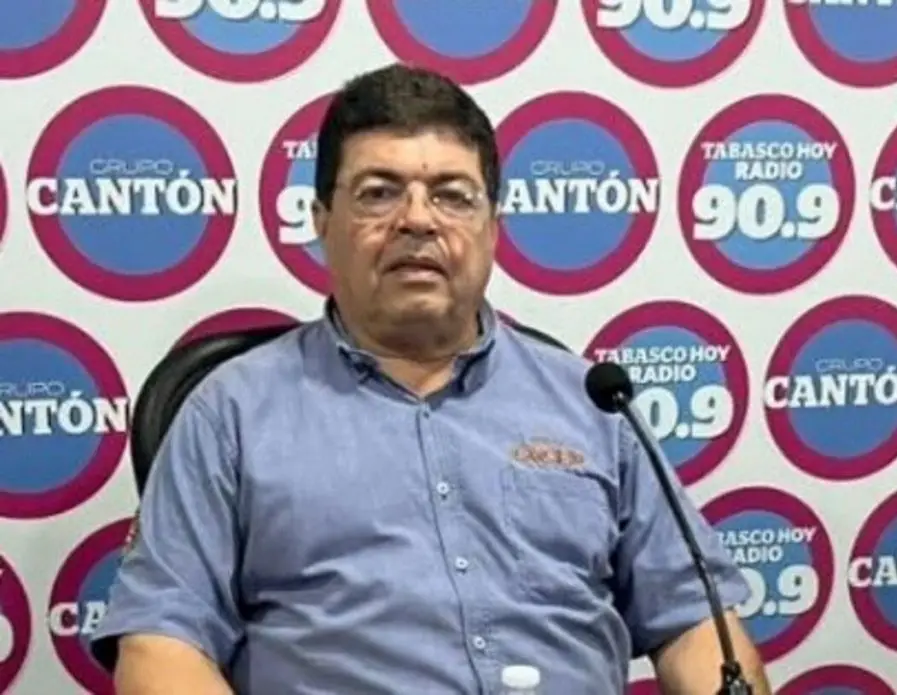

In an interview with Tabasco HOY Radio, Vicente Gutiérrez Cacep, CEO of Grupo Industrial Cacep, founder of Chocolates Cacep and the Jesús María hacienda, shared his analysis of the current situation and the cultural and commercial renaissance of Tabasco cacao. The businessman highlighted a change in the sector, namely Tabasco’s repositioning on the international stage.
Previously, Oaxaca was the global benchmark for Mexican chocolate, but thanks to programs implemented by the current administration, Tabasco cacao and chocolate have been given a specific value, making them resonate in many parts of the world. One indicator of this success was the attendance at the recent Chocolate Festival.
Gutiérrez Cacep noted that not only did special guests, such as those from Spain, attend, but American and European visitors also came on their own initiative in search of cacao products.
ANCESTRAL CHOCOLATE
An interesting phenomenon emerging in cacao tourism is the European preference for the rustic, metate-ground chocolate produced in the region. “When Europeans come, that’s what they’re looking for. That little crunch of sugar on their teeth and the flavor—we have the bitter taste of that washed cacao chocolate, mixed with a touch of cinnamon. It drives them wild,” he explained.
He pointed out that visitors aren’t looking for a refined texture, but rather the ancestral and mystical flavor of the traditional preparation.
—What about the international price of cacao?— “The price peaked last year, reaching $12,000 per ton. However, it has experienced a sharp drop, currently sitting below $5,000 per ton.”
—Despite the drop…is cacao production profitable? — “Yes, despite the decrease, the current price of almost $5,000 per ton is still nearly double the price before the boom, which was approximately $2,500 per ton.” “Therefore, cacao remains profitable and, according to the analysis, is much more profitable than raising cattle.”
— When is the peak chocolate consumption season in Mexico and Tabasco? — “It starts on November 1st, for Day of the Dead, since that is traditionally when people begin consuming table chocolate to accompany dishes like tamales, and it extends until February 14th, Valentine’s Day.”
— What type of chocolate do visitors look for? — “European visitors seek ancestral, rustic, and mystical chocolate, known as metate chocolate or table chocolate.” “They seek the coarse texture, the ‘snack of sugar on the teeth,’ and the bitter taste of cacao mixed with cinnamon, rather than the smoothness and refined textures of European chocolate.”
— What is the current global relevance of Mexican cacao culture? — “Mexican culture is gaining significant relevance due to the rise of cacao ceremonies worldwide, many of which draw inspiration from and traditions in Mexico, a place steeped in culture and mysticism.”
— What has changed in Tabasco’s cacao sector in recent years? — “Previously, Oaxaca was the global benchmark for Mexican chocolate. However, the current administration has shifted the focus and increased the value of Tabasco’s cacao and chocolate sector, making the state internationally recognized as a producer of high-quality chocolate.”
— What does the international attendance at the recent Tabasco Chocolate Festival indicate? — “The most recent festival showed a change, attracting a large number of people on their own initiative (Americans and Europeans) who came in direct search not only of the bean, but also of processed cocoa products, which confirms the new positioning of Tabasco.

Source: tabascohoy