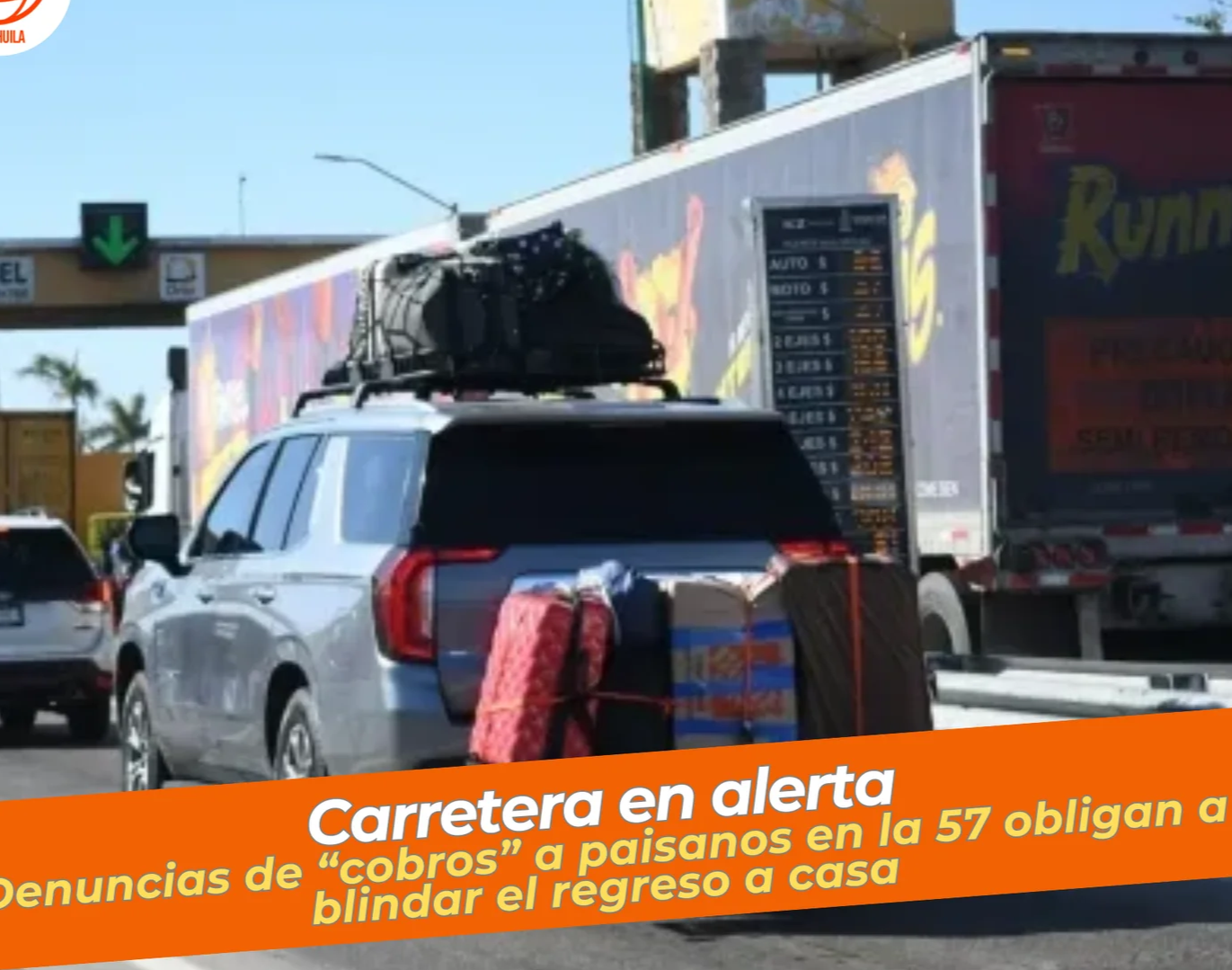

At the start of the peak holiday season, numerous reports are mounting from Mexican nationals who claim to have been stopped and forced to pay bribes on stretches of highway in Coahuila, primarily on the Piedras Negras-Monclova-Castaños route. According to testimonies, these bribes have reached as high as $1,600. The issue has prompted official statements and reopens a fundamental question: who is watching those who watch?
In publicly shared accounts, travelers describe being stopped just a few kilometers after passing through Piedras Negras and allege the involvement of municipal and state police forces, as well as suspected federal checkpoints. They even pinpoint specific locations along Highway 57 where, they claim, the stops and demands for payment are frequent. These are serious accusations that require formal investigation, but their pattern—when it emerges during peak season—directly impacts the trust, family flow, and economic well-being of the state.
On the institutional side, the State Attorney General’s Office announced a policy of “immediate dismissal” for officers who attempt to extort money on highways and reinforced the message to report such incidents. Meanwhile, the Paisano Guide reminds Mexican nationals that they have formal channels to report abuses during their journey and request assistance. The key is that the “report” doesn’t remain just words: it must be traceable, documented, and result in sanctions.
If Coahuila wants to protect its holiday season and its reputation, it needs a visible and measurable package: a public list of authorized checkpoints (and who is in charge there), mandatory and verifiable identification at every inspection, zero fines without receipts and justification, surprise audits, and a bi-weekly dashboard with the number of complaints, road sections, status, and sanctions. And, when applicable, clear coordination with federal authorities to prevent “phantom checkpoints” where no one is accountable.
Coahuila cannot normalize the feeling of returning home as a gamble. When people travel with their papers in order and still fear the next patrol, the damage is twofold: to their wallets and to their confidence. The question for citizens is simple: how many checkpoints are needed to provide security… and how many to take it away?
Source: coahuila360