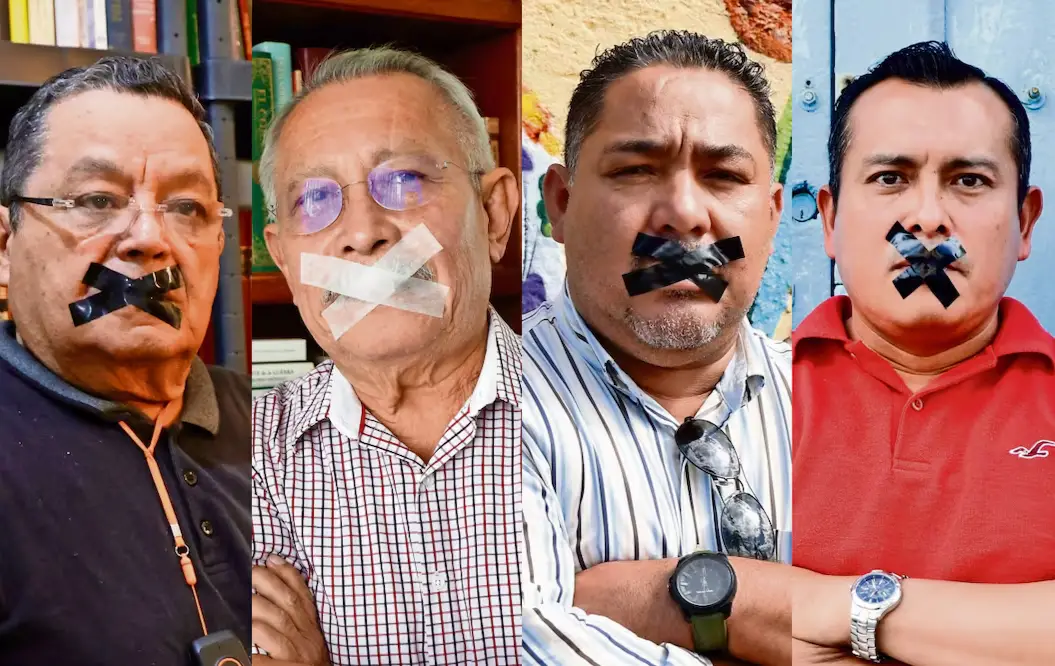

Journalists, university rectors, police officers, and even people who have worn costumes or masks of politicians during Carnival have been harassed, intimidated, and even sued by Layda Sansores, the Morena party governor of Campeche, who does not allow any kind of criticism or questioning of her administration. The inhabitants of this southern state are silenced.
Journalists in this state of more than 970,000 inhabitants assert that under Sansores’s administration, the only five existing print media outlets—Tribuna, Crónica, El Sur, Expreso, and Novedades—disappeared. She attacked and censored them until they were defunct.
“She wiped out the newspapers; there aren’t any left. There’s only one television station, and digital media abounds, although the vast majority are pro-government,” says Abraham Martínez, who has dedicated himself to crime reporting on social media platforms like Facebook for more than 15 years, where he hosts a program called “The Crime Reporter.”
Also read: Alleged commando threatens the director of the Kobén prison in Campeche; he is accused of protecting two inmates accused of extortion.
And, according to reporters in the state, Sansores privately claims that journalists are “filthy, starving wretches.”
Last August, Abraham, along with two other journalists, was forced to apologize to Sansores for gender-based political violence.
The Electoral Tribunal of the State of Campeche ruled that the statements made on a YouTube and Facebook program were offensive, stereotypical, and constituted gender-based political violence. Abraham Martínez always carries his panic button, which he activates when he faces a dangerous situation like the one he experienced two years ago in his truck, in which he was traveling with his family.
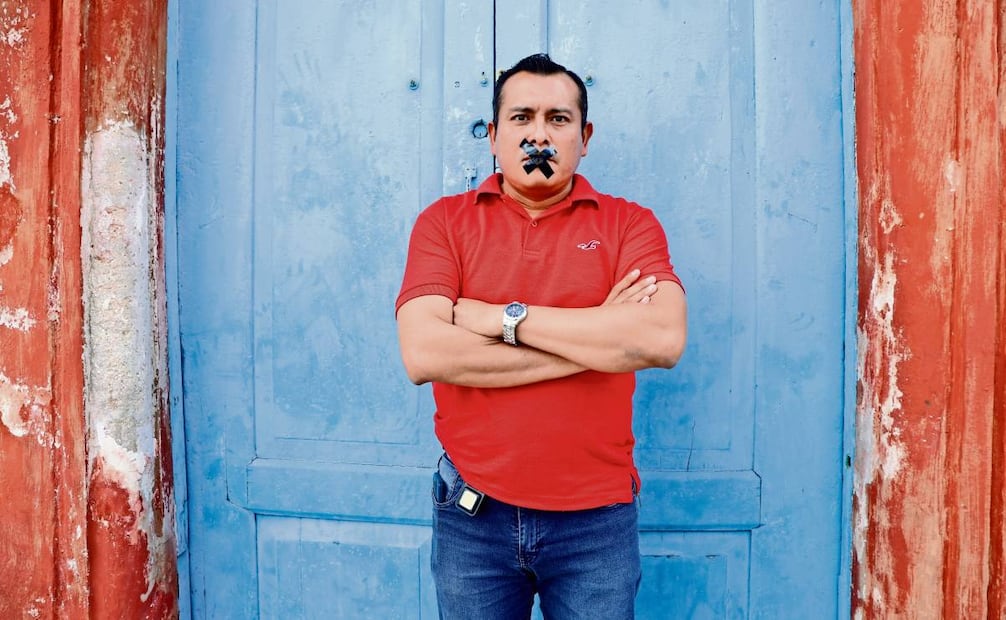
“Like every Friday, we went out to dinner. I don’t go out after 11 p.m. We were driving on Gobernadores Avenue, and near Ecuador Street, a police officer on a motorcycle approached me. He told me to stop because of the tinted windows on my truck. That was the justification. What was the appropriate action? A traffic violation. But commanders arrived, along with about 20 patrol cars. They started intimidating me and demanding that I get out of the car.
“But I didn’t, and I pressed the panic button, because I know they can plant drugs and weapons on you at any moment. They towed the truck and took us to a tow yard outside the city.” “And thanks to the intervention of the Human Rights Commission staff who arrived here, they released us,” recounts the 47-year-old journalist.
Just as Campeche boasts its architectural and ancient city wall, Sansores has done the same to avoid questioning her administration, using fabricated charges and harassment as her main weapons against those who are inconvenient to her.
On January 12, the former rector of the Autonomous University of Campeche (UACam), José Alberto Abud Flores, who was about to finish his term and was seeking reelection, was arrested on an unsubstantiated accusation that he was carrying drugs in his truck. He was taken to the State Attorney General’s Office and then to the Kobén Social Reintegration Center (Cereso), where he remained for two days.
On Thursday afternoon, Abud Flores released a video statement in which he held Layda Sansores’s government responsible for anything that might happen to him or any member of his family, and asserted that the cocaine found in his truck “was planted”.
Source: eluniversal