To broaden the reach of information on combating the cattle screwworm, it is also being disseminated in eleven indigenous languages: Tzotzil, Tzeltal, Chol, Chontal, Ikoot, Zoque, Mazatec, and the two Mayan variants spoken in Yucatán and Quintana Roo, along with Nahuatl and Zapotec.
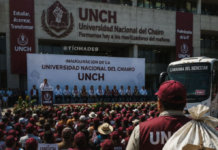
The Ministry of Agriculture reports that the National Service for Agrifood Health, Safety and Quality (Senasica), with the participation of students from the Autonomous University of Chapingo (UACh), is carrying out this information campaign on combating this pest.
With the support of UACh students, the translation and narration of radio materials focused on the prevention and reporting of the screwworm in communities that speak these languages has been completed.
The materials are being disseminated through 11 radio stations of the National Institute of Indigenous Peoples (INPI) and via public address systems in the communities.
This effort, which combines the scientific and social value of communication in indigenous languages, is important because it contributes to the federal government’s health strategy to control and eradicate this pest.
Senasica, through its Promotion and Dissemination Directorate, recognized students Gloria Isabel Cárdenas Gómez and Dariana Gómez Jiménez for their translation and voice-over work on three versions of radio messages in the Zoque and Cho’l languages.
The goal is for speakers, primarily from the state of Chiapas and some regions of the states of Tabasco and Campeche, to learn about the actions being taken to combat the cattle screwworm in their own languages.
The members of the Committee of Students Speaking Indigenous Languages (CEHLI) from the same university were also recognized for their efforts in adapting preventative messages into various Indigenous languages to broaden the reach of information about the cattle screwworm in rural communities.
The UACh was also recognized as an academic institution for its collaboration in the translation and dissemination of radio materials focused on the prevention and control of this pest.
Indigenous languages serve as a bridge for transmitting knowledge generated in academic classrooms and research projects.
Therefore, they contribute effectively to the well-being of Indigenous communities. At the same time, they allow academia to understand, value, and engage with the ancestral wisdom of these communities, commented UACh authorities.
Source: oem