The Secretariat of Sustainable Development (SDS) is prioritizing four major issues that are negatively impacting Yucatán’s ecosystems, with the aim of reversing their effects.
According to Secretary Neyra Concepción Silva Rosado, in an interview, these issues are the mass die-off of bees due to fumigation, aquifer contamination from wastewater discharges from pig farms, the protection of sea turtle nesting grounds, and climate change.
Secretary Silva Rosado states that her department has been working in closer coordination with climate change specialists on the Peninsula since last year.
Yucatán is one of the areas where the three levels of state government are working together, under the supervision of a Regional Climate Change Commission.
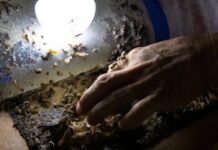
One of the priority issues where they are jointly focusing their efforts for better control is the management of agrochemicals that affect bees. In 2025, large-scale fumigations caused massive bee deaths in Campeche and Yucatán.
The official states that, given these negative effects of fumigation, they requested support from the National Service for Agrifood Health, Safety and Quality (Senasica) to establish a protocol for handling and sampling, as well as to review the permitting process for this activity.
Neyra Silva says she observes that authorities are authorizing fumigation permits without controls, and there are rural areas where this should not be happening.
To protect beehives, the SDS (Secretariat of Sustainable Development) is encouraging beekeepers to register their apiaries. This will help identify and locate hives and prevent fumigation permits from being issued in those areas.
“The agencies that should be issuing fumigation permits are the Ministry of Rural Development (Seder) and the Ministry of Agriculture and Rural Development (Sader), but nobody is requesting permission,” he admits.
“This is a very important issue that we are beginning to address. Last year, following the mass die-off of bees, a hazardous materials management group was re-established here in the state, comprised of representatives from various institutions, both federal and state, as well as civil society organizations and producers.”
“We are working with a committee to analyze what actions we need to take,” he notes.
“The first action, which is already underway, is the reopening of a temporary collection center for empty agrochemical containers to begin removing these toxins. We will work closely with producers to ensure the proper handling of agrochemicals.”
Regarding the turtle nesting season on the Yucatán coast, Neyra Silva points out that the law protecting these species has already changed. Today, it is forbidden to touch the turtles or collect eggs from their nests.
“Regarding the issue of sea turtles, I would like to wait a bit longer. We will be holding a press conference soon to discuss the matter,” he responds to questions.
“Last week we held our meeting of the Sea Turtle Management Committee, and one of the agreements we reached is that public awareness is crucial for protecting this species. We will inform you about who is working on this, where the turtle camps are located, what measures are being taken, and what we expect. We would appreciate your support in disseminating all of this information to the public.”
The Secretariat of Sustainable Development indicates that during this Easter holiday season, they will have several surveillance and monitoring points to protect the turtles.
He urged vacationers to report any turtle nests they see to the Tortuguil hotline, which everyone knows about, or to the SDS WhatsApp number so they can address the reports. No turtle nesting has been recorded to date. The peak nesting season is from June to September.
“What should someone do if they see a nest?” he was asked.
“They should call the authorities, seek support, and not touch it. The law has changed,” he reminded everyone. “They shouldn’t be grabbing the turtles. None of us release them with people around precisely for that reason. Now, what we must do is protect the nests, monitor them, see how they’re doing, and help when they hatch.”

Source: yucatan