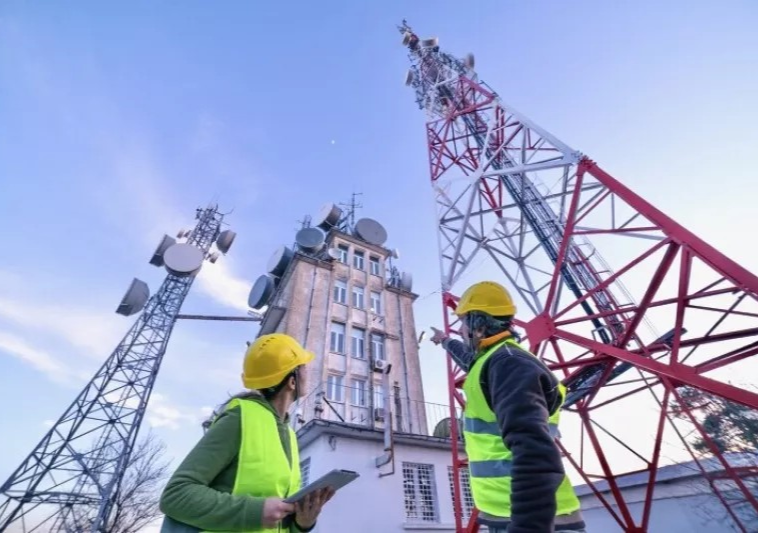

Geopolitics will influence decisions regarding critical infrastructure in Mexico, such as telecommunications. For the renegotiation of the USMCA, the country seeks to gradually move toward greater alignment with technology providers in the region, particularly from the United States, but this does not, for now, imply an immediate displacement of solutions from China.
Although there is no mandatory quota for US suppliers in telecommunications, the issue is part of the revisions to Chapter Four of the trade agreement, which seeks to limit dependence on inputs from third countries, particularly those in Asia.
Diego Flores, head of the Electronics and Digital Industry sector at the Ministry of Economy, stated that the decision also responds to criteria of technological sovereignty, in a context where greater control is sought over the infrastructure and mechanisms that guarantee the secure and encrypted circulation of information. He affirmed that this issue has been central to recent discussions.
“Currently, there are Western companies or companies linked to the North American region that can help us with new infrastructure projects. There is undoubtedly a growing integration in North America that points to greater affinity. This is a natural progression given our position within the supply chains and our business partners,” the official told Expansión.
The change, although gradual, would mark a new dynamic in the telecommunications sector. It is estimated that 54% of the country’s fourth-generation (4G) telecommunications infrastructure was built using Asian technology, particularly from Huawei, according to information from BNamericas, a business intelligence platform.
For example, Altán’s network – which hosts major MVNOs like Bait – is mostly made up of Huawei components, in areas such as the backbone, the most important part of a network infrastructure as it is responsible for interconnecting smaller networks and transporting data at high speed. The backhaul connects access nodes to the operator’s core network.
It is also part of the Radio Access Network (RAN), whose infrastructure component connects mobile and IoT devices to the core network via radio waves using antennas, masts, and other equipment.
Chinese companies are also gaining prominence in the fixed-line sector. For example, Izzi’s core network was built by ZTE. “Chinese suppliers would have the most participation in fiber optics,” said a source. However, the US company AT&T accelerated its transition to Ericsson and Nokia to avoid government sanctions.
The use of Asian components for telecommunications infrastructure is also reflected in the numbers. Huawei’s sales in the Americas, which largely comprises Latin America due to restrictions imposed by the United States and Canada since 2019, increased by 2.4% in 2025, reaching 37.184 billion yuan, equivalent to US$5.38 billion, according to its annual financial report.
Ericsson reported a 3% drop in revenue in the Americas region due to lower sales in Latin America, according to its annual financial report. Meanwhile, Nokia recorded $784 million, representing a 12% decrease.
Source: expansion