
The film Mexico 86, coming to Netflix, is presented as one of the platform’s strongest bets in the lead-up to the 2026 World Cup. The film delves into the behind-the-scenes story of the historic 1986 tournament and focuses on the political, business, and sporting decisions that allowed Mexico to host the World Cup for the second time. With an informative and satirical approach, the production moves away from the epic narrative of the pitch to tell what happened off it.
Starring Diego Luna, the film revisits a turning point in world football, usually linked to Argentina’s back-to-back championships, the figure of Diego Armando Maradona, and iconic plays like the “Hand of God” and the “Goal of the Century.” However, the narrative shifts to a little-known protagonist: a Mexican bureaucrat who was key to the country securing the hosting rights after Colombia withdrew.
The trailer reveals that the film offers a political and social reconstruction of the 1980s, with direct references to the economic crisis, international negotiations, and the influence of major media groups on football. The story draws on real events and reinterprets them through fiction to show how one of the most important decisions in FIFA history came about.
Set in the 1980s, the film follows the story of Martín de la Torre, a Mexican official with a passion for football who sets out to bring the World Cup back to Mexico. The character, played by Diego Luna, navigates a web of political negotiations, quid pro quo favors, and maneuvers that expose how major sporting decisions are made.
According to the official synopsis, the film suggests that “not all goals are scored on the pitch” and that what happens off the field can be even more intense than a decisive match. In this vein, the story shows how the Mexican bid was built on audacity, political pressure, and opaque agreements, in an international context marked by FIFA’s urgency following Colombia’s withdrawal as host country.
The narrative includes Martín de la Torre’s connection to key figures in economic and media power. Among them is Emilio Azcárraga Milmo, president of Televisa, played by Daniel Giménez Cacho, whom the trailer presents as “the most powerful man in Mexico.” The film exposes the role of media and money in securing the event.
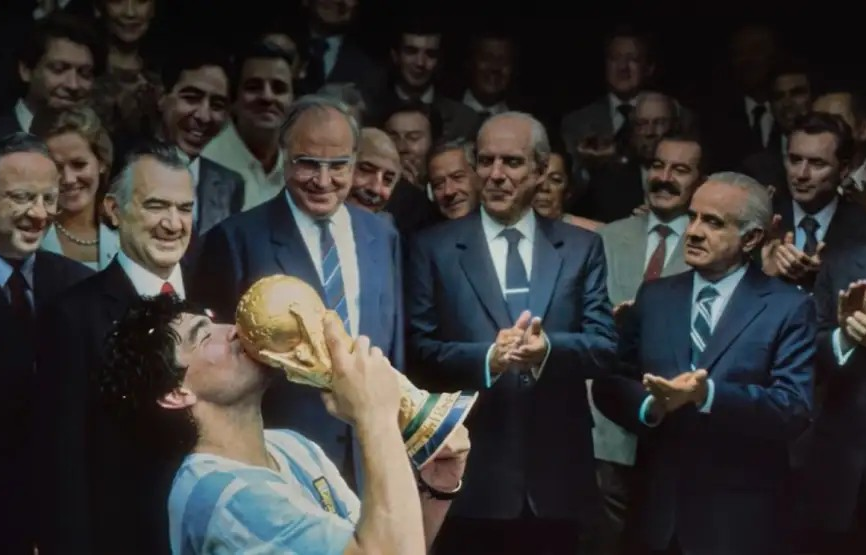
The trailer also revisits iconic moments from the 1986 World Cup, but always as a backdrop. References to the final, Argentina’s victory, and the tournament’s global impact serve as context for a story that seeks to explain how things got to that point, rather than relive what happened on the field.
In one scene of the trailer, Luna himself, in his character’s voice, states: “The best World Cup in history was played in 1986: in Mexico.” That line sets the tone of the film and makes it clear that the objective is not to discuss the sporting result, but rather the political process that made it possible.
Another key line from the trailer reinforces this spirit: “I’m going to work my ass off to bring that World Cup back to Mexico, because that’s never happened before, for a country to host the World Cup twice. That’s going to put us on the map.”
Mexico 86 is directed by Gabriel Ripstein, who also co-wrote the screenplay with Daniel Krauze. The duo proposes an approach that combines satire, dark humor, and historical reconstruction to portray the inner workings of power behind the 1986 World Cup.
The fourth and final season of “Envidiosa” arrives on Netflix: when it premieres and what happens next.
Diego Luna not only leads the cast but also serves as an executive producer on the project. The film is part of an investment announced by Netflix in August 2025, when the platform confirmed a plan of over $1 billion to develop original content in Mexico.
The cast includes Karla Souza, Álvaro Guerrero, Memo Villegas—who plays Hugo Sánchez—and Juan Pablo Fernández, among others. The diverse cast allows for the representation of different sectors of the political, business, and sporting landscape of the time.

Source: perfil