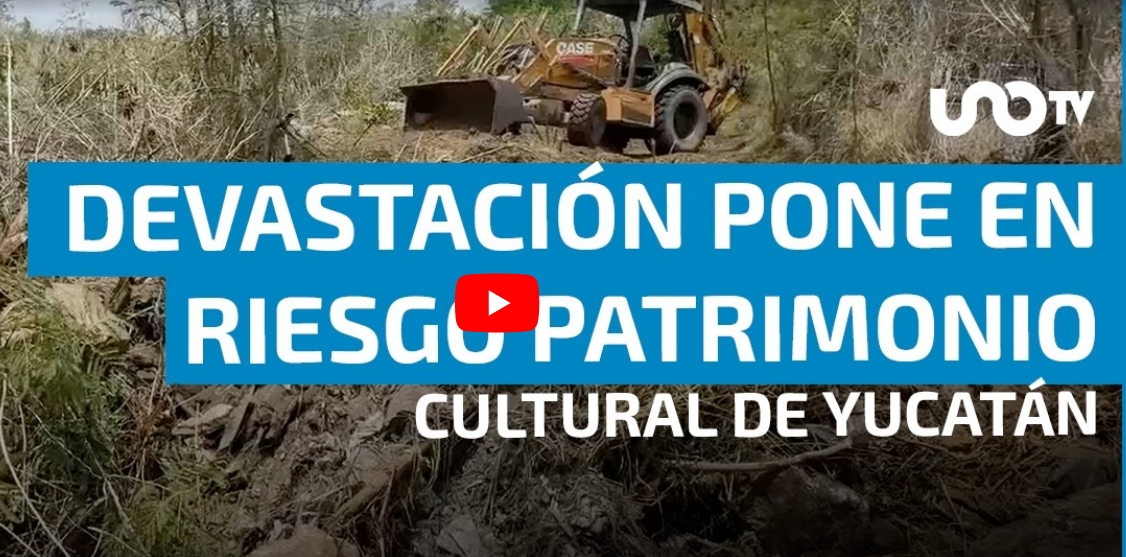

Since 2007, there have been reports of the risk looming over the Dzoyilá archaeological zone in Yucatán. Today, history is repeating itself and worsening. Located south of Mérida, this ancient Mayan settlement, with over 1,300 years of history, is currently being devastated by uncontrolled interventions in the area.
The site still preserves its pyramid, platforms, and residential remains, which are part of the pre-Hispanic heritage within the urban sprawl. However, it faces encroachments and construction projects that destroy its structures and cause direct damage to the archaeological remains. Citizen complaints have gone unanswered so far.
“It’s wrong, because it’s part of our history, and they shouldn’t be doing this. The National Institute of Anthropology and History (INAH), who oversee these things, are supposed to be here too, right? But they’re supposed to be notified and everything.”
Ignacia Moguel / Dzoyilá resident
“It belongs to our ancestors, and no, it doesn’t harm them at all; on the contrary, it looks better. They should clean it up so it looks even better.”
Residents of the area say that private individuals are already clearing the land, and heavy machinery is operating during the day.
“As far as I know, they’re already clearing weeds on this side because they’re going to build; I honestly couldn’t tell you if it’s houses… this is very wrong, because it’s for tourists, this shouldn’t be happening.”
Alejandra Escobedo / Dzoyilá resident
Residents and land defenders are asking the National Institute of Anthropology and History (INAH) and the Mérida City Council to protect the area and take measures to prevent further damage to the heritage site.
“Many real estate companies begin construction before obtaining the necessary permits. They then use a mechanism to essentially get a stamp of approval, even after the devastation has already occurred, when it’s impossible to know what they’ve destroyed.
“This is exactly what happened in the case of Kinchil, the pre-Hispanic city of Tzemé. The difference is that there, extensive documentation had already been done, and yet Crío came in and devastated the entire area with chicken coops.”
Source: unotv