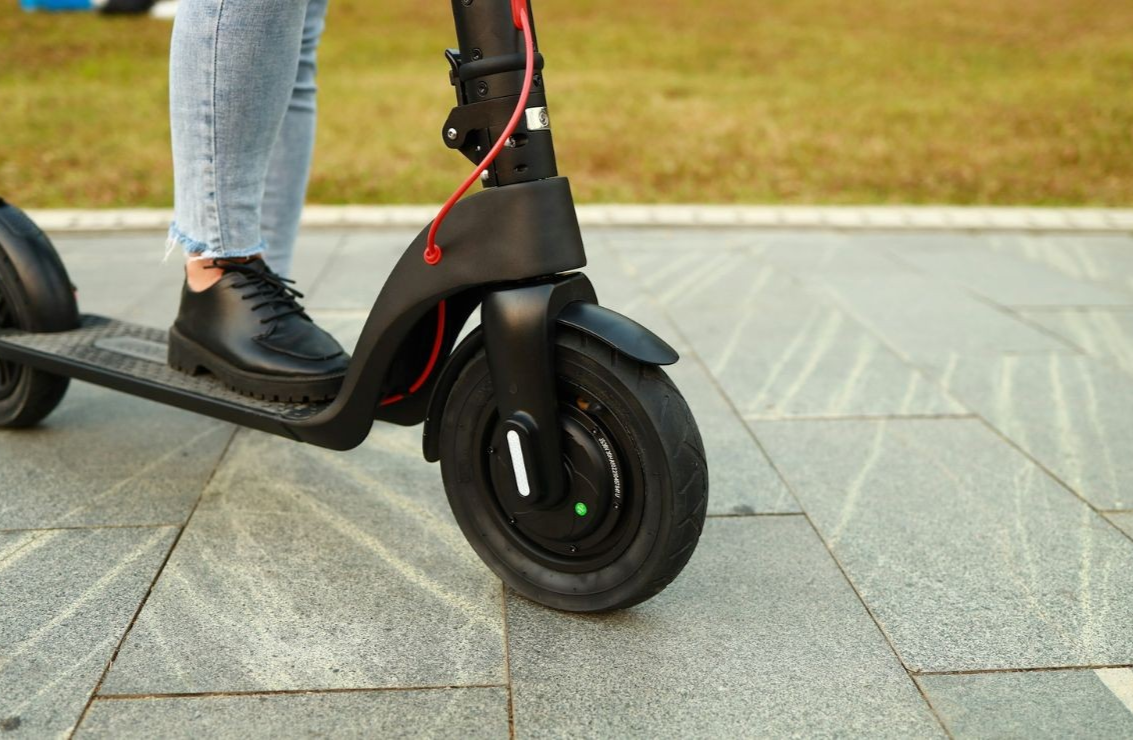

Héctor Ulises García, Mexico City’s Secretary of Mobility, explained the new guidelines for electric scooters, mopeds, and bicycles.
In an interview with Joaquín López-Dóriga on Radio Fórmula, the official emphasized the importance of regulating these modes of transportation “before they overwhelm us,” given that they are used by residents of both Mexico City and the State of Mexico.
“We don’t want to become like Vietnam, where the sheer number of vehicles runs rampant without regulation or control,” he pointed out.
The main motivation behind the new rules is to accurately determine how many of these vehicles are circulating in the capital and to regulate them “for road safety.”
To this end, the 28 companies that manufacture and sell these vehicles—more than 120 different types including scooters, mopeds, and electric bicycles—were invited to participate.
Classification of Personal Electric Vehicles
The Mexico City Mobility Secretariat established two types of vehicles:
Personal Electric Motorized Vehicles (VEMEPE)
Personal Electric Vehicles (VEP)
These will be further subclassified as follows:
By speed: Those with a motor up to 1.3 kW (1.4 horsepower) and a maximum speed of 25 km/h.
By weight: Those weighing up to 35 kg (type A1) and those weighing between 35 and 350 kg (type A2). A2).
The head of the Ministry of Mobility (Semovi), Héctor Ulises, explained that personal vehicles exceeding 25 km/h must be registered and their drivers must have a driver’s license and wear a helmet.
These vehicles will only be allowed on secondary roads.
Meanwhile, personal vehicles not exceeding 25 km/h must display a sticker to use the bike lane, without needing a license plate.
In both cases, the vehicles must have a special feature to make them visible to other drivers and pedestrians.
The Mexico City Secretary of Mobility stated that prior to the mandatory registration of these vehicles (scheduled for July 1, 2026), a public awareness campaign will be conducted to explain the new rules.
Source: lopezdoriga