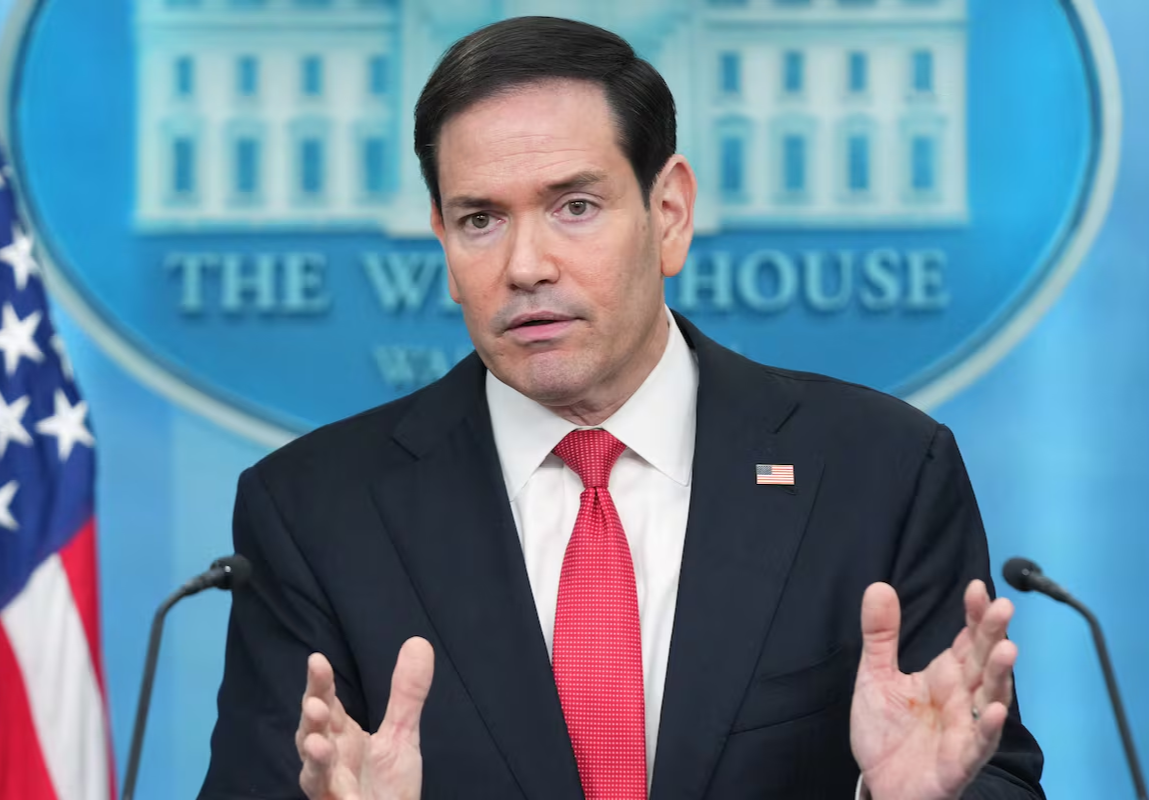

The U.S. State Department has begun a review of Mexico’s 53 consulates in the country, according to CBS News. The network reports that Secretary of State Marco Rubio is even considering closing some diplomatic offices. So far, the Mexican government has not commented on the investigation, the scope of which has not been disclosed. The news comes amid
crisis-of-the-cia-agents-open-the-first-rift-in-the-security-relationship-between-mexico-and-the-united-states.html” data-link-track-dtm=””>an escalating tension between the two countries, following the deaths of two CIA agents in a traffic accident in Chihuahua and the Justice Department’s indictment of Sinaloa Governor Rubén Rocha and nine other officials.
Mexico has its most extensive consular network in the United States, with 53 offices, in addition to its embassy in Washington, serving the more than 38 million Mexican citizens living in the country. The MAGA (Make America Great Again) movement, spearheaded in this battle by writer Peter Schweizer, has for months accused the diplomatic offices of being the spearhead of an offensive aimed at influencing the U.S. midterm elections, to be held this November. “The Mexican government is interfering “They are blatantly interfering in our domestic politics, collaborating with US political advisors to turn migrants, both legal and illegal, within the country into a political force they can use for their own benefit,” the far-right author asserted.
The Ministry of Foreign Affairs (SRE) has repeatedly denied this accusation and reaffirmed that Mexico’s consular work is limited to providing assistance to Mexican citizens, as well as promoting economic and cultural relations between the two countries. “There is nothing political about consular work, only the commitment to ensuring that people’s rights are respected,” the Ministry stated this Wednesday in response to Schweizer, who again denounced Claudia Sheinbaum for “interfering in the elections” through consulates and officials from Morena, the ruling party, who live in the US.
On January 20, 2016, exactly one year after Donald Trump’s return to the White House, political analyst Peter Schweizer published The Coup. Invisible, a purported investigation into how migrants were being used as a “weapon” by foreign powers. The book’s outlandish thesis—at a time when the Republican president has established a reign of terror for foreigners—included that Mexico was using “mass migration as a way to reclaim portions” of the country. The author attacked public channels like TV Migrante and even textbooks from the Ministry of Public Education (SEP), but above all, he pointed to the consular network as leading the interference.
A State Department official told CBS that the review of Mexican consulates is part of a broader effort to “align U.S. foreign policy with Trump’s priorities.” This was confirmed by Dylan Johnson, Assistant Secretary of State for Global Public Affairs, who told the U.S. network that “the State Department constantly reviews all aspects of foreign relations to ensure they align with the president’s America First policy agenda.”
Since his return to the White House, Trump has pressured Mexico, through threats of tariffs or military intervention, to shape a bilateral relationship to its liking. President Claudia Sheinbaum has been skillfully managing her counterpart’s outbursts for over a year; however, this exchange reached a breaking point on April 19, when a brutal accident revealed the presence of two CIA agents on an operation in the mountains of Chihuahua.
The president, who had tolerated, for example, the two versions of Ryan Wedding’s arrest (in which the US maintained he had been apprehended in a secret FBI operation in the country), stood firm with the CIA agents. “There can’t be people from the United States working in the field, that’s clear,” she asserted, and ordered an investigation into their presence in Chihuahua, one of the few opposition governments. Her reaction was heavily criticized by the White House, whose spokesperson reproached her for a “lack of compassion” toward the workers.
After that disagreement, the United States launched its indictment against Rocha and a string of Sinaloa officials, including a senator and the mayor of Culiacán, all members of the Morena party, as well as current and former security and prosecutorial officials. The Department of Justice requested their arrest and extradition to the United States. Sheinbaum and her administration have so far refused, citing a “lack of evidence,” but the timing left no doubt that this was a politically motivated move, just getting started. Exactly one day after the acting Attorney General announced he was preparing new indictments against Mexican politicians for their ties to organized crime, this investigation was made public to the consulates.
Source: elpais