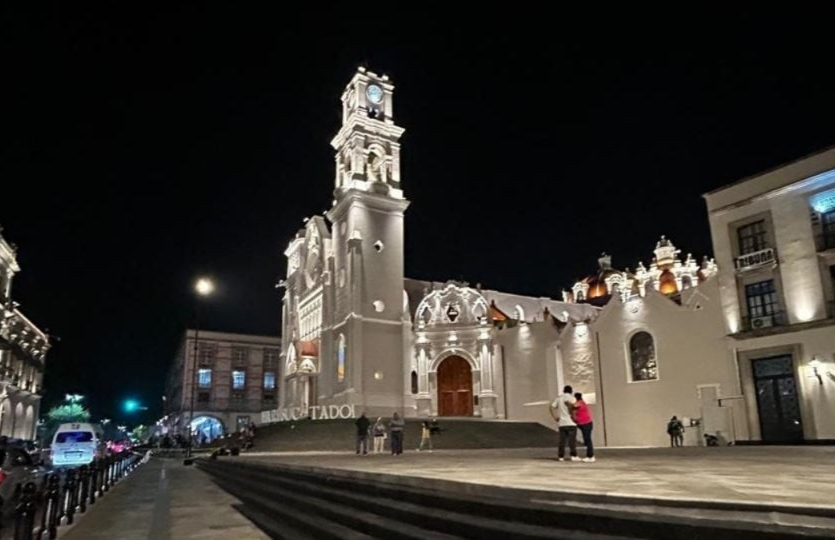

On May 9, 1824, Xalapa was designated the capital of the state of Veracruz, becoming the seat of government for the newly formed federal entity following the promulgation of the Mexican Federal Constitution.
This decision marked the beginning of a new political era for the city, which from then on consolidated itself as the administrative, cultural, and educational center of Veracruz, earning over the years the nickname “The Athens of Veracruz.”
Historical records indicate that Xalapa has pre-Hispanic origins and that its founding dates back to 1313, when various indigenous groups settled in the region. Totonacs, Toltecs, Teochichimecas, and Chichimecs formed the ancient neighborhoods of Xallitic, Techacapan, Tecuanapan, and Tlalnecapan, which eventually unified under the name Xalapa.
The name Xalapa comes from Nahuatl and means “spring in the sand” or “water in the sandy area,” due to the abundance of springs in the region.
During the colonial era, the city gained importance due to its strategic location on the route between the port of Veracruz and Mexico City, which boosted trade and economic growth in the region. In 1791, King Charles IV granted Xalapa the title of town.
After the consummation of Mexican Independence, Xalapa was chosen as the capital of the state of Veracruz and the seat of the First Local Legislature, installed on May 9, 1824.
Throughout the 19th century, the city continued to grow. In 1830, it was officially elevated to city status and subsequently consolidated itself as an important educational and cultural center. In 1843, the National College of Xalapa was founded, considered one of the most important precursors of public education in the state.
In 1892, the city adopted the name Xalapa de Enríquez, in honor of Governor Juan de la Luz Enríquez, who promoted urban modernization and reaffirmed the capital of Veracruz as the definitive seat of state power.
Currently, Xalapa is recognized for its cultural, artistic, and academic activity. Among its most emblematic spaces are Juárez Park, the Metropolitan Cathedral, the magical neighborhood of Xallitic, the Xalapa Museum of Anthropology (MAX), the Paseo de Los Lagos (Lakes Promenade), the State Theater, Los Tecajetes Park, and Macuiltépetl Hill—sites that form part of the historical and cultural identity of the capital of Veracruz.
Source: lasillarota