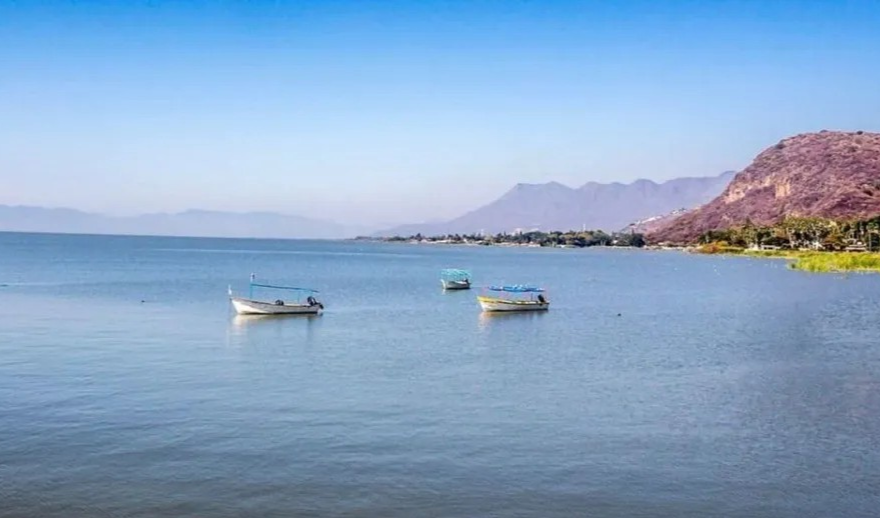

The mayor of Chapala acknowledged that the lake is facing pollution problems that directly impact the Guadalajara Metropolitan Area, since more than 60 percent of the city’s water supply comes from this body of water.
The mayor pointed out that studies and statements from institutions such as the University of Guadalajara have warned about the presence of pollutants in the lake. He added that the problem is not limited to Chapala, as the lake depends on the entire Lerma-Chapala basin, which spans five states, through which water flows carrying varying levels of pollution before reaching the lake.
The process invites companies to consider aspects of engineering, sustainability, environmental impact, and water management efficiency.
Pollution that reaches everywhere
“More than 60 percent of the water consumption in the metropolitan area and Lake Chapala comes from this area. Some universities, such as the University of Guadalajara, have stated that there are some pollutants in the lake. I believe that all of these impacts are significant. Let’s remember that the entire Lerma-Chapala basin depends on Lake Chapala, which encompasses five states through which the water flows, and that it is definitely affected by pollution to varying degrees. This pollution reaches the city. Finally, to answer the question of whether there is an impact,” said Alejandro Aguirre Curiel, mayor of Chapala.
Aguirre Curiel explained that local actions are being taken to prevent direct discharges into the lake.
“Within our means, we are monitoring the situation to ensure there are no direct discharges into the lake and working to eliminate them in those neighborhoods, because there are still neighborhoods without drainage. We are working on this, but we always depend on the support of the National Water Commission, because we rely on other agencies. I believe, as you rightly pointed out, that the support has been fragmented,” said Curiel.
The mayor admitted that institutional efforts for the cleanup of Lake Chapala have been fragmented, and therefore considered it necessary to better coordinate support and projects among municipalities, federal authorities, and organizations involved in the conservation of the country’s main lake.

Source: milenio