
Mexico announced Tuesday that it will implement epidemiological surveillance measures for Ebola, along with the United States and Canada, during the World Cup and urged tourists who have been in contact with infected individuals to self-isolate for 21 days before traveling to the Latin American country.
Mexican Health Secretary David Kershenobich said at the president’s morning press conference that the three host countries of the World Cup agreed to implement coordinated surveillance protocols to ensure the safety of both their residents and the millions of tourists who will visit.
Kershenobich indicated that in Mexico’s case, the protocols will include health screenings at international airports, strengthened procedures for reviewing visitors’ flight itineraries, verification of Ebola exposure factors before boarding aircraft, and continuous monitoring of suspected cases.
“As host country of the 2026 World Cup, Mexico is committed to providing the safest possible environment,” the Secretary stated, assuring that the country “is implementing all necessary isolation measures for any eventuality that may occur.”
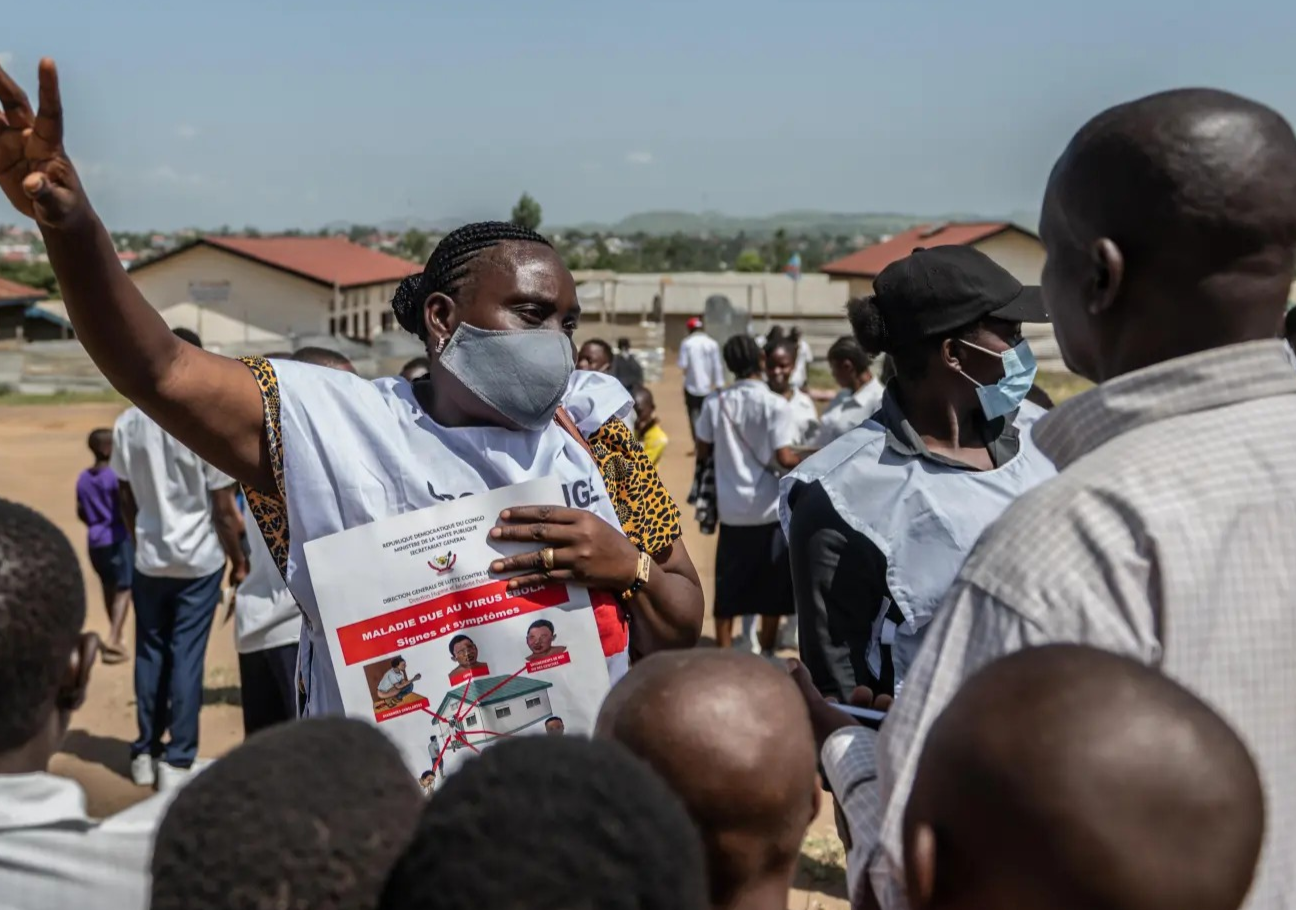
So far, Ebola infections have been reported in the Democratic Republic of Congo, where there are more than 900 suspected cases and more than 220 suspected deaths, and in Uganda, where there are six cases and one death. According to the African Union health agency, 10 African countries are at risk.
As part of the controls, Mexican authorities will require individuals who have been in contact with the disease to undergo 21 days of isolation prior to their travel, the Secretary of Health explained, but denied that this measure would be applied to the Democratic Republic of Congo team, as they are already in isolation in Belgium.
The African team will have its base camp in Houston during the World Cup and will play its first Group K match against Portugal on June 17 in that city, followed by matches against Colombia on June 23 in Guadalajara, Mexico, and against Uzbekistan on June 27 in Atlanta.
The United States required the Congolese team to self-isolate for 21 days before arriving in the US.
Given the spread of the disease, Kershenobich urged the public to avoid traveling to the region where the outbreak has been reported until the public health emergency is lifted, but ruled out imposing any entry restrictions on tourists from African countries.
“Mexico recommends that people who have been in or transited through the Republic of Congo, Uganda, or South Sudan in the last 21 days reschedule their trip for a later date,” he added.
The Director-General of the World Health Organization (WHO), Tedros Adhanom Ghebreyesus, warned yesterday that the Ebola outbreak is “extremely serious and difficult” and urged countries neighboring Congo to act “immediately.”
Ebola is a deadly viral disease transmitted through direct contact with the bodily fluids of infected individuals and can cause hemorrhagic fever and multiple organ failure.
The virus has killed more than 15,000 people in Africa over the past 50 years, with a mortality rate of between 25% and 90%, according to the WHO.

Source: bostonherald