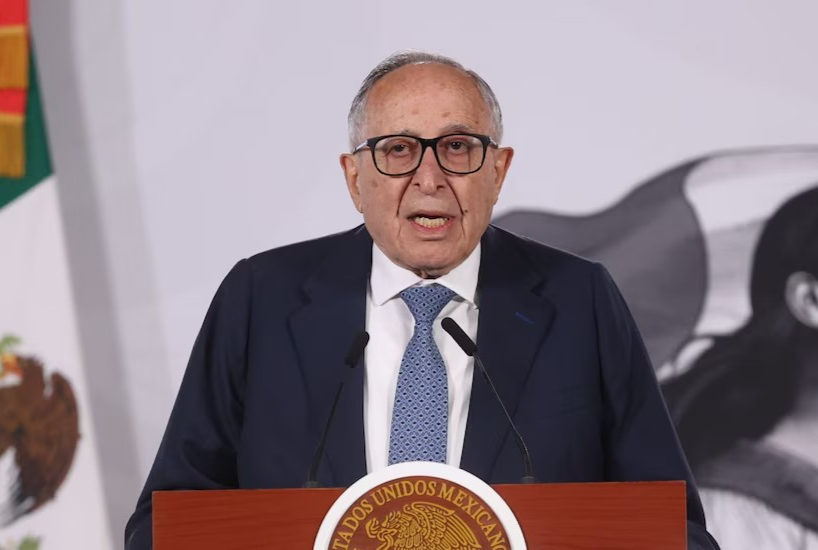

Health Secretary David Kershenobich reported during Mayor Claudia Sheinbaum’s morning press conference that no cases of Ebola have been registered in Mexico and that, so far, the risk of its spread to the country is considered low.
The official explained that the cases detected internationally are concentrated mainly in the Democratic Republic of Congo and Uganda, and that South Sudan is also being monitored due to its regional proximity.
“No cases have been registered in Mexico, and the risk of spread is low at this time. Globally, it is very low for our country,” he emphasized.
He detailed that the World Health Organization is maintaining constant monitoring because the outbreak continues to evolve in the affected African region.
“Yesterday, the Director-General of the World Health Organization commented that the Ebola outbreak continues to evolve and that the situation could worsen before it improves, but that refers primarily to the region of the three countries where it is contained,” he noted.
Given this situation, he indicated that Mexico will strengthen epidemiological surveillance through the General Directorate of Epidemiology and the Ministry of Health, with the goal of acting preventively in the event of any eventuality.
Likewise, the Secretary of Health recommended that people who have been in or traveled through the Democratic Republic of Congo, Uganda, or South Sudan during the last 21 days reconsider or reschedule their trips until the international health emergency is over.
In order to prioritize public health and the management of health risks, prevention and preparedness for any eventuality are crucial.
The Secretary of Health, David Kershenobich, reported during the daily press conference that no cases of Ebola have been registered in Mexico and that the risk to the country is very low.
The federal official announced that health screenings, along with document checks and passenger itineraries, will be implemented at the country’s international airports to detect possible risk factors related to the disease.
He specified that health authorities will also strengthen coordination with airlines and foreign governments to verify potential exposure to the virus before boarding international flights.
Kershenobich reiterated that the Ebola virus is not transmitted through the respiratory tract, as was the case with COVID-19, but rather through direct contact with secretions and bodily fluids of infected individuals.
“Having been in contact with an infected person is very important,” he explained.
Regarding the definition of a suspected case, he indicated that it applies to individuals who, in the 21 days prior to the onset of symptoms, have been in areas with transmission or had contact with a confirmed case. He added that this period corresponds to the virus’s incubation period.
Among the warning signs, he mentioned high fever, sore throat, muscle pain, severe abdominal pain, diarrhea, and bleeding, the latter being considered one of the most relevant characteristics for diagnosing Ebola.
Source: razon