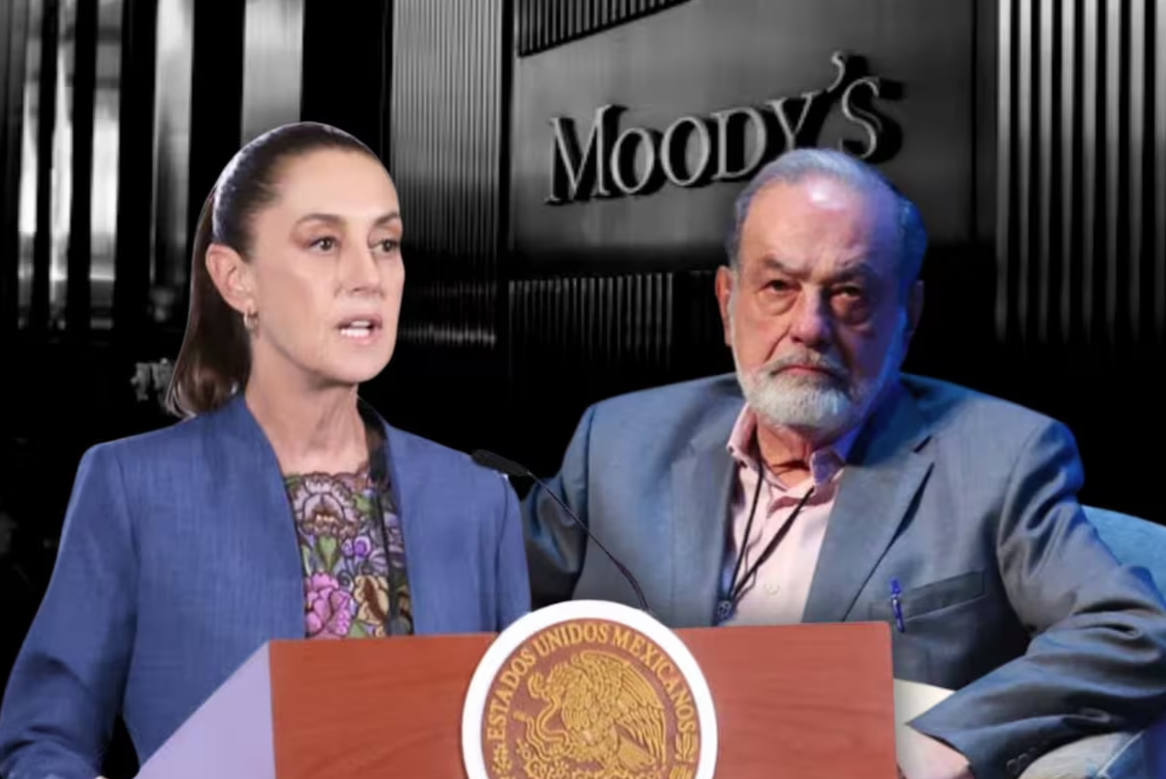

President Claudia Sheinbaum backed businessman Carlos Slim in criticizing Moody’s decision to downgrade Mexico’s credit rating, stating that she agrees with Slim that the evaluation was “irrational” given what the federal government describes as positive economic indicators, including stability, investment, and employment growth.
Sheinbaum said Slim “views the national economy very positively” and emphasized that his opinion carries weight because he constantly monitors Mexico’s economic indicators, not just the performance of his own companies. Her remarks came after Moody’s Ratings downgraded Mexico’s sovereign credit rating from Baa2 to Baa3, while maintaining a stable outlook.
The downgrade has sparked renewed debate about the Mexican economy. While Moody’s warned about risks tied to rigid government spending, a limited revenue base, and continued financial support for Petróleos Mexicanos (Pemex), Sheinbaum and Slim argued that Mexico continues to show positive signs, including foreign direct investment, employment growth, and major private investment announcements.
WHAT DID SHEINBAUM SAY ABOUT MOODY’S RATING?
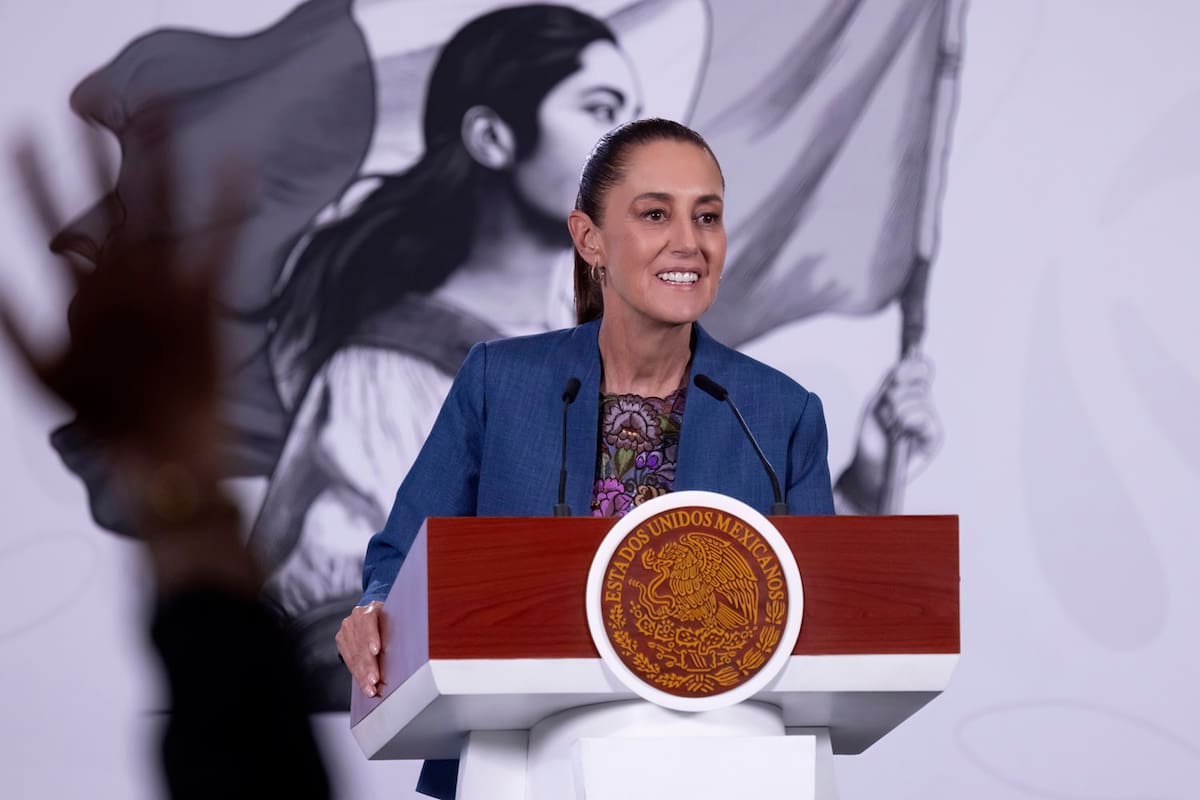
Sheinbaum stated that she agrees with Carlos Slim that Moody’s downgrade was “irrational.” She interpreted Slim’s comments as a sign of confidence in the Mexican economy.
“When he says the rating is ‘ridiculous,’ he means he sees the national economy very positively. He is a man who not only looks at his companies, but constantly reviews the numbers of the Mexican economy and understands what is happening,” the president said.
She also argued that rating agencies rely on outdated indicators and claimed they remain “stuck in the neoliberal period.”
WHAT DID CARLOS SLIM SAY?
Carlos Slim questioned Moody’s decision during his annual conference, arguing that the downgrade does not reflect Mexico’s investment and growth potential.
“There are only two or three people making these decisions, and what they should be looking at is where investment is going. If we manage to continue investing and growing, as expected, then that rating is irrational. That is my opinion,” Slim said.
The honorary chairman of Grupo Carso added that he personally was not worried about the downgrade, although he acknowledged that it could influence investment perception and financing conditions.
“It doesn’t worry me at all, although it has effects. Then people start saying investment will slow down or that there will no longer be access to external financing… nonsense,” he said.
MOODY’S DECISION ON MEXICO’S CREDIT RATING
Moody’s Ratings lowered Mexico’s long-term issuer ratings in both local and foreign currency from Baa2 to Baa3. It also reduced the rating of the Mexican government’s senior unsecured debt and changed the outlook from negative to stable.
Baa3 is still considered investment grade, but it is the lowest level within that category. This means Mexico has not lost investment-grade status, though it now sits closer to speculative-grade territory.
The agency argued that Mexico’s fiscal strength has weakened due to three main factors: rigid spending obligations, limited government revenues, and ongoing financial support for Pemex.
WHY DID MOODY’S LOWER MEXICO’S RATING?
Moody’s said Mexico faces greater vulnerability to fiscal shocks. Among the factors influencing the downgrade are low expected economic growth, budgetary pressures, and repeated support for Pemex.
According to reports cited by financial media, the agency expects economic growth to remain moderate in the short term and gradually return to a trend close to 2%.
In simple terms, Moody’s believes the Mexican government has less financial flexibility to deal with future pressures. The concern is not only current debt levels, but also the government’s ability to stabilize debt if growth remains weak and mandatory spending stays high.
WHAT DATA DID SHEINBAUM USE TO DEFEND THE ECONOMY?
Sheinbaum responded by citing indicators that, in her view, show positive economic conditions.
The president highlighted record foreign direct investment, a positive trade balance, and rising employment. She also noted that between the first quarter of 2025 and the same period in 2026, 552,000 additional people entered employment, bringing the total employed population to 59.6 million.
Another point she emphasized was the reduction in labor poverty. According to the president, that indicator is currently at its lowest level since measurements began in 2005.
Using these figures, Sheinbaum argued that Moody’s evaluation does not fully reflect the current performance of the Mexican economy.
WHAT INVESTMENT DID CARLOS SLIM ANNOUNCE?
During his annual conference, Slim announced that Grupo Carso and América Móvil will invest 5 billion dollars in Mexico this year.
Slim explained that the companies already had an investment plan but decided to make it “more aggressive.”
“We already had an investment plan, but we made it more aggressive,” he said.
The announcement was interpreted by many as a sign of confidence in Mexico’s economy and investment opportunities, contrasting with Moody’s downgrade.
WHAT DOES THIS RATING MEAN FOR MEXICO?
A sovereign credit rating serves as a reference point for investors. It helps measure the risk of lending money to a country or investing in its public debt instruments.
When a rating agency lowers a country’s rating, it can send a signal of greater caution to financial markets. This does not automatically mean the country loses access to financing, but it can influence perceptions of risk and borrowing costs.
In Mexico’s case, the country still maintains investment-grade status. However, the downgrade to Baa3 leaves less room to absorb additional fiscal or economic pressures.
WHY DOES SUPPORT FOR PEMEX MATTER?
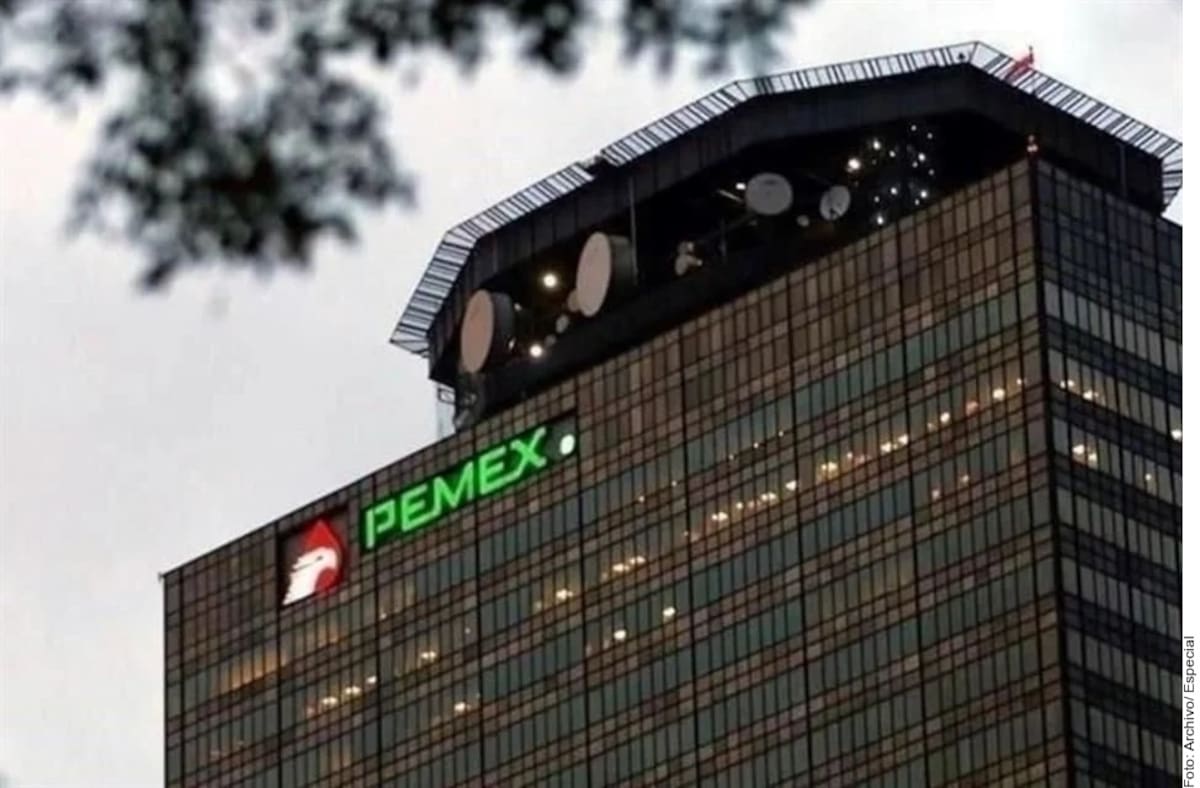
Pemex was one of the main concerns cited by Moody’s. The agency believes that continuous financial support for the state oil company places additional pressure on public finances.
This happens because when Pemex requires government assistance, public resources are used to cover financial obligations, debt payments, or operational needs.
For Moody’s, this support limits the government’s ability to stabilize debt levels in an environment of slow economic growth. For the federal government, however, Pemex is part of an energy strategy intended to preserve sovereignty and national production.
SLIM’S COMMENTS CARRY POLITICAL AND ECONOMIC WEIGHT
Carlos Slim is considered one of the most influential businessmen in Mexico and Latin America. For that reason, his rejection of Moody’s decision was highlighted by Sheinbaum as an important opinion in the broader economic debate.
The president said Slim not only follows the performance of his companies, but also monitors Mexico’s broader economic indicators. She added: “It’s good that engineer Slim said it, because his opinion carries weight both in Mexico and internationally.”
WHAT HAPPENS NEXT AFTER THE MOODY’S DOWNGRADE?
Following the downgrade, attention will likely focus on three areas: economic growth, the government’s fiscal situation, and continued financial support for Pemex.
It will also be important to watch whether announced private investments materialize and whether the government can increase revenues, contain budget pressures, and maintain macroeconomic stability.
For now, Sheinbaum’s administration maintains that it disagrees with Moody’s assessment and believes current employment, investment, and labor poverty figures present a more favorable picture. Moody’s, meanwhile, maintains that although Mexico retains investment-grade status, it now has less fiscal flexibility in a period of moderate growth.
Source: elimparcial