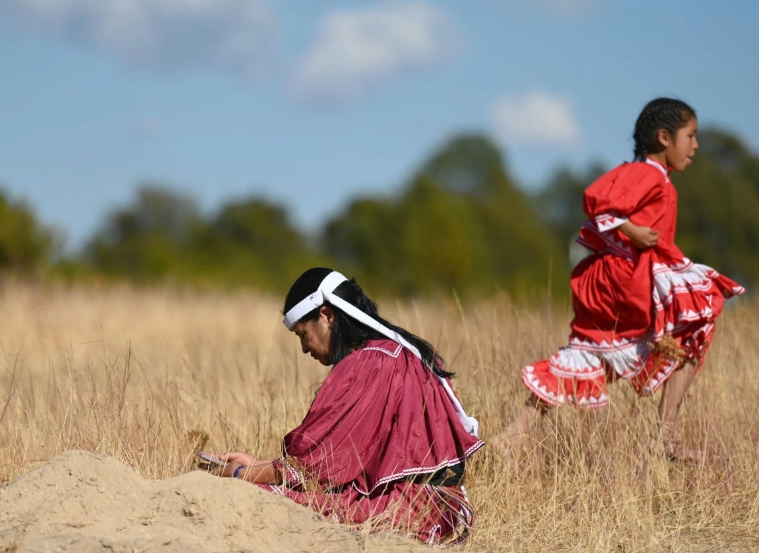

“We are here because of the war,” declares a 12-year-old girl with deep sadness. Her family has been forcibly displaced to Parral due to an organized crime offensive against her community in the Sierra Tarahumara.
While the disputes between political parties and the federal and state governments dominate the headlines, internal forced displacement continues to worsen in Chihuahua. Between 2021 and 2025, the number of displaced people tripled, skyrocketing from 500 to 1,500 individuals. Despite the existence of 60 open investigation files regarding this issue, impunity persists. To document and bring visibility to this severe crisis, the Red TDT, Peace Brigades International, UNHCR (Acnur), and several Chihuahua-based human rights organizations carried out a civil observation mission from May 26 to 29.
The mission interviewed 200 displaced victims originally from the municipalities of Guadalupe y Calvo, Guazapares, and Uruachi in Chihuahua, as well as Tamazula in Durango and Badirahuato in Sinaloa. These individuals have sought refuge in Parral, Delicias, and the state capital.
A war of conquest and dispossession
The reality in this mountain range is not just a process of colonialism, but a true war of conquest. This continuum of violence strips people of their lands, homes, livestock, heritage, natural resources, and agrarian rights—and often, their lives. In some cases, people are even subjected to forced labor, echoing practices from 500 years ago.
Children bear the heaviest burden. Violence abruptly shatters their peaceful daily lives, tears their families apart, and strips away their freedom to grow up in their natural surroundings. Forced into strange and hostile urban environments, they frequently face barriers to school enrollment and suffer harassment for being different. They ultimately mirror the insecurity and profound grief visible in their parents.
Adults deeply miss their quiet lives back home, where they produced everything they ate and only occasionally sold an animal to purchase supplies in the city. They rarely fell ill because they lived without stress, relying mostly on herbs and home remedies. They supported one another and gathered frequently for community celebrations.
Displacement strips them of all of this. Their traditional knowledge and rural skills hold no value in the city, forcing them into unfamiliar trades such as night watchmen, construction workers, or domestic service. The noise, pollution, and frantic pace of urban life make them sick. Many fall into depression over the impossibility of returning, as their homes have been looted or destroyed, and criminals now control their towns.
The silent “narco-agrarian reform”
A silent narco-agrarian reform is unfolding across several communal lands (ejidos) in the Sierra. Criminals arrive at an ejido and begin buying up land rights by hook or by crook to legally establish themselves as ejidatarios. Once inside, they impose their own communal authorities to overexploit the forests, clear land for illicit crops, and forge contracts with mining companies.
If the original ejidatarios resist, they are either executed or forced to flee, finalizing the theft of their territories and rights. Notably, every single community of origin among the displaced population overlaps with ongoing logging or mining interests.
In other instances, the criminal incursions are sudden and devastating. Cartels surround communities and issue direct ultimatums for residents to abandon their ranches and homes. Families are forced to hide their youth to protect them from forced recruitment by hitmen. This is followed by indiscriminate shootouts to instill terror. Recently, criminals have escalated their tactics by using drones to bomb houses and corrals—igniting fires, injuring residents, and killing livestock.
An absent State response
This war of conquest and displacement has yet to face an effective counteroffensive from the State. Displaced families report that when the National Guard, the Army, or the State Police arrive, the criminals simply hide, only to reemerge the moment authorities leave. Local municipal police forces are largely colluded with organized crime, and community defense forces do not exist in the region. There is zero preventive action from State institutions to halt the violence that kills and displaces.
Furthermore, state support for displaced individuals at their destinations remains woefully inadequate. Civil society organizations and churches are the first to provide aid. While municipal authorities offer temporary shelters and food pantry staples, they are consistently overwhelmed by the sheer scale of the need.
There is no coordinated effort among the different levels of government to guarantee the displaced population’s basic rights to work, housing, healthcare, and education. In fact, this crisis is completely absent from weekly regional security meetings.
Demands for a coordinated solution
Faced with this negligence, the displaced communities and the civil observation mission are putting forward two fundamental demands:
- A Unified Task Force: The immediate creation of a dedicated space requiring the mandatory participation of municipal, state, and federal authorities alongside displaced communities to organize and coordinate comprehensive aid for victims.
- A Safe Return Strategy: The development of a long-term strategy to establish the security and structural conditions necessary to guarantee their fundamental right to a dignified, peaceful return to their lands.
This remains Chihuahua’s invisible war—one intensely suffered by those at the bottom, and completely ignored by those at the top.
Source: jornada