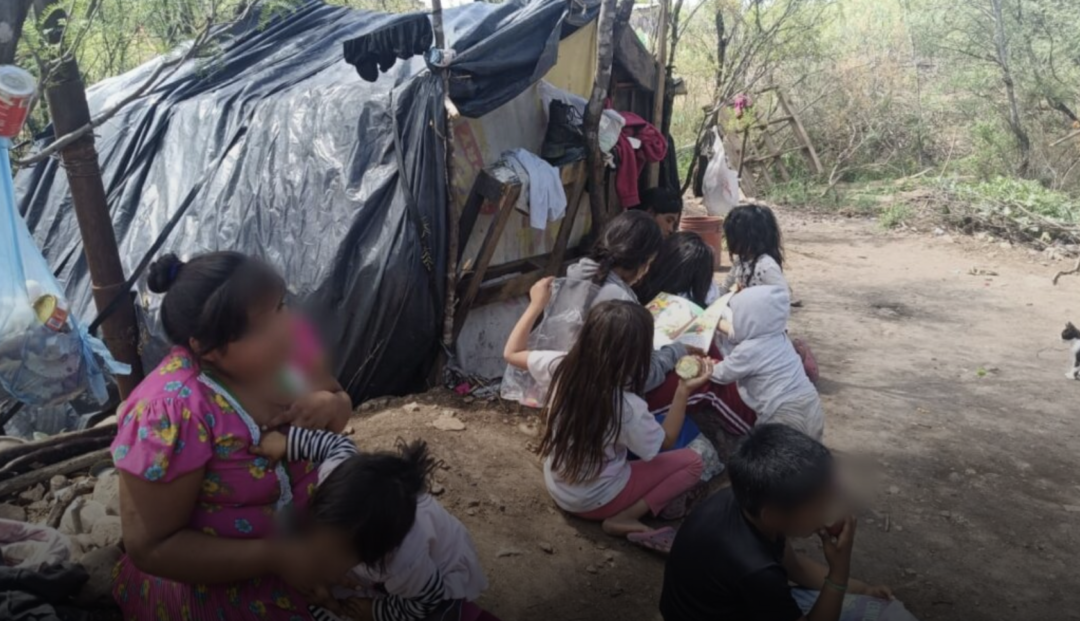

Seven Ódami families, originally from Guadalupe y Calvo, are surviving under plastic tarps next to a creek and railroad tracks in the Los Leones neighborhood, near the city of Chihuahua’s airport. They have no water, electricity, or government assistance.
Three years ago, the group of families, made up of 28 people, arrived in the state capital fleeing the violence affecting their community of origin. Without identification documents, strong support networks, and still living with fear, they were seeking peace but instead encountered exclusion, discrimination, and extreme poverty.
“We left because we could hear the gunshots very close by, the bad people were shooting, and our relatives told us to leave with the children because the bad people were coming,” said a woman of approximately 55 years old who leads one of the family groups.
Like many others, she left without identification documents. They left behind their land, animals, crops, corn, beans, fruit trees, peaches, oranges, and belongings, with the sole hope of protecting the children. To this day, in addition to being away from home, they say that one of the hardest things has been adapting to the noise of the city.
When they arrived in the city, they found a place to live. They paid 600 pesos per family in rent, with all the families living together. However, heavy rains flooded their homes and destroyed their blankets, clothing, and important documents.

The property owner relocated them, but the situation soon became unsustainable. According to their testimonies, the landlord had problems with alcohol and, after being hospitalized by his sister, returned and ordered them to leave immediately. He told them he would sell the property.
For the past three weeks, these families have been living outdoors in an improvised camp next to a creek and railroad tracks. Their “home” is made of black plastic, sticks, and ropes, barely held together enough to withstand the wind. They have no mattresses, beds, bathrooms, or running water; they obtain water only from a nearby outlet. They cook outdoors, and their belongings are exposed to the elements.
There are five plastic shelters housing a total of 28 people. The area is dangerous, especially at night. The howling of coyotes and the presence of animals, particularly foxes that approach looking for food, as well as the appearance of snakes, are part of their daily lives. They also endure extreme heat and rain without protection or access to electricity.
Despite attempts to integrate the children and young people into the local education system, several have been rejected because of their age or because they do not speak Spanish, as their native language is Ódami. This linguistic and cultural barrier has kept them outside any institutional support.
So far, no municipal, state, or federal authority, nor any civil organization, has come to provide assistance. The women in the group, visibly exhausted and concerned, carry the responsibility of caring for the children on their own, as there is only one 23-year-old young man among all of them.
This situation highlights not only the forced displacement experienced by many Indigenous communities in the country, but also the abandonment by the State and the discrimination they face when arriving in cities. The Ódami families who fled violence are now facing another form of violence: indifference and impunity.

Source: laverdadjuarez