
President Claudia Sheinbaum warned during La Mañanera on June 16 that Mexico could decline the urgent detention request for extradition purposes against Rubén Rocha if the United States government failed to provide supporting evidence.
During the conference, the president stated that, without such elements, there was no legal deadline requiring authorities to execute the arrest.
Sheinbaum clarified that the request, submitted by an office of the United States Department of Justice, did not correspond to a formal extradition proceeding, but rather to a different legal mechanism: an urgent detention request.
The president also emphasized that the matter remained in a preliminary stage and that any future determination would depend on the documentation eventually presented by U.S. authorities.
Sheinbaum maintains that, without evidentiary elements, there is no legal deadline that would require the execution of the arrest resulting from the request made by the United States Department of Justice.
What Evidence Would the United States Need to Provide to Request Rocha Moya’s Extradition?
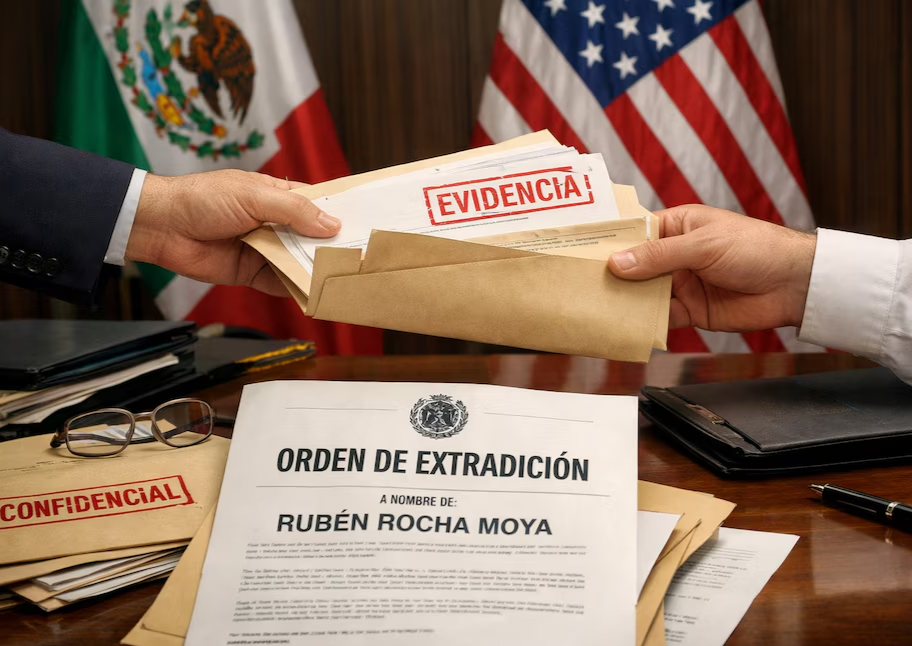
According to statements made during the same Mañanera conference, in order to formally request the extradition of Rocha Moya, the United States must submit specific evidence and documents, which are defined both in the Extradition Treaty between Mexico and the United States and in Mexican law.
Evidence and Documents That Must Be Submitted by the United States
- A certified copy of the arrest warrant issued by a U.S. judge.
- Evidence justifying the arrest and prosecution of Rocha Moya. It must be sufficient under Mexican law to formally charge him.
- A statement of the alleged facts, meaning a clear account of the acts for which he is being accused.
- Legal texts defining the alleged crimes under U.S. law.
- Identification information for Rocha Moya and, if possible, information regarding his location.
- Spanish translations of all documents, duly legalized by the U.S. Department of State and in accordance with Mexican law.
- The request must be submitted through diplomatic channels.
Process and Criteria
If U.S. authorities believe there is a risk of flight or destruction of evidence, they may first request a provisional arrest for extradition purposes. In that case, the United States has 60 days to submit the complete case file. If it fails to provide the required documents and evidence within that period, Rocha Moya must be released.
Mexico reviews whether the evidence meets Mexican legal standards. Isolated testimonies or uncorroborated documents (for example, an alleged “narco-payroll”) are not sufficient to formally charge a person.
The Attorney General’s Office (FGR) and the Ministry of Foreign Affairs (SRE) may request additional evidence from the United States if they determine that the initial request is not properly substantiated or lacks urgency.
Legal Basis
Articles 10 and 11 of the bilateral treaty and Article 17 of Mexico’s Extradition Law establish these requirements.
Extradition may only proceed if the evidence would allow, under Mexican law, the prosecution of the requested individual.
Who Is Rubén Rocha Moya and Why Is He Wanted by U.S. Authorities?
Rubén Rocha Moya is a Mexican politician born on June 15, 1949, in Badiraguato, Sinaloa.
A member of Morena, he served as governor of Sinaloa from November 1, 2021, until May 2, 2026, when he stepped down after being identified by U.S. authorities in a criminal investigation.
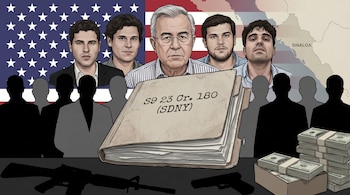
U.S. authorities accuse him of maintaining alleged ties to the Sinaloa Cartel, particularly with the faction known as “Los Chapitos,” led by the sons of Joaquín “El Chapo” Guzmán.
According to the U.S. Department of Justice, Rocha Moya and other officials allegedly conspired with the cartel to facilitate the importation of drugs into the United States in exchange for bribes and political support.
The specific allegations include:
- Conspiracy to import narcotics (fentanyl, heroin, cocaine, and methamphetamine).
- Possession of and conspiracy to possess machine guns and explosive devices.
- Protecting cartel leaders, warning them about operations, and providing confidential information from Mexican law enforcement agencies.
- Receiving support from “Los Chapitos” during his electoral campaign, including intimidation and the kidnapping of rivals.
The New York Prosecutor’s Office maintains that the alleged offenses carry minimum sentences of 40 years and could result in life imprisonment.
Rocha Moya rejects the accusations and claims they constitute a political attack and interference against Mexico’s sovereignty and the Morena movement.
Source: infobae