
f someone had told me in 1998, when I was training on the A320, that 28 years later I would be enjoying a guided tour of Airbus’s plant in Querétaro, I would not have believed it. And before I continue, let me say something many of you already know: ever since I started flying, this aircraft manufacturer has held a very special place in my heart.
And I say this with complete conviction: Airbus is a company that thinks and acts holistically, something that is extremely important today, viewing aviation as a complete ecosystem.
Let me explain. Following a recent expansion, Airbus’s Communications team invited a group of people to visit their facility in Querétaro, and I was fortunate enough to be included. Of course, I want to share the experience with you.
Inside Airbus Querétaro
At this plant, Airbus manufactures doors and emergency exit windows for aircraft in the A320/A321 family, both passenger and cargo versions, as well as components for helicopters.
The facility is designed like a rally course, meaning visitors can follow the entire manufacturing process from start to finish. As soon as you enter, you begin learning how the products are built from the ground up.
As you move through the building, you can observe each step in the construction of a door’s “skeleton” until its outer “skin” is added. Once completed and after passing all quality inspections and approvals, the doors are sent to an Airbus facility in Germany, where the “arteries” are installed.
These include all the wiring and systems required for operating the doors and emergency exit windows during both normal and emergency situations. Afterward, the doors are completed and installed on aircraft destined for commercial airlines that are already waiting to receive them.
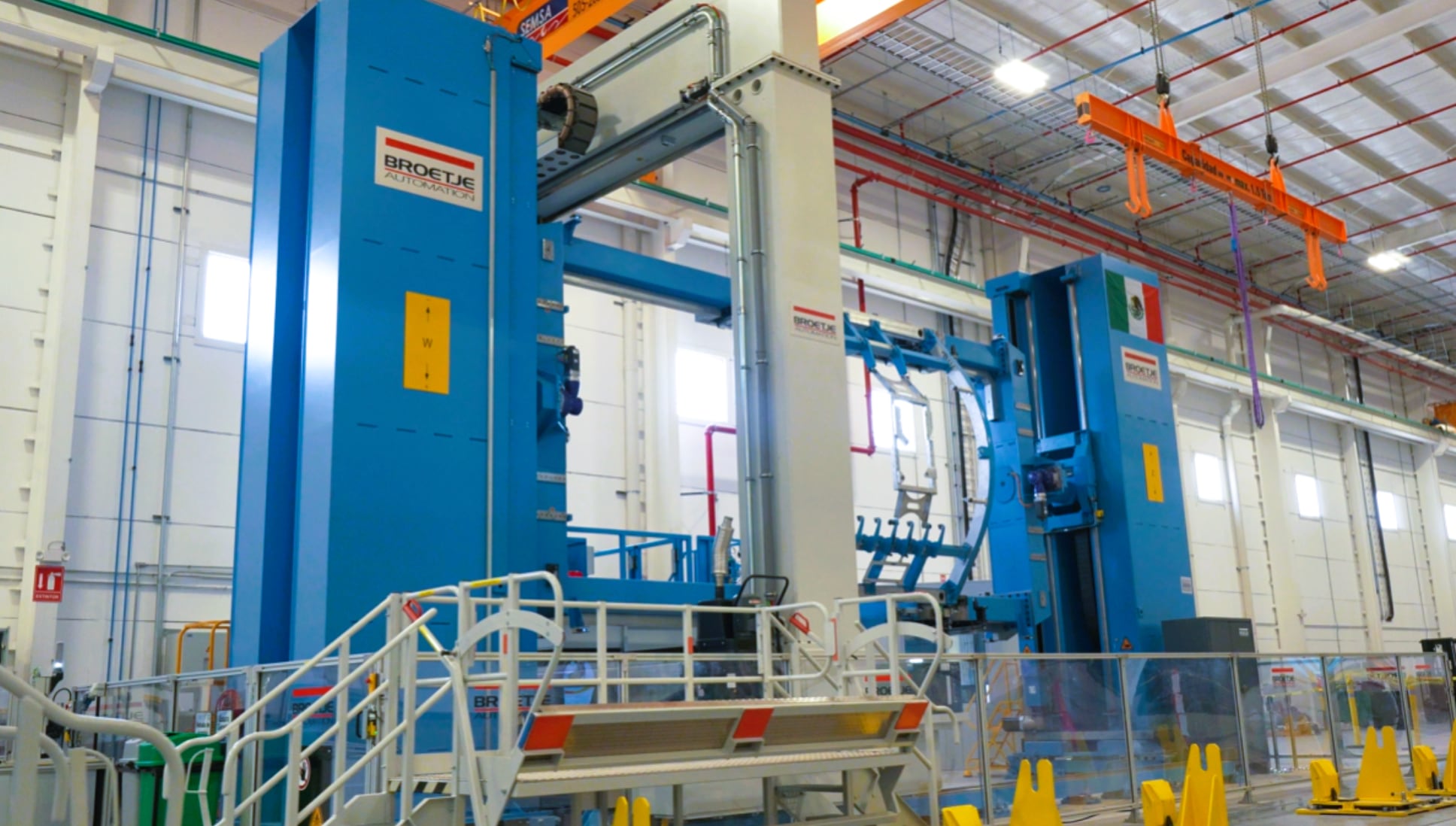
The expansion of the Querétaro facility will allow these doors to be produced more quickly while maintaining the same level of quality. Those of us who work in aviation understand that any irregularity can end in tragedy, which is why quality controls are exceptionally strict. I should point out that a new machine acquired as part of the expansion helps meet the required standards.
Growth and Expansion
Airbus Querétaro began operations in 2013 with a facility of just over 10,000 square meters, producing doors and components for helicopters and aircraft.
Today, following the expansion, the site now covers more than 15,000 square meters of infrastructure.
But that is not all.
As many of you know, I am observant and naturally curious. One thing that immediately caught my attention was the presence of a lactation room within the administrative offices. Naturally, I had to ask: How many women work at Airbus Querétaro?
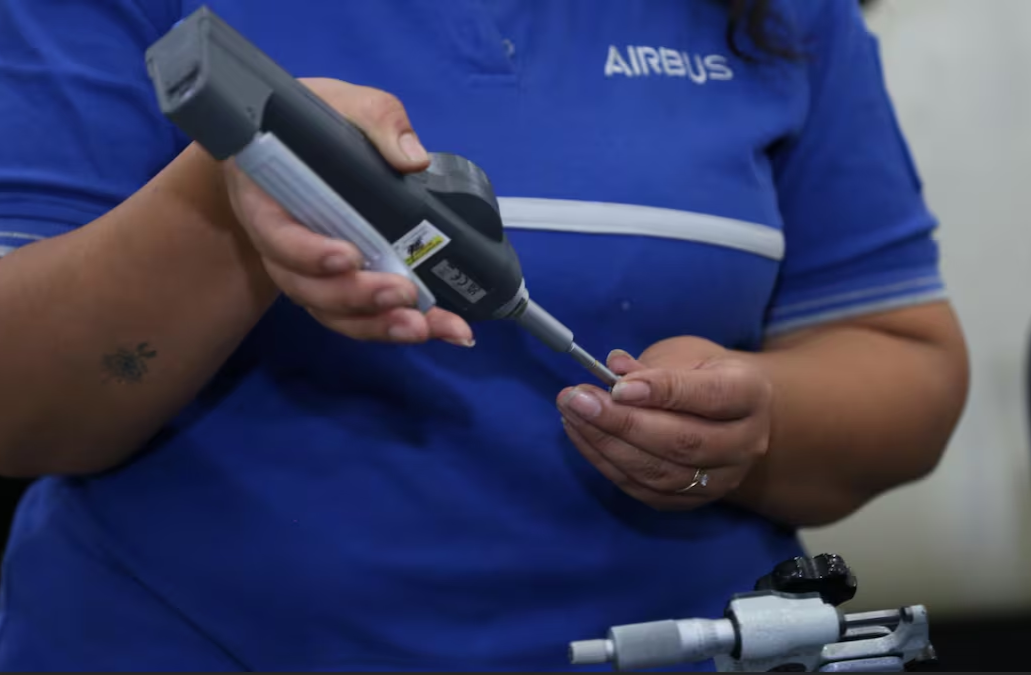
I can tell you that women are not only present in administrative roles. During the tour, I saw many women performing highly specialized operational tasks throughout the production process.
In other words, aviation is becoming a genuine professional development opportunity for women.
Women in Aviation
These types of jobs have traditionally been dominated by men, but Airbus has opened its doors to women, integrating and supporting them through initiatives such as lactation rooms, which are essential for the well-being of working mothers.
Currently, women make up 32% of the workforce at Airbus Querétaro, a notably high percentage for Mexico’s aviation industry.
That is why I began by mentioning my personal admiration for Airbus.
Over my career, I have flown on aircraft from different manufacturers and had to learn how to work aboard every one of them. You come to know each aircraft thoroughly, including its strengths and weaknesses.
As a cabin crew member, you appreciate when space is used efficiently and allows you to work comfortably.
That was something Airbus aircraft consistently achieved. Their galleys were perfectly designed for airline needs, practical yet comfortable for daily operations.
The same philosophy is reflected in the design of the Airbus plant itself.
A Thoughtfully Designed Manufacturing Process
During the tour, it became evident that Airbus applies careful planning even to the production process.
To manufacture the doors, special cranes transport them from the moment they are little more than pieces of aluminum. The process reminded me of the door transportation system featured in the movie Monsters, Inc.
The doors travel along rails and are immersed in specialized tanks that remove impurities. They continue moving through the facility until the final product is completed.
You literally see a shiny aluminum sheet transformed into a matte green aircraft door that will later be painted according to the specifications of the airline purchasing the aircraft.
While complying with all safety and security requirements, I was able to move throughout the plant and observe women working in manufacturing, quality control, and administrative positions.
I found this particularly gratifying because for years many of us have advocated for greater opportunities for women in the industry, and Airbus has clearly embraced that vision.
Training Future Aviation Professionals
The company’s commitment extends beyond support for motherhood and women’s inclusion.
Airbus operates its own training school, where individuals can first learn the theory and then gain practical experience before joining the workforce.
The company’s goal is to reach 800 jobs by 2030, making it an excellent option for anyone interested in building a career in aviation.
Environmental Responsibility
This has become a recurring theme in my visits to industrial facilities, and I always pay attention to it.
Airbus Querétaro has solar panels, recycling systems, and waste-management programs designed to reduce environmental impact and operate in a more sustainable manner.
There is no doubt that growth and job creation can occur without compromising the environment or disregarding local communities.
Airbus approaches the management of its facility with a broad perspective. It is not simply about manufacturing doors on an assembly line; it is about creating a center of development for the people of Querétaro, opening opportunities for women, supporting long-term careers, and remaining environmentally responsible.

Caring for Employees
If all of that were not enough, another aspect that matters greatly to me is how companies treat their employees.
The Airbus team invited us to eat in the employee cafeteria and experience firsthand what workers eat on a daily basis.
The company provides balanced meals designed to combat obesity and illnesses associated with poor eating habits.
Meals include soup, salad, a main course, and fruit for dessert. Employees can choose between sweetened fruit water, reduced-sugar fruit water, or sugar-free fruit infusions.
Why focus on the food?
Because it matters.
The French philosophy is evident here. Eating is not simply about filling your stomach until you feel full. It is about eating in a balanced way and ensuring food nourishes the body while minimizing reliance on junk food.
As a result, workers remain healthier, better nourished, and more productive.
In France, school cafeterias are considered an essential component of education and public health, while also encouraging social interaction and an appreciation for food.
Beyond numbers and statistics, employees are the soul of any company. When businesses support their people through parental care, nutrition, and education, they create the foundation for long-term success.
Looking Toward the Future
With the new expansion in Querétaro, Airbus aims to help the manufacturer deliver an average of 70 to 75 narrow-body aircraft per month, specifically from the Airbus A320/A321 family.
These aircraft have become the industry’s workhorses and the preferred choice for many airlines around the world.
I would like to thank Arturo Barreira, President of Airbus Latin America and the Caribbean, and Guillaume Leprince, Managing Director of Airbus Helicopters Mexico, for their hospitality.
It was immensely rewarding to once again confirm that my admiration for Airbus is well founded. This is an aircraft manufacturer that thinks holistically, organically, and always with an eye on the future.
Dear readers, the next time you board an aircraft from the A320/A321 family, remember that its doors and emergency exit windows carry the heart and soul of Mexico.
Source: sdpnoticias