
48th Gay Pride March (LGBTTTIQAP+) in Mexico City
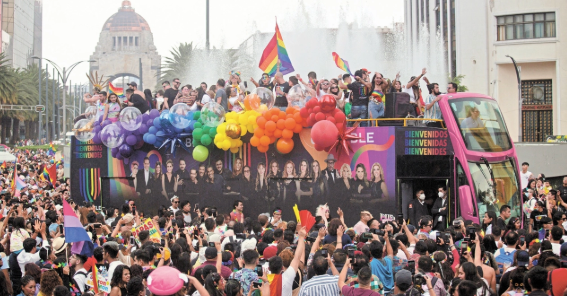
The 48th edition of the Gay Pride March (LGBTTTIQAP+) in Mexico City already has a date: it will take place on June 27 and will march from the Ángel de la Independencia to the Zócalo in Mexico City.
For 2026, the theme of the march is: “Before the eyes of the world: my struggle is your struggle! Equality, peace, and solidarity!”
What time does the Gay Pride March begin?
According to the organizers, participants are expected to gather at the historic monument on Paseo de la Reforma at 10:00 a.m. However, different groups may arrive earlier or begin marching slightly later than the scheduled time.
When is International LGBTTTIQAP+ Pride Day?
The official commemoration takes place on June 28, a date dedicated to highlighting the diversity of lifestyles, beliefs, preferences, ways of loving, and ways of being, while also recognizing the ongoing fight for the rights that all people deserve as human beings.
However, in Mexico City, the march will take place on Saturday, June 27, because, as is customary, the celebration is held on the last weekend of Pride Month.
LGBTTTIQAP+ March and the FIFA World Cup
In 2026, Mexico City is under global attention as one of the host cities of the FIFA World Cup, an event that inevitably brings discussions about human rights, inclusion, safety, public space, and social justice to the forefront.
In this context, the organizers of the LGBTTTIQAP+ Pride March stated that “it is essential to reflect on and question what kind of city and country is being presented to the world, while also acknowledging the inequalities, violence, and exclusion that millions of historically discriminated people continue to face.”
Due to concerns that the march might not be allowed to enter the Zócalo, the city government clarified that participants will indeed be permitted to enter and walk into the Zócalo on June 27.
The Ministry of Government of Mexico City (Secgob) and the Executive Secretariat of the Unit for Attention to Sexual Diversity (Seundadis) explained that agreements were reached through dialogue between authorities, activists, organizations, and community groups to ensure the orderly development of the event.
As a result, all participants in the Pride March will be able to walk to the Zócalo without inconvenience and access the area where the FIFA Fan Festival is taking place.
The only change compared to previous years is that, as part of the agreements reached, the main closing stage will not be installed in the Zócalo. Instead, it will be located on Eje Central Lázaro Cárdenas, near the Palacio de Bellas Artes, where the artistic and musical program of the day will be held.
Likewise, participating vehicles and motorized units will continue along Paseo de la Reforma and conclude their route at Reforma Norte, before Avenida Juárez, in accordance with the operational and safety measures established for the event.
The “Silent Section”
The LGBTTTIQAP+ March will once again include the so-called “Silent Section,” a deeply symbolic space dedicated to honoring the memory of LGBTQ+ individuals who have been victims of hate crimes, disappearances, violence, discrimination, and institutional or social neglect.
Organizers emphasized that the “Silent Section” also serves as a protest against the violence that continues to take lives and violate rights in Mexico.
Where will the “Silent Section” be located?
As in previous editions, it will extend from the Glorieta de las Mujeres que Luchan to the +43 Memorial and the recently installed “Aquí Nadie Olvida” memorial.
What does LGBTTTIQAP+ mean?
L – Lesbian: A woman who is emotionally and/or sexually attracted to other women.
G – Gay: A man who is emotionally and/or sexually attracted to other men (sometimes used as a broader term for homosexual individuals).
B – Bisexual: A person who is attracted to more than one gender.
T – Transgender: A person whose gender identity does not match the sex assigned at birth.
T – Transsexual: A person who has undergone physical and/or hormonal transition to align their body with their gender identity.
T – Transvestite (Travesti): A person who expresses themselves through a gender identity or appearance different from the one assigned at birth (depending on cultural context, they may or may not identify as transgender).
I – Intersex: A person born with biological sex characteristics that do not fit typical definitions of male or female.
Q – Queer: A term that encompasses nonconforming or fluid identities regarding sexuality and gender, often reclaimed as a personal and political identity.
A – Asexual: A person who does not experience sexual attraction (although they may experience romantic, emotional, or other forms of attraction). In some contexts, the letter may also represent allies.
P – Pansexual: A person who is emotionally and/or sexually attracted to others regardless of sex assigned at birth, gender, gender identity, sexual orientation, or gender roles.
+ – Represents other identities not included in the previous initials, such as agender, non-binary, demisexual, and others.
It is worth noting that non-binary people are those whose gender identity does not fit within the traditional male/female binary.
Source: eleconomista