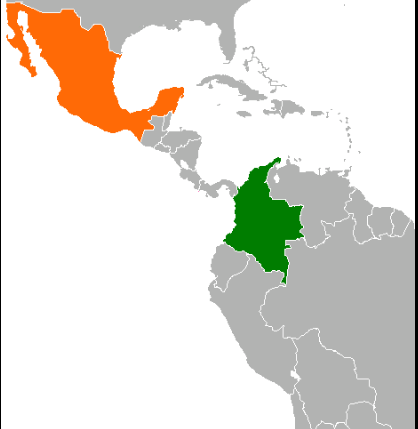

As I finish this column, all indications are that Colombia will have elected the far-right Abelardo de la Espriella as president. A wealthy private lawyer who promises to be a mix of Trump’s kleptocracy, Milei’s economic ineptitude, Bolsonaro’s racist nationalism, and Bukele’s mass incarceration.
The question is why. The outgoing left-wing government, led by President Gustavo Petro, managed to lift millions of Colombians out of poverty with labor and pension reforms and increases to the minimum wage. One would have expected such results to resonate electorally.
Understanding what happened is essential for Mexico, one of the few remaining left-wing governments in Latin America, and one that has gained much of its popularity precisely because of reductions in poverty.
It is not enough to argue, as is done in certain Morena circles, that Petro lost because the traditional media, imperialism, and conservative elites were against him. They were, but in politics, playing the victim is useless. One must win despite everything.
In retrospect, it’s clear that Petro’s most fundamental mistake was that he never understood how he came to power. The Colombian left came to power with a coalition of fragile allies, many of them conservative. Something similar happened with Morena, which won its majority in alliance with the Green Party, a political group that is not progressive and has already been accused of betrayal on several occasions.
However, instead of understanding and accepting the limitations of such an alliance—or strategically building another—Petro tried to govern by force. When some of his reforms were rejected, as was to be expected given the temperament of his allies, he reacted impetuously, demanding the resignation of his cabinet and declaring states of emergency.
Petro’s methods were celebrated by the left and undoubtedly earned him some successes (such as the wage increase he achieved through popular mobilizations), but they were not appreciated by the voter who would ultimately determine the outcome of yesterday’s election: the undecided centrist.
Among the voters Petro needed to win over, a deep rejection of him emerged, labeling him populist and unprofessional. De la Espriella’s victory is explained more by an anti-Petro vote than by one in favor of the far right.
Petro’s story matters because in Mexico, the left-wing factions of Morena also believe their ideology is supported by the majority. However, the reality is that what brought Morena to power was an ideologically diverse and essentially pragmatic political group. If this isn’t understood, Morena risks repeating Petro’s mistake: aligning itself with the voters it needs most.
This would be exacerbated if Morena doesn’t choose good candidates, as happened in Colombia. The Colombian left was confident that the government machinery would deliver them victory, and therefore chose a terse and unappealing candidate like Iván Cepeda. Cepeda never challenged De la Espriella, nor did he manage to cultivate a vibrant social media presence.
It’s time for Morena to open its eyes. You can’t govern from the left with allies who aren’t left-wing. And no electoral machine is invincible. If Morena wants to govern from the left, it must forge left-wing alliances and stop feeding the Green Party, whether out of convenience or laziness.
The content of this text is published by its author in her capacity as an independent professional and does not reflect the opinions, policies, or positions she holds in any other capacity.
Source: milenio