
Jalisco Government Recommends Tap Water Be Used Only for Household Purposes, Not for Drinking
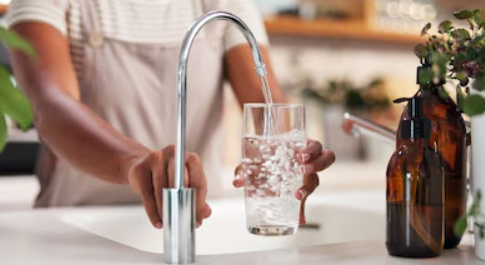
The Government of Jalisco has advised residents that tap water supplied to homes should be used only for household purposes and should not be consumed as drinking water.
Jalisco Health Secretary Héctor Pérez Gómez stated that the state government is monitoring water quality throughout the Guadalajara Metropolitan Area following numerous public reports of water with unusual color and odor.
“We want to share practical and very specific recommendations for using water at home in order to reduce risks. As has been the case for many years, in the Guadalajara Metropolitan Area the preventive recommendation for families is not to use tap water for drinking or preparing food. For those purposes, bottled or purified water has been used for decades,” he said during a press conference on Monday, July 6.
The Jalisco health official also recommended using bottled purified water for brushing teeth.
Meanwhile, tap water supplied to homes should only be used for washing dishes, laundry, and other household cleaning tasks, provided it does not have discoloration or a strong odor. Running water may also be used for washing hands, he added.
What Do We Know About the “Cloudy” Water Reaching Homes in Guadalajara?
Last May, researchers from the University of Guadalajara warned about the quality of the water reaching homes in the Guadalajara Metropolitan Area after residents reported cloudy, foul-smelling water and the presence of microorganisms in at least 150 neighborhoods.
According to the head of the Laboratory for Sustainable Architecture and Urbanism Technologies at the university, the problem appears to result from a chain of factors beginning at water sources such as Lake Chapala and the Calderón Dam.
The water then passes through canals contaminated by wastewater discharges, while the problem is further aggravated by the limited capacity of water treatment plants and an aging distribution network.
Specialists indicated that the cloudy water reaching homes could be contaminated by industrial and urban wastewater discharges.
Another contributing factor is the expansion of residential developments that discharge wastewater into canals without adequate treatment.
According to the director of the Institute of Limnology and Sustainability at the university, the contaminated water could represent a public health risk if consumed by residents.
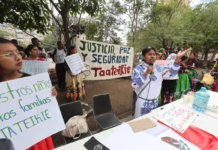
Meanwhile, on July 1, legislators from the parliamentary groups of Hagamos, Futuro, Morena, and the Labor Party (PT), together with civil society organizations, academics, and employees of the Intermunicipal Water Services System (SIAPA), called for greater transparency and immediate action to address water quality issues in Guadalajara.
During the meeting, citizens presented the results of a community water sampling project conducted between March and June 2026 in Guadalajara, Zapopan, San Pedro Tlaquepaque, Tonalá, and Tlajomulco de Zúñiga.
The water analyses showed a widespread absence of residual chlorine, along with the presence of bacteria and metals such as lead, mercury, and aluminum, as well as nitrates and nitrites within the water distribution system.
The neighborhoods where contaminants were identified included:
Guadalajara / Zapopan: Americana, San Rafael, Del Fresno, Santa Teresita, Mirador del Sol, Jardines del Valle, Arcos de Guadalupe, and Belisario Domínguez.
Tonalá / Tlajomulco: Alameda Zalatitán, El Sauce, and Santa Ana Tepetitlán.
What Actions Has the Jalisco Government Taken Regarding Contaminated Water in Guadalajara?
During Monday’s press conference, led by José Antonio Muñoz, head of COPRISJAL, together with the Jalisco Ministry of Health, Health Secretary Héctor Pérez Gómez stated that reports of discolored or foul-smelling water had originated from approximately 200 neighborhoods out of the 2,000 neighborhoods located throughout the Guadalajara Metropolitan Area.
He also noted that health surveillance data had been reviewed to determine whether there had been an increase in gastrointestinal illnesses or cases of conjunctivitis related to the use of poor-quality water in the region. According to the available data, no such increase had been detected.
The Health Secretary stated that the Government of Jalisco has already established 30 specific measures aimed at permanently improving the water supply system and verifying water quality.
COPRISJAL also emphasized that while samples collected by citizens provide a useful point of reference, any official regulatory determination or formal action must be based on more rigorous procedures and analyses conducted by laboratories accredited by COFEPRIS.
Source: elfinanciero