
They now say in other groups that the McLane–Ocampo Treaty does not matter. They ask:
What lands did Juárez sell? They claim that Juárez did not sign it, but rather Melchor Ocampo did, and that others stole much more, etc.
Benito Juárez has always been glorified by official history. Mexicans have been taught since kindergarten that he is an example of self-improvement because he was a Zapotec Indigenous boy who tended sheep and eventually became president of Mexico.
An example of superior intellect.
He separated the Church from the State.
He was the author of the Reform Laws.
He always acted according to the law, defended it, and never allowed the country’s sovereignty to be violated.
Now let us see how true these claims really are.
Benito Pablo Juárez García was a full-blooded Zapotec native born in Guelatao, Oaxaca, on March 21, 1806. He arrived in the city of Oaxaca in 1818, fleeing from an uncle with whom he worked after allegedly losing one of the sheep. He arrived with his sister Josefa, who worked as a cook in the home of Don Antonio Maza, who would later become his father-in-law. He then became a servant in the home of a friar (Don Antonio Salanueva), where he was given the opportunity to attend school during his free time.
The Catholic Church helped him escape poverty and educated him according to the customs of the time, teaching him Latin, proper table manners, how to dress formally, and how to speak correctly. Lacking a religious vocation, he entered the seminary but never became a priest. Instead, he graduated as a lawyer.
His contemporaries described him as a “reserved” person, “of mediocre intelligence,” and “not a very good speaker.” He spoke little and rarely laughed. When he became governor of Oaxaca, he was a devout Catholic, encouraging his employees to pay tithes, confess, and receive communion in order to seek divine help. Later, he would go from being a lay Christian to becoming one of the fiercest persecutors of the very institution that had once benefited him so greatly. According to this account, this was due to the influence of Freemason teachers at the Institute of Sciences and Arts of Oaxaca, where he received his professional education.
When Juárez came to power after the Reform War, he established a completely liberal government and sought to create what had already been envisioned sixty years earlier during the War of Independence: “a nation where all individuals would be equal,” an ideal described here as utopian and unrealistic, especially in what Alexander von Humboldt once called “the country of inequality.” Naturally, many Indigenous communities opposed this national project because they did not consider themselves Mexican. Juárez then began a campaign of repression against these communities. The Indigenous president forgot his own Indigenous roots.
Juárez never showed pride in his Indigenous origin. On the contrary, according to this account, he seemed ashamed of it, as all of his children married people of Caucasian origin.
During the presidential election of 1871, Benito Juárez, Sebastián Lerdo de Tejada, and Porfirio Díaz ran as candidates. Juárez was declared the winner, although this text claims there was evident electoral fraud, asserting that he was never a constitutional president elected by the people but instead took advantage of the circumstances created by war. In response, Porfirio Díaz launched the Plan de la Noria in an attempt to remove Juárez from power, but failed. Juárez remained in office for eleven years (1858–1864 and 1867–1872), despite the Constitution establishing a four-year presidential term. This was longer than Antonio López de Santa Anna, who governed for only six or seven years in total. The text also claims that Juárez frequently left the country for places such as Panama, Havana, and New Orleans without congressional authorization.
He allegedly eliminated his political enemies outside any constitutional or wartime legal framework and ordered killings with complete impunity. According to this account, between 1867 and 1872 he shed more blood outside the law than General Porfirio Díaz did during thirty years in power.
The McLane–Ocampo Treaty
Juárez authorized and approved a series of treaties that, according to this text, trampled and destroyed Mexico’s sovereignty for the benefit of the United States. Justo Sierra reportedly described them as a “political crime.” These agreements granted U.S. military forces access through routes from Mazatlán to Matamoros, Nogales to Guaymas, and throughout the Isthmus of Tehuantepec (from Tabasco to Chiapas), with permission to kill, arrest, and possess land. This was the McLane–Ocampo Treaty, signed on December 14, 1859, which ultimately never took effect because the United States Senate refused to ratify it. The text also claims that Juárez requested money from the U.S. government to build concentration camps in support of the Reform Laws, intended to imprison ecclesiastical and conservative military personnel.
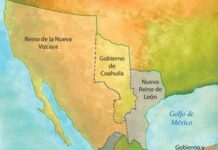
Harassed by Miguel Miramón and concerned that the United States would not lend him money, Juárez and his supporters took refuge behind the walls of San Juan de Ulúa. According to this account, the conservatives rejected an American proposal to purchase Baja California, Sonora, and Chihuahua for fifteen million dollars. Juárez then allegedly sent Lerdo de Tejada to inform the U.S. ambassador that he wanted the United States to invade Mexico, impose the English language, prohibit the Catholic religion, promote the “Americanization” of Mexico through mass immigration from the United States, and import American military officers to train the Mexican Army.
With Juárez’s authorization, the idea of turning Mexico into a U.S. protectorate was allegedly developed, offering the United States everything it requested in exchange for financial and military assistance for the liberal cause. Negotiations temporarily stalled because U.S. President James Buchanan reportedly preferred acquiring Mexican territory rather than establishing protectorates.
Desperate over conservative advances, the liberals appointed Freemason Melchor Ocampo to negotiate once again. In 1859 they received Robert M. McLane, the U.S. ambassador to the liberal government, who is described here as a slaveholder and partner in the Louisiana Tehuantepec enterprise.
Maximilian of Habsburg
Almost every accusation made against Maximilian of Habsburg could, according to this text, also have been made against Juárez and his supporters. However, Juárez strongly desired the emperor’s execution. He ignored the plea sent by U.S. Secretary of State William H. Seward requesting clemency for Maximilian. Juárez showed no mercy after Maximilian was defeated by republican forces and executed at Cerro de las Campanas in 1867.
The text also argues that most liberals, together with much of the population, eventually supported the Intervention and the Empire. Therefore, it describes Juárez’s law of May 25, 1862, which declared interventionists and monarchists traitors, as effectively condemning nearly all Mexicans.
According to this account, these betrayals and abuses were among the principal causes that eventually led to the Mexican Revolution of 1910.
Source: mexicodailypost