
Political crises rarely simply disappear with the passage of time, no matter how much politicians hope they will. They only vanish when facts prevail over suspicion. Until that happens, each new revelation, document, or contradiction reignites a debate that ultimately erodes any government’s most valuable asset: its credibility.
In Durango, just when it seemed the storm was beginning to subside for Governor Esteban Villegas, new revelations have emerged that once again place his administration and a significant portion of his cabinet at the center of national discussion due to the alleged investigations against them.
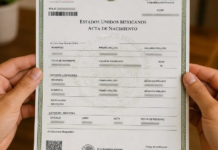
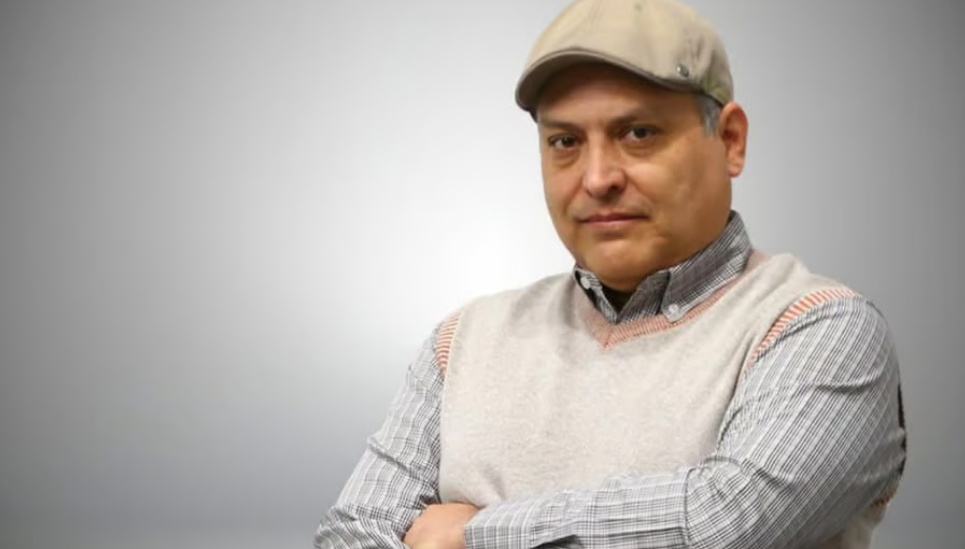
In a new publication by La Silla Rota, directed by Roberto Rock—a journalist and political analyst with extensive experience in Mexico—not only were the immigration documents we published in this outlet and on the digital platform I manage revisited, but elements were added that broaden the scope of the case and keep the governor under pressure.
Until a few weeks ago, the debate revolved primarily around the president’s contradictions regarding his U.S. visa. However, today the discussion is no longer limited to an immigration document, but also includes the behavior of officials in his administration toward U.S. agencies and the institutional strategy for responding to journalistic scrutiny.
Records reviewed by La Silla Rota show seventeen entries into the United States between 2018 and 2024, several of them made via private aircraft. In itself, using this type of transportation is not irregular. What is relevant is that these documents once again place under scrutiny the various versions the president has offered about his travels and about when he stopped traveling to the neighboring country.
However, another new piece of information provided by the publication points to state government officials who, according to sources cited by the outlet, were invited to meet with representatives of the U.S. Drug Enforcement Administration (DEA) in Mexico City, an invitation they reportedly declined.
The official response has also done little to quell the controversy. According to the publication, the State’s Social Communication Coordination sent a letter to the media outlet complaining that the articles damage the Governor’s image. The problem is that public image cannot be protected through complaints. The most effective way to defuse a crisis is to respond with evidence that dispels the speculation.
Esteban Villegas maintains his absolute rejection of the reports of investigations against him, both by the Attorney General’s Office (FGR) and by U.S. authorities. However, the political crisis no longer hinges solely on the existence or non-existence of these investigations. What’s troubling today is that, as new information emerges, the official arguments fail to close the debate and, on the contrary, open new fronts.
The information I published about President Claudia Sheinbaum’s visit to Durango was based on the official agenda that the Presidential Communications Office distributed Wednesday afternoon to reporters covering the presidential beat, which only listed one activity for the president in Gómez Palacio. It wasn’t until Thursday’s morning press conference that the president herself announced she would also visit the municipality of Durango to oversee the construction of the Tunal II dam. Presidential agendas are often modified—or not—for logistical, security, operational, or even weather-related reasons, so these kinds of adjustments are part of the normal routine of the Mexican presidency.
Source: elsiglodedurango