
The Veracruz State Congress has been accused of failing to properly align its recall referendum legislation with the federal constitutional reform, effectively restricting the mechanism. Lawmakers may now be required to amend the legislation following the announcement that the Presidency’s Legal Counsel Office will review the state reform, as confirmed by President Claudia Sheinbaum during her Thursday morning press conference.
Federal intervention comes after the Veracruz Congress approved a constitutional amendment that shortened the period for collecting signatures from two months to 30 days and added a requirement that signatures equal 3% of registered voters in 107 municipalities. Legal experts argue these conditions are impractical and contradict the constitutional framework governing recall referendums.
The amendment, introduced by Green Party (PVEM) legislator Carlos Marcelo Ruiz, was described as an “unconstitutional constitutional reform” by Eduardo de la Torre Jaramillo, a professor at the Universidad Veracruzana (UV) and one of the organizers of the citizen initiative seeking to activate the recall process in the state.
De la Torre explained that the 2021 federal constitutional reform requires states to adopt the recall mechanism without imposing additional restrictions. However, he argued that Veracruz not only altered the deadlines and requirements but has also failed for four years and eight months to enact the secondary legislation necessary for the process, despite multiple rulings from electoral courts ordering lawmakers to do so.
“If there is no secondary law, there can be no recall referendum,” he warned.
The academic compared Veracruz’s actions to a similar case in Hidalgo, where local reforms made it virtually impossible to gather the required 239,000 signatures, causing the recall effort to fail.
“The president does not want that scenario repeated in 2028, when her own recall referendum could take place,” he said. In his view, the federal government’s intervention aims to prevent Morena governors from using local legal barriers to shield themselves from accountability.
“If I am subject to recall, then so should you be,” he summarized.
The review by the Presidency’s Legal Counsel Office could require the Veracruz Congress to amend the reform and finally pass the long-delayed secondary legislation before the first week of August, the deadline established under the state’s Electoral Code due to the upcoming legislative election process scheduled for November.
De la Torre believes lawmakers may have to convene another legislative session to reverse the recent constitutional amendment and comply with federal standards.
“I want to see whether they are bold enough to defy the president,” he said, recalling that citizens submitted more than 10,500 signatures along with a draft law that the state legislature has ignored since November.
He argued that both the legislature’s inaction and the recent amendment represent a democratic setback that denies Veracruz residents their right to participate in a recall referendum.
Governor Nahle Avoids Addressing the Restrictions
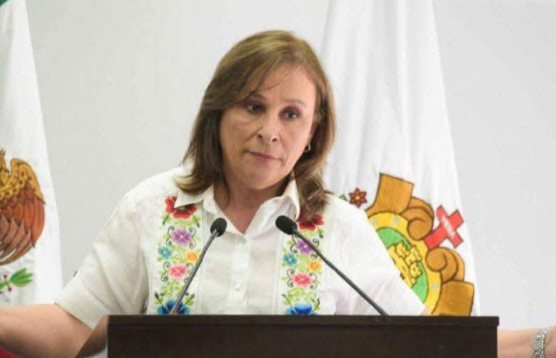
Meanwhile, Veracruz Governor Rocío Nahle downplayed the reform that makes it more difficult to request a recall referendum. During a radio interview, she said the issue “doesn’t keep me up at night,” but declined to comment directly on the new restrictions approved by the state legislature.
While the reform significantly reduces the practical possibility of citizens initiating a recall vote against her administration, Nahle expressed full support for the legislators from her governing coalition, stating only that “the law must be respected.” She did not explain why the ruling majority chose to further restrict the citizen participation mechanism, a move critics argue departs from the original principles behind the recall referendum.
Source: excelsior