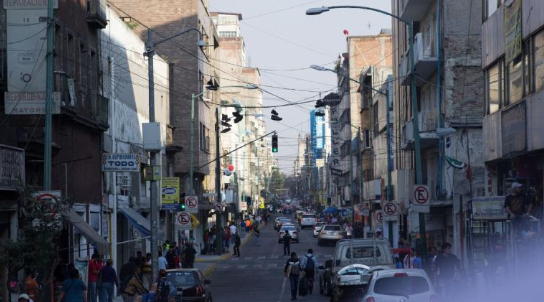

The echo of silence interrupts the urban bustle while the aroma of old wood and wax envelops the senses in secret corners. The hidden churches of Mexico City preserve centuries of history behind ordinary-looking facades that often go unnoticed.
Historians of the Historic Center and archaeologists from the National Institute of Anthropology and History (INAH) have documented the construction of these colonial sites over pre-Hispanic ceremonial centers. Their preservation reveals the complex urban evolution of the capital.
Hidden Churches in Mexico City
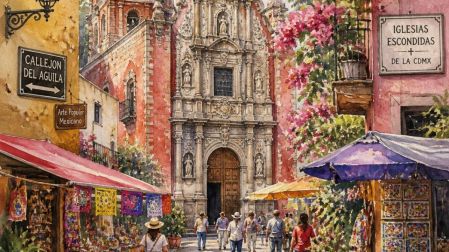
Where are the hidden churches located in the Historic Center?
The most enigmatic sites are located among crowded alleys and inside civil buildings in the first district of Mexico City. Temples such as the Chapel of Las Ánimas or San Cosme and San Damián protect invaluable artistic treasures.
Many of these sites operate in small spaces that challenge the conventional architecture of the viceregal period. A tiny chapel in the heart of the city stands out, where only 20 people can enter at the same time, maintaining an atmosphere of absolute mysticism.
The phenomenon of underground temples is related to the uneven sinking of the former lakebed and the reconstructions carried out after historical floods. Walking through these streets means stepping on layers of history where ancient remains lie buried beneath the pavement.
What secrets do the lesser-known temples of the capital preserve?
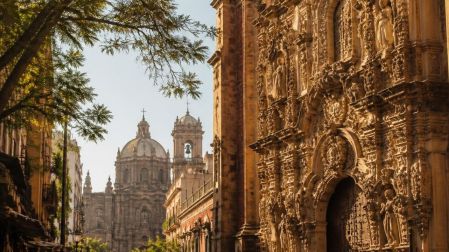
These buildings preserve Churrigueresque altarpieces (a Baroque style characterized by highly elaborate ornamentation and inverted pyramid-shaped pilasters) that survived modernization. They also safeguard colonial relics that most pedestrians completely overlook.
Religious syncretism is reflected in the bases of their columns, where carved stones from ancient teocallis (pre-Hispanic temples) can still be seen. Each wall is a living document that tells the story of the fusion of two worlds.
Entering these sanctuaries requires attention, as their entrances are often integrated into residential buildings, markets, or active shopping plazas. The transition between commercial chaos and inner peace is immediate and overwhelming.
How can visitors explore the underground religious remains?
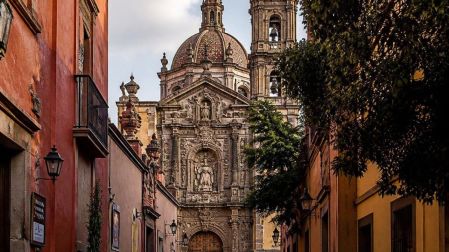
To visit these colonial structures, it is recommended to create a walking route focused on the eastern and northern alleys of the area. Access is usually free, although visitors must respect the worship schedules of each community.
It is advisable to be accompanied by certified guides who know the specific permissions required to enter crypts or restricted areas. Some of these underground passages visually connect with the foundations of ancient Tenochtitlan.
The dim lighting and unique acoustics of these basements offer a singular mystical experience for lovers of cultural tourism. History is revealed in every crack created by the passage of time.
Why visit the city’s hidden sacred corners?
Exploring these spaces allows visitors to understand the metropolitan identity from an archaeological and social perspective completely different from the conventional one. It is a way to discover the resistance of historical memory against the advance of modernity.
Dare to walk with the eyes of a chronicler and uncover the secrets that the city protects in its deepest depths. The next great story of the city awaits behind the least expected door.
Source: excelsior