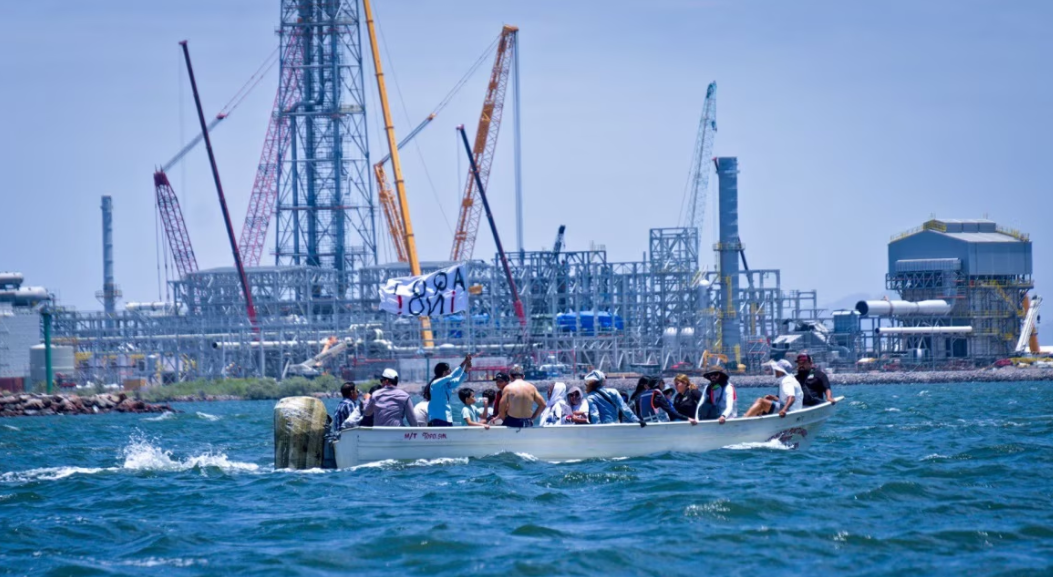

Environmental organization Greenpeace Mexico announced on Friday, July 24, its opposition to the construction of a large-scale ammonia plant in Topolobampo, Sinaloa, warning that the project poses serious risks to public health and the marine ecosystem of Ohuira Bay.
The organization joined the territorial and environmental defense led by Mayo-Yoreme Indigenous communities and local organizations opposing the project developed by Gas y Petroquímica de Occidente (GPO), a subsidiary of the Swiss-German consortium Proman.
Traditional fishing activities and the marine biodiversity of the wetland—recognized as a Ramsar Site of International Importance—are considered to be at risk from the proposed facility, which would produce up to 800,000 metric tons of anhydrous ammonia per year. Greenpeace warns that this chemical can damage the environment by disrupting aquatic ecosystems, acidifying soils, and contributing to air pollution.
Greenpeace Warns of Potential Damage to the Marine Ecosystem
Ohuira Bay is home to numerous native species, including whales, dolphins, mollusks, and fish. It also serves as an important breeding ground for the larvae of many marine organisms, which could be affected during both the construction and operation of the ammonia plant.
As the company continues to move forward with the project, Greenpeace has sent formal letters to executives at Proman Group and to the German financial institution KfW IPEX-Bank, urging them to halt construction and withdraw financial support for the project.
In response, the company developing the plant requested a meeting with Greenpeace to discuss the environmental and social concerns raised by the organization. The meeting is scheduled to take place on Monday, July 27.
Despite the upcoming meeting, Greenpeace reiterated its call for the Government of Mexico to cancel the project and to stop approving infrastructure linked to fossil fuels that could threaten the rights of Indigenous peoples.
Source: elfinanciero