
An intimate look into the mind of the general who achieved glory in his homeland, yet did not hesitate to harshly condemn the injustice of a foreign invasion. A stark chronicle that reveals the political forces behind American expansionism and the profound consequences that reshaped the borders of an entire continent. The final testament of a titan of history who defied death itself to uncover the darkest truths of an imperialist war.
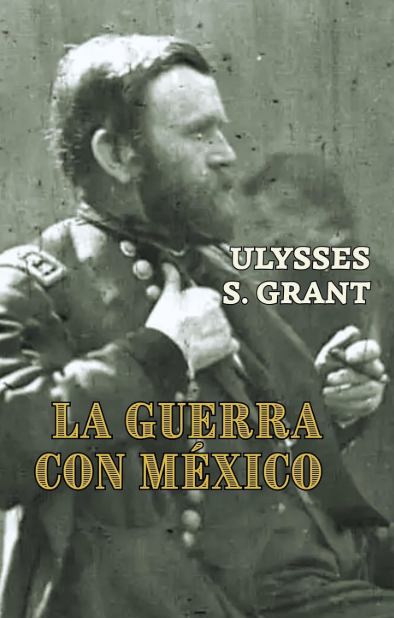
The War with Mexico: Excerpts from Personal Memoirs by Ulysses S. Grant
July 23 marks the anniversary of the death of Ulysses S. Grant. Born on April 27, 1822, he is remembered as the brilliant and steadfast strategist who secured the Confederacy’s surrender during the American Civil War, establishing himself as one of the most accomplished military commanders in nineteenth-century United States history. His leadership combined unwavering determination with a modern understanding of total warfare, qualities that elevated him to command the Union Army and eventually to the presidency of the United States. Yet behind the image of the victorious general who reunited a fractured nation stood a deeply reflective man whose tactical brilliance was first forged during his early campaigns in Mexico, where he learned the realities of warfare long before becoming a legend.
The War with Mexico: Excerpts from Personal Memoirs is a landmark historical work that preserves Ulysses S. Grant’s firsthand experiences during the U.S. intervention in Mexico (1846–1848). Translated into Spanish by Enrique de Lafuente, this volume compiles the sections of Grant’s original memoirs devoted to the conflict. It offers Spanish-speaking readers direct access to the perspective of a young lieutenant who would later become the commanding general of the Union Army and the 18th President of the United States.
Throughout its pages, Grant presents a detailed and exceptionally valuable account of campaign life and the tactical development of the war. With military precision, he describes pivotal battles such as Palo Alto, Monterrey, Cerro Gordo, and the final assault on Chapultepec Castle. Beyond strategy, the memoir stands out for its keen observations, portraying Mexico’s geography, terrain, and the immense logistical challenges involved in moving troops across unfamiliar and hostile landscapes.
Perhaps the book’s most remarkable feature is Grant’s profound moral self-criticism regarding the causes of the conflict. Although he faithfully fulfilled his military duty, he openly described the invasion of Mexico as one of the most unjust wars ever waged by a stronger nation against a weaker one. In his political analysis, he argued that the conflict had been deliberately provoked by the interests of the American slaveholding South, viewing the subsequent Civil War as divine punishment for the injustices committed on Mexican soil.
The memoir also serves as an important anthropological document, offering a portrait of nineteenth-century Mexico through the eyes of a foreign military officer. Grant wrote respectfully of the courage of Mexican soldiers, describing them as devoted fighters who were often undermined by poor leadership and political instability. His observations of civilian life, local customs, and the Mexican landscape provide a rich historical portrait that deepens our understanding of a nation struggling with fragmentation during a turbulent era.
Completing these memoirs became the final battle of Grant’s life. He wrote the closing pages while racing against an aggressive case of throat cancer. Financially ruined and living in a cottage at Mount McGregor, New York, Grant endured excruciating pain and the loss of his voice, finishing the manuscript just four days before his death on July 23, 1885. His passing marked not only the end of a distinguished military career but also transformed these memoirs into a testament of extraordinary perseverance. The book’s enormous commercial success rescued his family from financial ruin and secured an enduring legacy that is commemorated today at his famous mausoleum in New York City.
By preserving these passages, the book invites readers to reflect on the shared historical memory of Mexico and the United States. It demonstrates how examining the past—even through the eyes of the invading side—can offer valuable insights, empathy, and a deeper understanding of some of the most painful chapters in the history of Latin America.
Source: mexicodailypost