
Campeche’s Museum of Contemporary Art Disappears Months After Opening; Artists Question the Decision
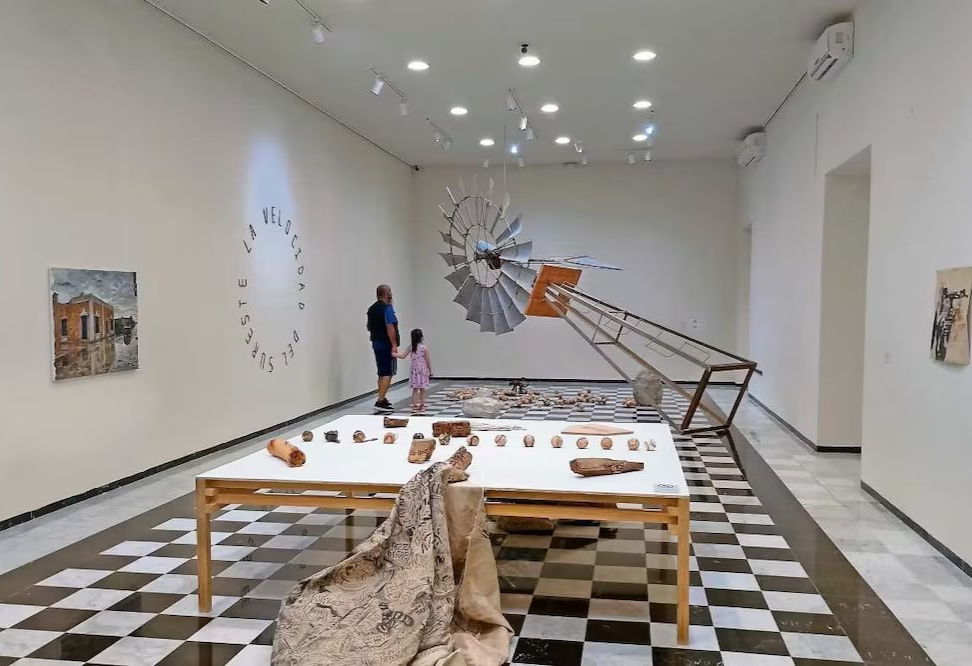
The appearance of Luis Carlos Hurtado’s exhibition Soy capaz de cualquier cosa cuando no es importante, one of the two exhibitions that inaugurated the Campeche Museum of Contemporary Art in December 2024. Photo: Luis Carlos Hurtado.
Campeche’s excitement over finally having a museum of contemporary art lasted only briefly. Just months after opening in December 2024, the Campeche Museum of Contemporary Art (MACC) has already disappeared. In its place, an immersive exhibition about Frida Kahlo is now being presented, while the artistic community, facing uncertainty, has sought opportunities in Mérida, where the Yucatán Museum of Contemporary Art also closed to be replaced by the Mayan Train Museum.
Everything began in 2024, when the former head of the Campeche Institute of Culture and Arts, Esteban Hinojosa, invited artists such as Luis Carlos Hurtado to open the MACC in “El Palacio,” a government building that also houses the Campeche Library, located on Calle 8.
Hurtado presented one of the two exhibitions that inaugurated the venue: Soy capaz de cualquier cosa cuando no es importante; the other was Mutaciones desde la naturaleza, by artists Vanessa Rivero, Lorena Ancona, and Olga Dondé.
There was not much funding. Artist and cultural manager Alejandro Cobá considers that the MACC emerged as a project that was not properly planned to “be established for the future.”
“An initial investment of 100,000 pesos was made in the museum, but it was not guaranteed that it would receive future funding from the budget. Many people were working for free,” Cobá explains.
For example, Hurtado had to curate his own exhibition, but he felt it was an effort worth making, especially after seeing the public’s response. In January 2025, Mónica Sosa arrived at the Institute of Culture and Arts as director. Meanwhile, the museum hosted summer courses, film screenings, and talks, until April arrived, when the exhibitions were supposed to be dismantled. This did not happen, and they remained on display without information. It was the artists themselves who began requesting their work back because they had other commitments.
Despite that mistake, unusual in professional museums, efforts continued. Hurtado explains that meetings were held to discuss how to improve the museum, and new artists were selected for future exhibitions. However, suddenly, “the Institute of Culture informed the museum’s coordination that the museum was no longer continuing, that we had to quickly remove our work because an exhibition by Frida Kahlo had already been scheduled. The museum coordinator (Claudia Carranco) told us that she had been informed that the MACC would close and that her position had been removed,” says Hurtado, who adds that the entire process lacked transparency.
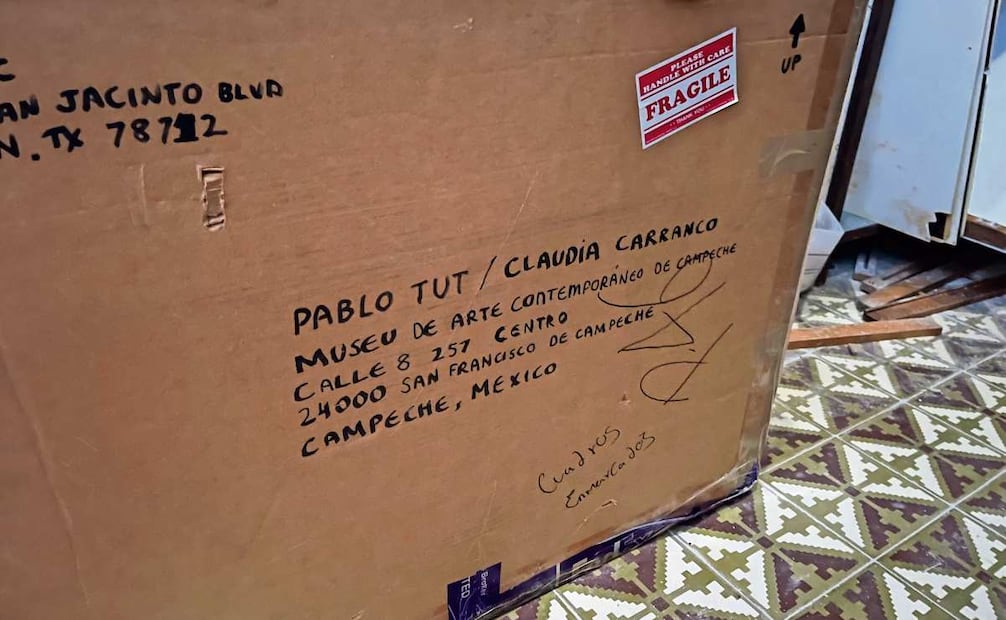
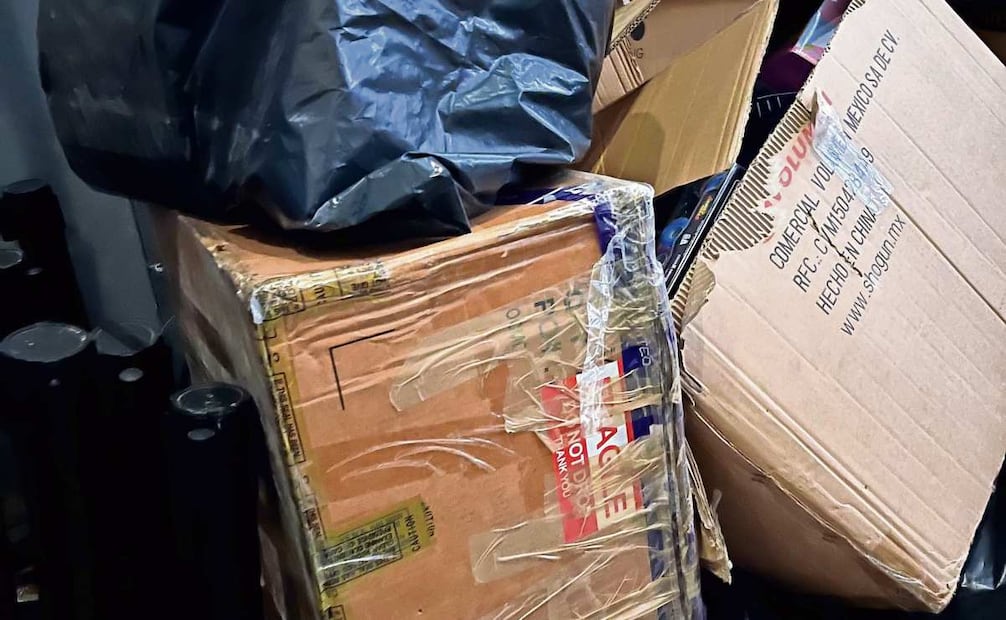
The closure of the museum left works by Pablo Tut stored in a location without adequate conditions until he personally recovered them. Photo: Pablo Tut.
One of the plans frustrated by the museum’s closure was Pablo Tut’s exhibition, whose artwork had traveled from the Center for Visual Arts at the University of Austin (Texas, United States). In an interview, he explains that “they kept delaying things,” stored his works in a place without the necessary conditions, until he had to collect them himself in order to exhibit them better in Mérida.
“Everything happens in a very informal way. In fact, the exhibition I was going to create was happening in a very informal way because there was no budget. Rather, I was doing it to contribute efforts so that the museum could become established,” Tut comments.
The artists’ willingness to support the museum came from the fact that it was a space they did not have and still need. In Campeche, where an art degree is offered at the Campechano Institute, the cultural offer for contemporary art is very limited, as more traditional creations are prioritized. That is why many art professionals look for opportunities in Mérida.
“It was not only the museum space that was closed, but also many possibilities and proposals, including projects that were already being developed for future exhibitions and activities inside the Museum. There are many artists, there is an art school, and they are closing a space and an opportunity to exhibit, to dialogue, to meet, and to bring together young people and those who want to approach art. It is a closure in many ways,” Hurtado states.
“There is a lot of sadness and basically resignation because, obviously, as citizens we have no power,” says Cobá.
Frida Takes Its Place
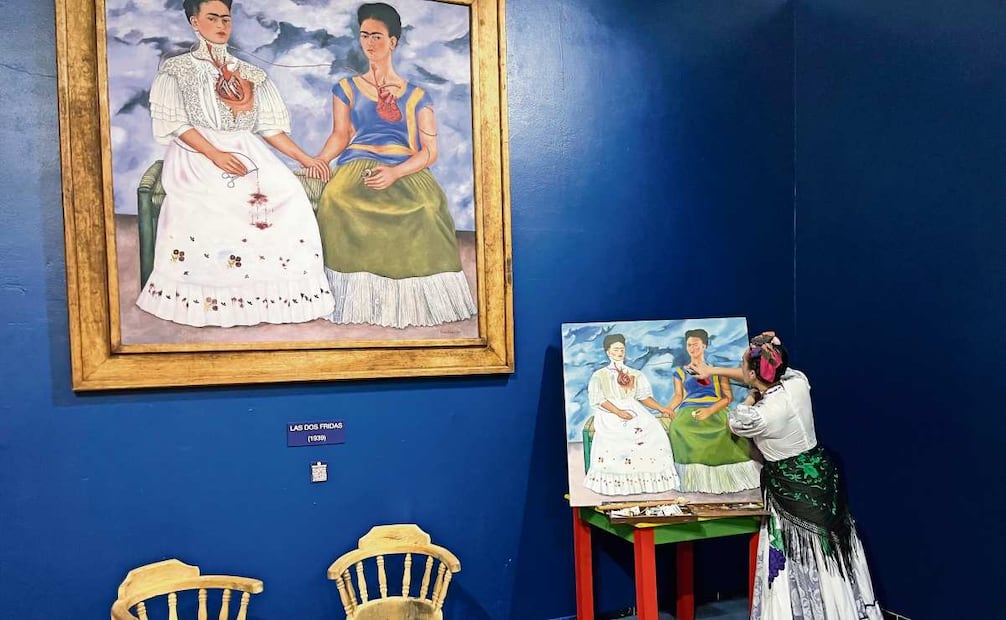
Instead of the MACC, there is now Yo soy Frida Kahlo. La Experiencia Inmersiva, a “Digital Gallery” that opened in December 2025 and that the Campeche government announced in a statement as “an innovative cultural space” and “a firm step toward democratizing access to culture.”
The exhibition consists of projected artworks on different screens, printed paintings, women dressed as Kahlo, and songs such as “Bésame mucho” playing in the background.
“It is a somewhat deplorable exhibition because the paintings are reproductions on tarps; they did not even make the effort to create fabric reproductions so they would look more presentable. The images are pixelated; it seems like a mockery. But people in Campeche liked it because it has interactions, screens, and that overstimulates the body,” Cobá comments.
Campeche Now Without a Museum of Contemporary Art
The installation was supposed to end on April 12 of this year, but it remained open, and last week it was announced that it would continue without specifying a closing date. For the government, it has been a success, as it has received more than 21,000 visitors.
Admission to the exhibition is free. However, Hurtado questions how much it is costing the Campeche government to maintain it. The same statement identifies Bernardo Noval as general director of Yo soy Frida Kahlo. Who is he and how much was he paid? These are other questions raised by Hurtado regarding the businessman who, as previously reported, has also been behind exhibitions at the Chamber of Deputies and the 2024 loan of an Olmec Head to the Louvre Abu Dhabi in the United Arab Emirates. Although it was supposed to return to Mexico in April 2025, Noval himself announced on his personal social media accounts that its stay would be extended until 2027.
“I found it very crude. Enough of pretending that culture is being created. We do not need that to believe that culture is actually happening in the state,” Hurtado added.
The Campeche Institute of Culture and Arts was contacted, and by the time this edition closed, it indicated that it was preparing a response. However, in an interview with local outlet NCS Campeche, Mónica Sosa said in June that the closure of the MACC “is just a rumor” and that no official source has announced its closure.
“The cultural complex, called ‘El Palacio,’ specifically provides space for visual arts exhibitions because it also has a gallery called Manuel de la Cruz,” she said. Regarding the Kahlo exhibition, she stated that many contemporary art museums include immersive rooms and that they saw an opportunity due to the high demand it has generated.
“We will always be open to working together with the artistic community, promoting their work, and providing spaces for them. The museum is not closing; on the contrary, we are already working on proposals not only for this year,” she said.
Source: eluniversal