
On the Seabed, the Mayan Octopus Encounters Microplastics
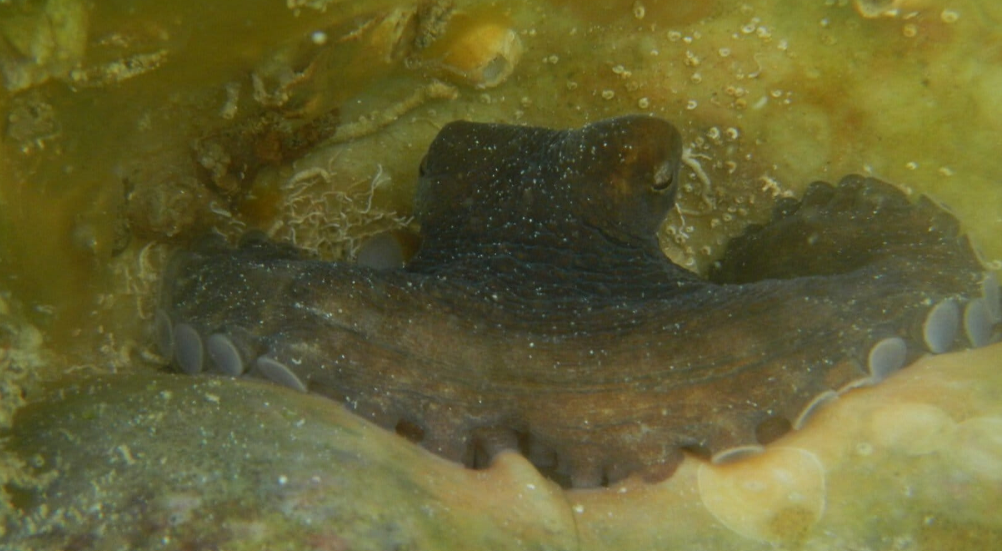
On the seabed, the Mayan octopus (Octopus maya) searches for small crustaceans and mollusks to feed on. There, where it spends much of its life, tiny plastic particles accumulate. Some can end up inside its prey, while others mix with the sediments the octopus disturbs as it searches for food. What happens inside the octopus is a sign of how deeply plastic pollution has penetrated an ecosystem on which communities, fisheries, and consumers in the Yucatán Peninsula, in southeastern Mexico, depend.
A study published in July 2026 in the journal Regional Studies in Marine Science found microplastics in 89 of 95 Mayan octopuses analyzed in the laboratory, representing 93.68% of the specimens. In total, researchers found 367 particles in their gastrointestinal tracts. In addition, the average number of microplastics increased from 3.18 particles per individual in 2021 to 4.62 in 2024, a 30.80% increase between the two years.
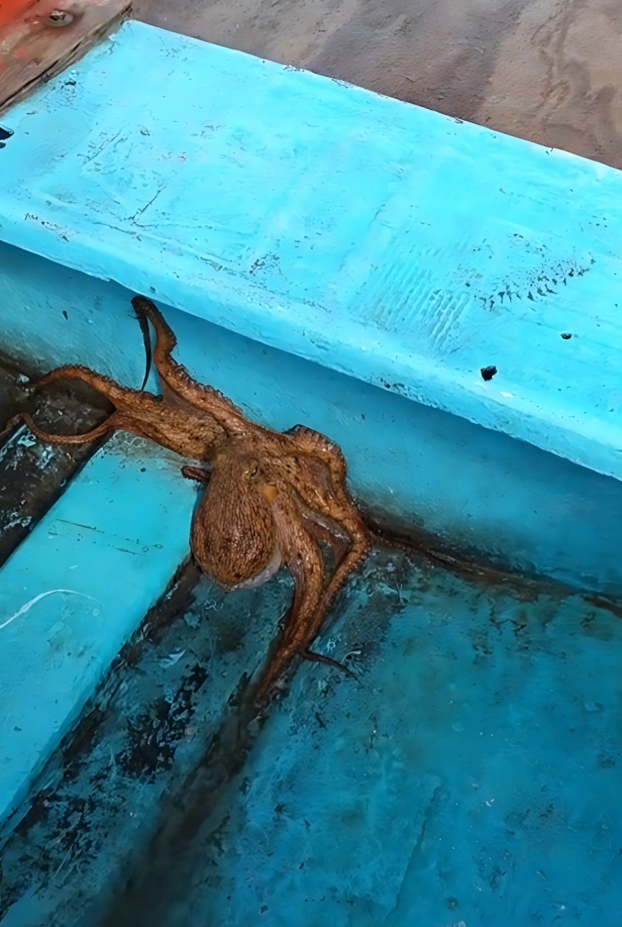
The octopus fishery is a key economic activity for Mexico’s fishing sector. The study notes that in 2024, the national catch exceeded 34,000 tons, of which approximately 25,000 came from the Yucatán Peninsula. There, the fishery is sustained mainly by two species, the Mayan octopus and the common octopus (Octopus vulgaris), with the former accounting for approximately 75% of the regional catch. The production supplies local restaurants and those in Cancún, reaches markets such as La Viga in Mexico City, and is also exported to countries including Italy, Spain, China, Japan, South Korea, and the United States.
Prolonged ingestion of the muscle could represent an indirect route of exposure, but this is a potential risk, not demonstrated harm to consumers, the study’s authors explained to Mongabay Latam.
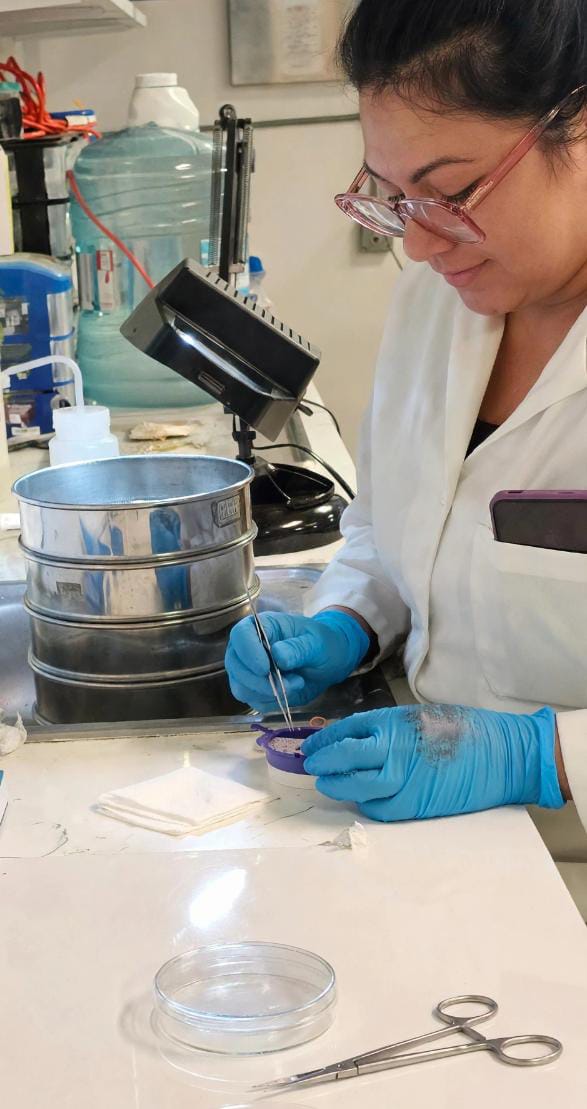
The work, carried out by researchers from the Institute of Ecology, Fisheries, and Oceanography of the Gulf of Mexico (EPOMEX) at the Autonomous University of Campeche and other institutions, analyzed 50 specimens in 2021 and 45 in 2024. The octopuses came from catches made by small-scale fishermen between 20 and 45 kilometers from the coast of Campeche, at approximately 4.5 meters in depth.

The finding did not surprise Merle Marisa Borges Ramírez and Jaime Rendón von Osten, co-authors of the research. By then, the team had already found microplastics in sediments, fish, and other animals in the region in previous studies, so the result confirmed their suspicions about the octopus’s exposure to the pollution they had already observed in the environment.
“It was not strange for us; rather, we confirmed our suspicions that this organism, which is found in the sediments, is beginning to indirectly take in these contaminants,” Rendón von Osten, a research professor at the EPOMEX Institute, told Mongabay Latam. “Unfortunately, in the end, plastics are everywhere.”
An Animal That Feeds Where Plastic Accumulates
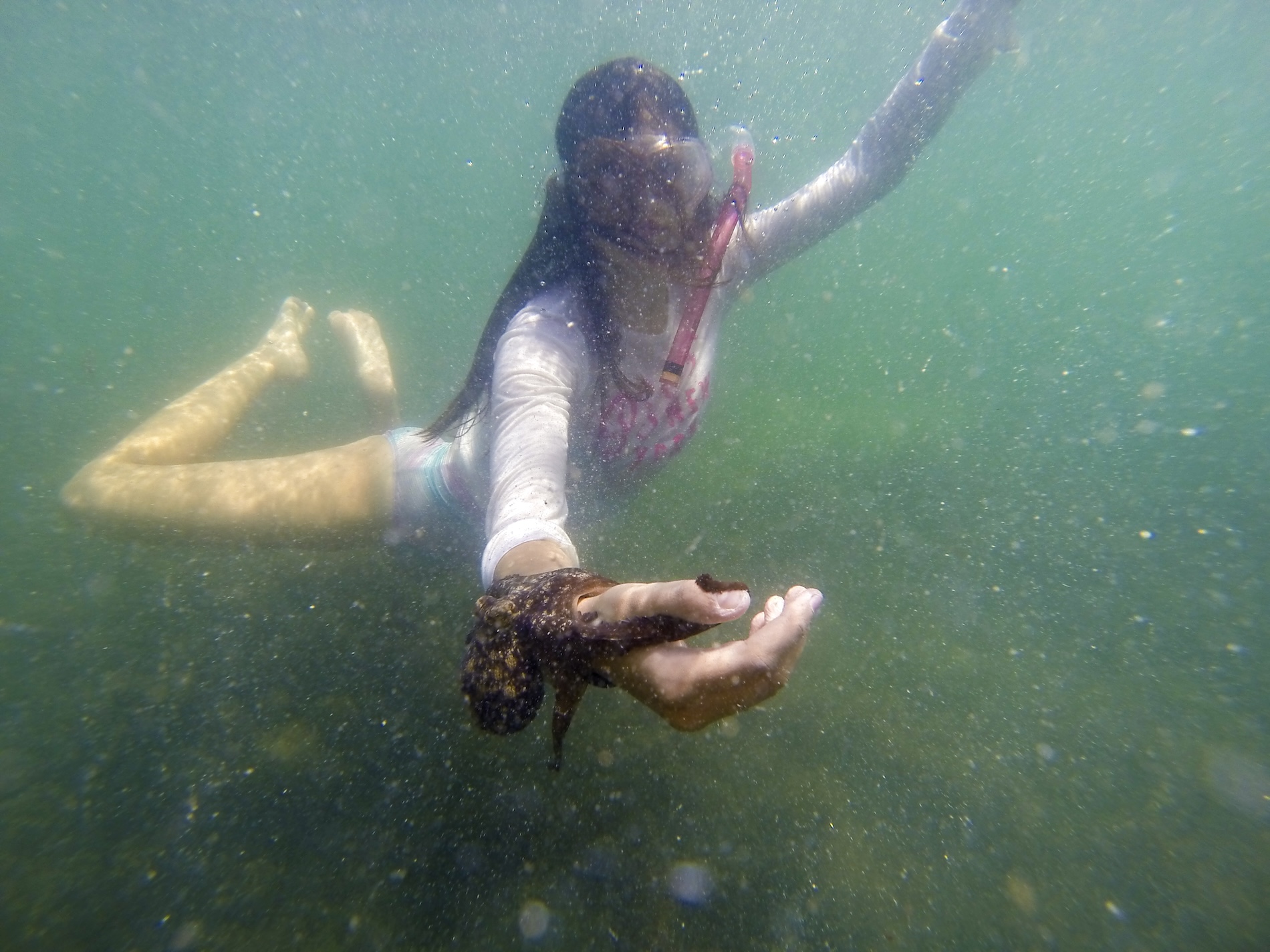
The Mayan octopus, also known as the red octopus, is a species native to Mexico and endemic to the continental shelf of the Yucatán Peninsula. The National Commission for the Knowledge and Use of Biodiversity (Conabio) describes it as inhabiting shallow waters, generally between three and 25 meters deep. It is commonly found in seagrass beds and coral formations, where it creates burrows for shelter.
It also stands out for reaching large sizes compared with other octopus species: specimens with mantles up to 25 centimeters long have been recorded—the part of the body that covers and protects its internal organs—and, including the length of their arms, they can reach a total length of 1.30 meters. It also has the ability to change color and texture to camouflage itself with its surroundings and has a distinctive double-ring ocellus beneath its eyes, accompanied by spots that have earned it the name “four-eyed octopus.”
According to the study, most of the particles found have a characteristic that favors their persistence on the seabed. More than 80% had a density between 1.1 and 1.7 grams per cubic centimeter, higher than the density of seawater, causing them to tend to sink. They can therefore become available to organisms that live or feed on the seabed, such as the Mayan octopus.
This cephalopod can ingest particles found alongside its prey or consume animals that were already contaminated. Among them is the stone crab (Menippe mercenaria), the most common bait used in octopus fishing in Campeche. A previous study found microplastics in the digestive tract, gills, and muscle tissue of specimens of this species collected in Laguna de Términos.
Pollution can come from land. The study mentions abrasive products, oil platforms, wastewater and urban runoff, plastic and consumer-packaging waste, as well as fishing gear and lines as possible sources. Previous research by the team had already found microplastics and phthalates in sediments along the Campeche coast, associated with additional land-based sources such as seafood-processing companies and tourism.
For the researchers, the increase observed between 2021 and 2024 should be interpreted with caution. Rendón von Osten links it to the global increase in plastic use and human consumption patterns. In addition, Borges Ramírez warns that the distribution of these particles also depends on environmental factors, meaning that the results from two years of sampling alone cannot establish that there is a sustained increase along the entire coast.
“Much of the increase—and we say this in the article—is not necessarily local, because environmentally, everything that is discharged into the sea does not remain there; it moves through currents, storms, and all natural events,” Borges Ramírez, a researcher at the EPOMEX Institute specializing in environmental contamination by microplastics and heavy metals, told Mongabay Latam.
The study found that 77.11% of the particles present in the octopus were plastic fragments, while the remainder consisted mainly of fibers and pellets. There was also a change in particle size: while those between 1 and 2.3 millimeters predominated in 2021, most particles measured between 0.5 and 1 millimeter in 2024.
The authors suggest that the octopus’s feeding mechanism, which uses its beak and radula to pierce the hard structures of its prey, could contribute to fragmenting materials and increasing the presence of smaller particles in its gastrointestinal tract.
In total, researchers identified 25 types of polymers, including polyamides—used in clothing, ropes, and fishing nets—cellophane, polyvinylidene fluoride (PVDF), and polyethylene, which is found in bags, bottles, and other everyday products.
However, composition matters for another reason: not all plastics have the same level of danger. The authors used the Polymer Hazard Index (PHI), which classifies polymers according to the risk associated with their chemical composition. Polyamide and polyester appeared in the high-risk category, while polyvinyl chloride (PVC) was classified as hazardous in both 2021 and 2024. Polyacrylonitrile (PAN) appeared in that category in 2021 and polyurethane in 2024. None of the polymers found reached the extreme-risk category.
“The importance of conducting this analysis through hazard indices is that it gives us an idea of the long-term risk these organisms may face, particularly the fishery, which is important on the peninsula, where many people depend on small-scale fishing,” Borges Ramírez said.
From the Seabed to the Table
The presence of microplastics raises an inevitable question not only about the health of these animals, but also about the health of the people who consume them. However, the study does not demonstrate that eating contaminated octopus causes specific diseases, such as cancer or others.
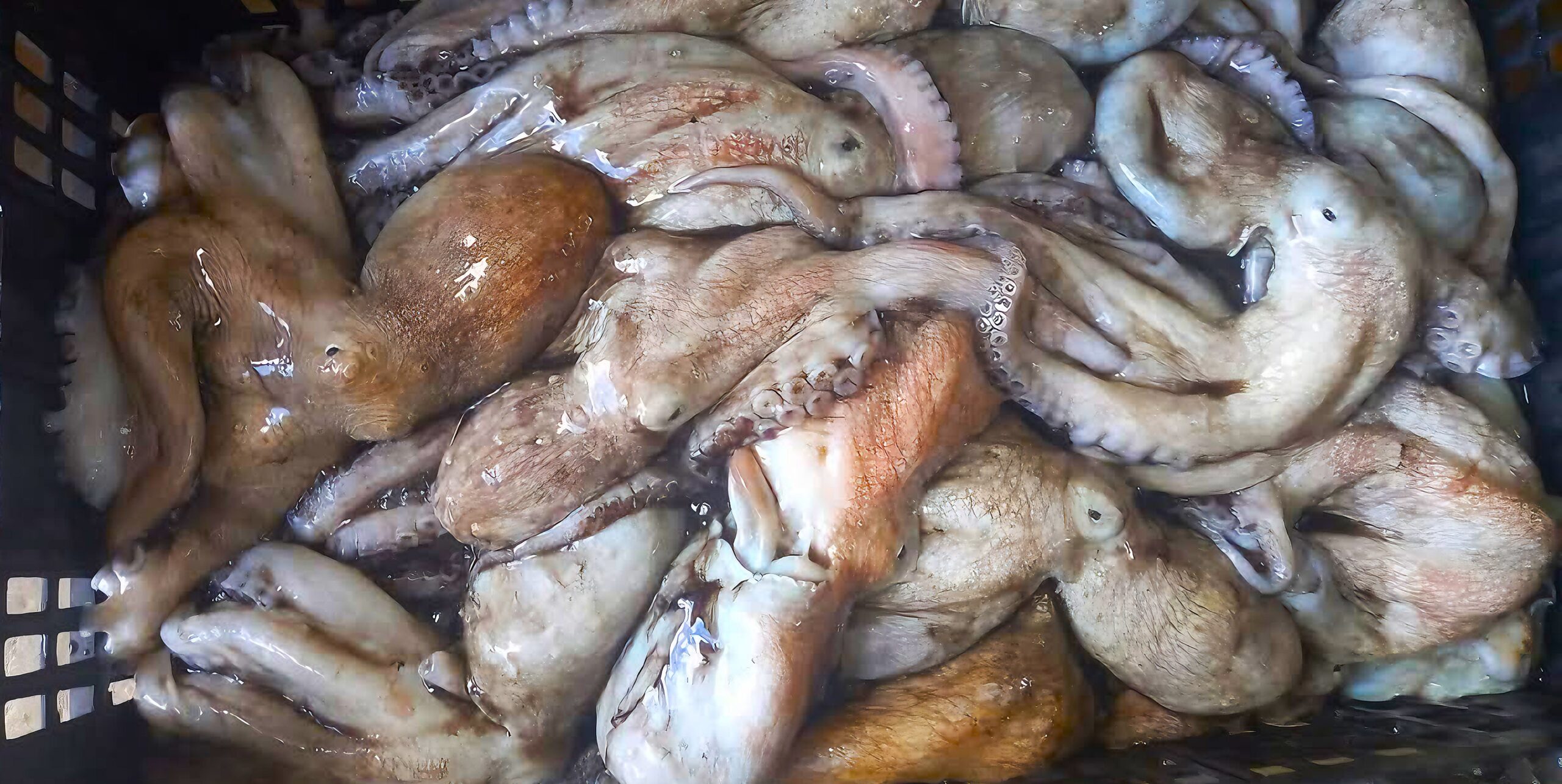
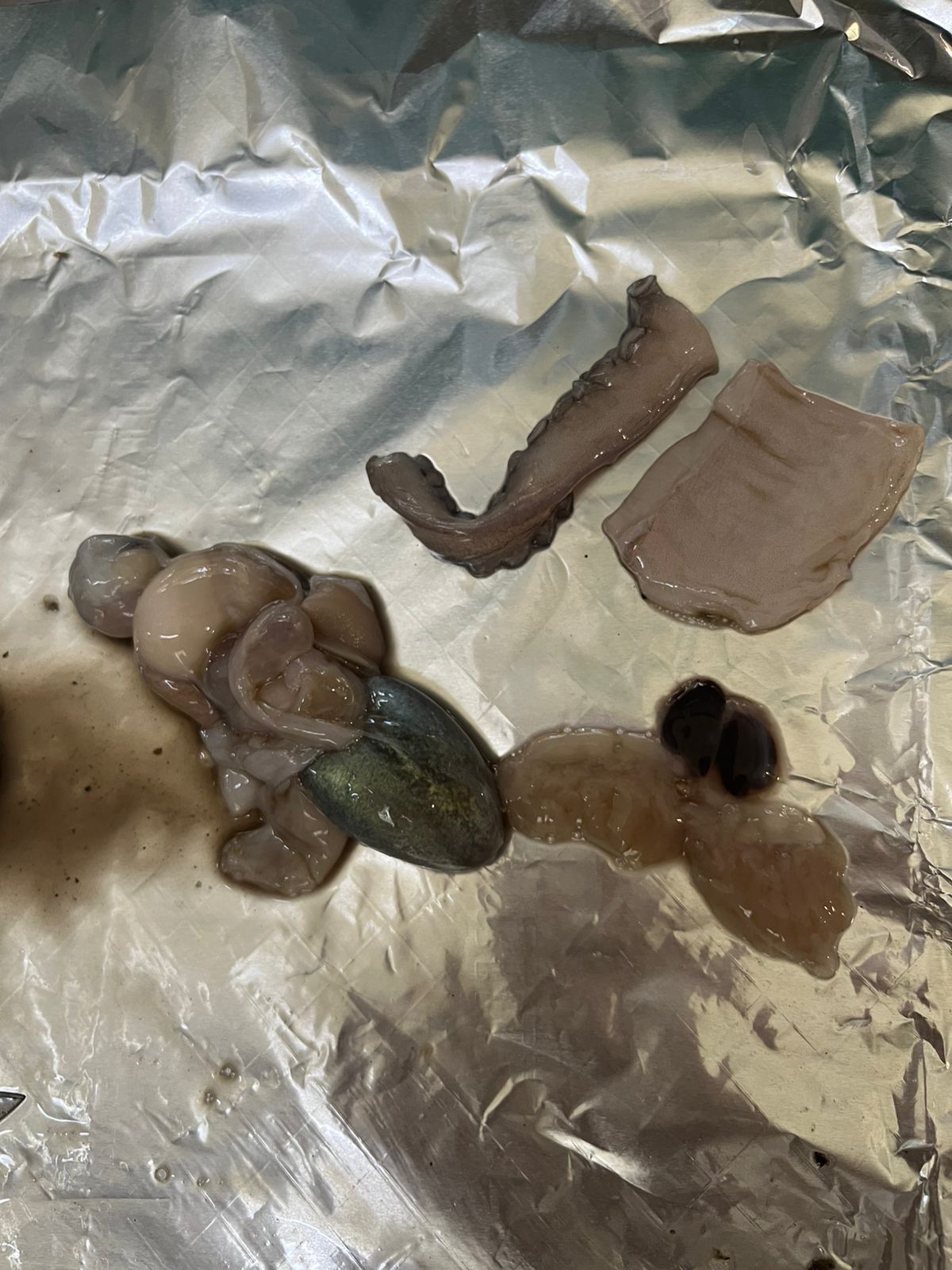
In Mexico, the octopus’s gastrointestinal tract is not normally consumed, so removing the internal organs reduces direct exposure to the particles found there. Nevertheless, the authors state that more research is needed to determine whether some compounds associated with plastics can reach the tissues that are actually consumed.
For Griselda Escalona Segura, a senior researcher at the College of the Southern Border (Ecosur) Campeche, specializing in ecology and evolutionary biology and who has studied plastic pollution in wildlife, particularly birds, the effects of microplastics can vary depending on the species, the shape and size of the particles, feeding habits, and their concentration in the environment.
“Some studies have found a decrease in energy reserves associated with microplastic ingestion in crabs and sandworms, and even a reduction in the number and size of oocytes in oysters,” the specialist explained.
However, she warns that much of the available toxicological evidence comes from laboratory experiments. “Studies on microplastics under environmentally realistic conditions are still in their early stages, with many questions unresolved when it comes to predicting their risks to human health,” Escalona Segura said.
There is also the possibility that particles move from one species to another through the food chain. “The effect of microplastics on ecosystems is cumulative and biomagnifying because, when they enter the base of the food chain—such as plankton—microplastics pass to higher predators, accumulating in increasingly greater concentrations,” the researcher explained. “In other words, humans can acquire plastics through our food.”
Escalona says the response to this possibility begins by reducing the amount of plastic entering the sea. “Remediation is more expensive than prevention,” she warns. “In other words, what we all have to do is reduce plastic consumption and dispose of it in designated places so that it causes less damage to the environment.”
She concludes: “Removing all the plastics that have been dumped into the sea is expensive and apparently a gigantic task, but it has to be done if we do not want the extinction of all living beings, including ourselves.”
For this reason, the study’s authors see the finding in the octopuses as a starting point as well. They propose establishing microplastic monitoring strategies, evaluating their potential ecotoxicological effects, and studying whether these contaminants can affect processes such as reproduction and growth in Mayan octopus populations. They also point out that it is important to train fishing cooperatives in Campeche so that they can report citizens who dump garbage into the sea and conduct a microplastic risk assessment in Mayan octopus populations off the Campeche coast, considered one of the most important fishing areas in the state and the Yucatán Peninsula.
The call also has an environmental-management dimension. The Mayan octopus fishery is regulated to prevent overexploitation and maintain the species’ productivity. For Campeche and Yucatán, there is an allowable catch volume of 28,000 tons of whole fresh weight. But the researchers point to a contrast: while specific mechanisms exist to manage the fishery, there is no institution responsible for managing plastic and microplastic pollution in Campeche.
“There are many things at stake,” Borges Ramírez concludes. “But ultimately, all of this means that we humans continue to impact the environment. We are practically forcing species to live in this way, with everything that exists in the ocean. They are changing their ways of surviving in order to endure.”
Source: es.mongabay