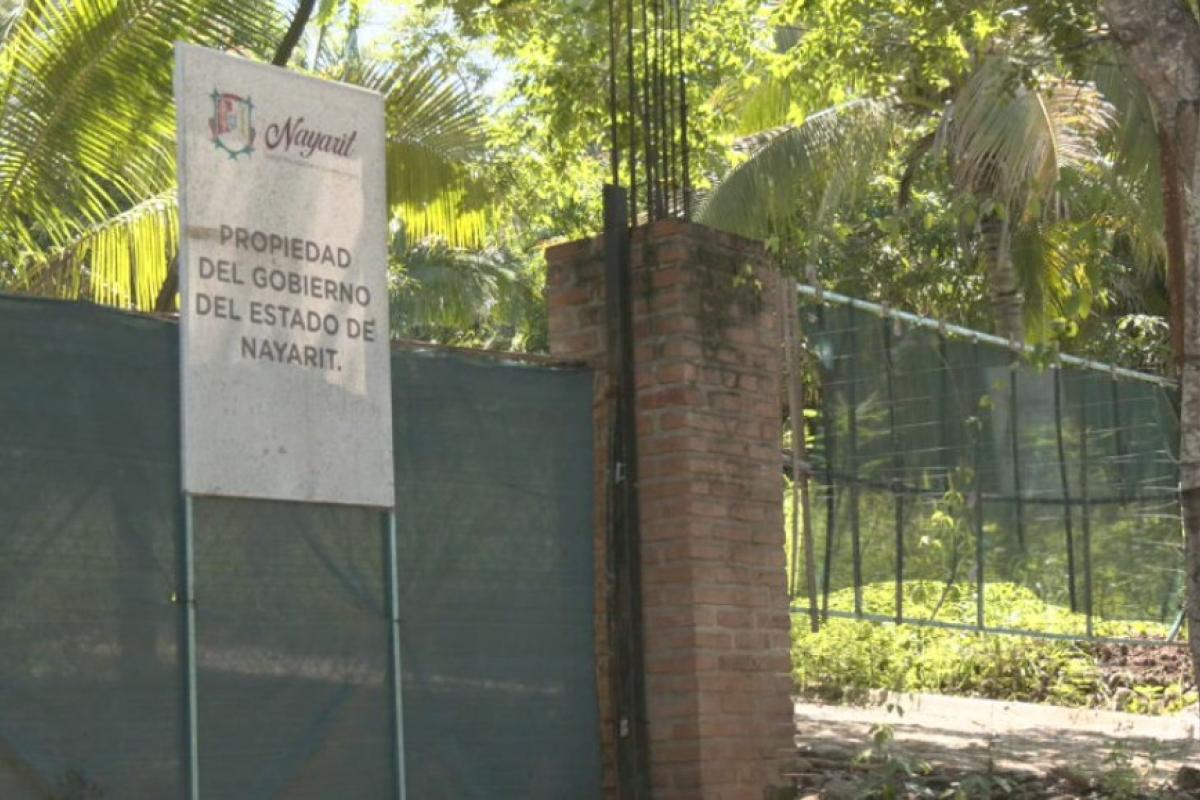

Coastal Land Dispute in Nayarit Sparks Allegations of Criminalization Against Ejidatarios
Along the tourist corridor of Nayarit, where a single square meter of beachfront land can be worth thousands of dollars more than an entire inland parcel, land ownership has become more than a family asset. According to several ejidatarios, it has become a source of legal persecution that has led some of them to prison.
Representatives from seven agrarian communities allege that the administration of Governor Miguel Ángel Navarro Quintero has used the state prosecutor’s office, the Bahía de Banderas Trust (FIBBA), and judicial authorities to pressure them into surrendering land their families have occupied for decades.
According to the complaints, the warning is repeated in different ways: relinquish land rights or face criminal investigations that can result in imprisonment. They allege that state prosecutors carry out arrests under “orders from above,” disregarding legal protections and the human rights of those involved.
Residents Describe a Pattern of Intimidation
Grupo Imagen interviewed farmers, business owners, and relatives of individuals facing criminal proceedings throughout the Bahía de Banderas and Riviera Nayarit tourist corridor. The interviews were conducted in Nuevo Vallarta, Bucerías, La Cruz de Huanacaxtle, Sayulita, Compostela, and among people connected to recent land disputes in Playa Las Cocinas, Punta de Mita.
All interviewees requested anonymity, citing fear of retaliation. Some remain involved in criminal proceedings, while others said they had been warned by police officers and public officials that speaking publicly could result in their arrest.
Family Says They Have Occupied the Property for More Than 60 Years

Apolinio Guzmán Franco says his family possesses agrarian documents proving continuous occupation of a property in Rincón de Guayabitos for more than six decades. The land overlooks the ocean and contains fruit trees and long-standing homes.
According to Guzmán, his father was arrested three times, and each time authorities allegedly demanded that the family surrender the property. He says his father was released after prosecutors failed to prove the family had previously been compensated for the land.
The most serious incident, according to the family, occurred on April 17, 2026, when more than 20 police officers and personnel linked to FIBBA entered the property.
Family members allege that officers did not present a search warrant, arrest warrant, or any written authorization. Four people—two brothers, a 19-year-old man, and an employee—were arrested.
Relatives say they were unable to determine where the detainees had been taken for several hours. Guzmán also alleges that the arrests were not promptly entered into official detention records, preventing attorneys from contacting them, and claims that two detainees showed documented injuries while in custody.

The four individuals remained imprisoned for nearly three months before federal court rulings allowed them to continue the proceedings while free.
State Prosecutor Presents Different Version
The Nayarit Attorney General’s Office offered a different account.
Attorney General Elvia Ludmila Heredia Verdugo stated that the four individuals were charged with unlawful occupation, threats, and assault. She maintained that the approximately 10-hectare property belongs to FIBBA, that one of the structures on the land had been built recently, and that those arrested reacted violently during an inspection.
She also argued that possession certificates are not equivalent to property deeds and suggested the possibility of fraud.
Ownership of the property and the legality of the operation remain disputed, although Grupo Imagen reported verifying that one of the buildings had existed for more than 30 years.
A Dispute Rooted in a 1970 Expropriation
The conflict originates from a 1970 presidential decree that expropriated 4,136 hectares across eight ejidos in Nayarit:
- La Jarretadera
- Bucerías
- Cruz de Huanacaxtle
- Higuera Blanca
- Sayulita
- Peñita de Jaltemba
- Las Varas
- El Capomo
A 1973 reform maintained the trust structure and established that affected farmers were to receive compensation, profit-sharing, and benefits derived from tourism development.

Interviewees claim that many families in seven of those ejidos never received full compensation and therefore maintained possession of their land.
Ejidatarios argue that the expropriation process was never legally completed for those who were not compensated.
The state government, meanwhile, maintains that it is recovering public property allegedly transferred or occupied illegally, and has even suggested that some of the disputed properties are linked to organized crime.
Government’s Anti-Corruption Campaign
Under an initiative known as “Megaoperativo Nuevo Nayarit,” state and federal authorities announced in November 2025 that they had recovered 9.6 million square meters of land valued at approximately 50 billion pesos.
Authorities say the investigation targets allegedly fraudulent land transactions carried out during previous administrations.
However, critics argue that this explanation does not address families who possess agrarian certificates, long-standing occupancy records, homes, cultivated land, and decades of documented possession.
They also question why disputes that traditionally fall under civil or agrarian law have increasingly resulted in criminal charges and preventive detention.
According to several testimonies, officials or police arrive at disputed properties, reject existing documentation, and open criminal investigations for unlawful occupation against the people living there.

Residents Say Fear Has Become Widespread
José Ponce, a farmer from La Peñita de Jaltemba, says he is living in hiding.
He estimates that his family once owned 25 hectares, but now controls only about 10.
Ponce says his home remains under surveillance and that he avoids returning for fear of arrest. He denies any connection to criminal organizations and says he possesses documents from the original ejido land allocation.
“They don’t want to compensate us. We only ask that the property boundaries be established and our ownership recognized.”
Ejidatario Ramón Maldonado described another incident in which a family’s home was demolished during the night while people were inside.
He also recounted the detention of a tractor owner who was taken to Tepic and released later that day, although relatives were unable to locate any official case file explaining the arrest.
“People prefer to stay silent. They say life is worth more.”
Agricultural producer Manuel González, who grows pineapples and soursop, recalled that his father rejected compensation decades ago because it was worth less than a single banana harvest.
The family remained on the land and now seeks dialogue.
“They’re taking away our livelihood. No one has called us to review our documents. Everything has been pressure.”
Land Values Fuel the Conflict

According to one ejidatario, beachfront land in hotel development zones can sell for between $2,000 and $2,500 per square meter.
For farming families, inherited parcels represent both housing and income.
For real estate developers, the same land may be worth hundreds of millions of pesos.
The state government insists it is not dispossessing farmers but recovering public assets allegedly obtained illegally by former officials and private individuals.
Its investigations reportedly include properties, financial accounts, and notarial offices connected to previous administrations.
The report notes that anti-corruption efforts deserve investigation, but argues that such objectives do not justify unlawful arrests, incommunicado detention, physical abuse, threats, or the use of criminal proceedings as leverage in property disputes. Each allegation, it states, requires evidence and independent review.
Calls for Federal Review
Since December 2025, ejidatarios say they have documented similar complaints from landowners, businesspeople, and attorneys who allege that criminal investigations, property seizures, and preventive detention are being used to intervene in properties targeted under the state’s asset recovery strategy.
State authorities reject those accusations, maintaining that their objective is solely to recover public property.

In January 2026, President Claudia Sheinbaum stated that anyone who believes they have been subjected to abuses may file constitutional injunctions (amparos) or submit complaints to the Federal Attorney General’s Office (FGR).
The affected families argue that those legal remedies offer insufficient protection because they believe the state executive branch exercises significant influence over some local judicial decisions.
They are requesting that a federal authority independently review each disputed property, determine which owners were compensated, compare agrarian certificates, deeds, expropriation decrees, and judicial rulings, distinguish legitimate ownership claims from fraudulent acquisitions, and provide guarantees allowing residents to testify without fear of arrest.
In Bahía de Banderas and the Compostela coastline, the dispute is no longer measured only in hectares. It is reflected in abandoned homes, lost harvests, separated families, and testimonies given under assumed names.
While Governor Miguel Ángel Navarro Quintero’s administration presents these actions as part of an anti-corruption campaign to recover public assets, the ejidatarios describe a different reality—one in which land ownership disputes have become criminal prosecutions, threats, and imprisonment.
They further allege that some of the disputed properties ultimately end up in the hands of foreign investors through cash transactions conducted in U.S. dollars, a claim that has not been substantiated publicly and would require an independent and transparent investigation.

Source: excelsior