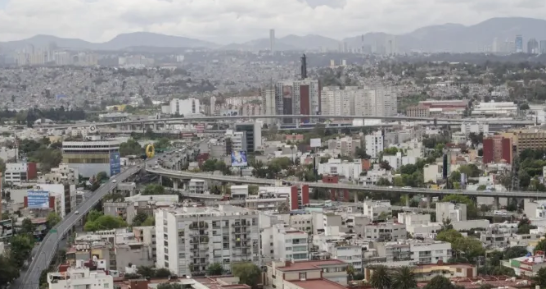

The Metropolitan Area of the Valley of Mexico has expanded and now includes four states and 84 municipalities in the country’s central region.
The decision was made during the First Ordinary Session of the Metropolitan Development Council of the Valley of Mexico, held at Felipe Ángeles International Airport (AIFA).
The council, previously composed of the governments of Mexico City, the State of Mexico, and Hidalgo, has now incorporated the state of Morelos. The Federal Government also participates through the Ministry of Agrarian, Territorial, and Urban Development (Sedatu).
During the session, eight agreements were approved, including the declaration modifying the Metropolitan Area of the Valley of Mexico, officially expanding its boundaries.
The Metropolitan Area of the Valley of Mexico now officially consists of 59 municipalities in the State of Mexico, 16 boroughs (alcaldías) of Mexico City, eight municipalities in Hidalgo, and one municipality in Morelos.
How Is the Metropolitan Area of the Valley of Mexico Now Composed?
According to Sedatu, the Metropolitan Area of the Valley of Mexico is now composed of the following:
Mexico City
- Álvaro Obregón
- Azcapotzalco
- Benito Juárez
- Coyoacán
- Cuajimalpa de Morelos
- Cuauhtémoc
- Gustavo A. Madero
- Iztacalco
- Iztapalapa
- La Magdalena Contreras
- Miguel Hidalgo
- Milpa Alta
- Tláhuac
- Tlalpan
- Venustiano Carranza
- Xochimilco
State of Mexico
- Acolman
- Amecameca
- Apaxco
- Atenco
- Atizapán de Zaragoza
- Atlautla
- Axapusco
- Ayapango
- Chalco
- Chiautla
- Chicoloapan
- Chiconcuac
- Chimalhuacán
- Coacalco de Berriozábal
- Cocotitlán
- Coyotepec
- Cuautitlán
- Cuautitlán Izcalli
- Ecatepec de Morelos
- Ecatzingo
- Huehuetoca
- Hueypoxtla
- Huixquilucan
- Isidro Fabela
- Ixtapaluca
- Jaltenco
- Jilotzingo
- Juchitepec
- La Paz
- Melchor Ocampo
- Naucalpan de Juárez
- Nextlalpan
- Nezahualcóyotl
- Nicolás Romero
- Nopaltepec
- Otumba
- Ozumba
- Papalotla
- San Martín de las Pirámides
- Tecámac
- Temamatla
- Temascalapa
- Tenango del Aire
- Teoloyucan
- Teotihuacán
- Tepetlaoxtoc
- Tepetlixpa
- Tepotzotlán
- Tequixquiac
- Texcoco
- Tezoyuca
- Tlalmanalco
- Tlalnepantla de Baz
- Tonanitla
- Tultepec
- Tultitlán
- Valle de Chalco Solidaridad
- Villa del Carbón
- Zumpango
Hidalgo
- Atitalaquia
- Atotonilco de Tula
- Tepeji del Río de Ocampo
- Tizayuca
- Tlaxcoapan
- Tolcayuca
- Tula de Allende
- Villa de Tezontepec
Morelos
- Huitzilac
The Importance of the Metropolitan Area of the Valley of Mexico
The Metropolitan Area of the Valley of Mexico is one of the most important metropolitan regions in the country.
With a territorial extension of 912,000 hectares, it now encompasses 84 municipalities and boroughs distributed across four federal entities. Nearly 23 million people live in the region, representing approximately 17 percent of Mexico’s total population.
Its importance goes beyond its population size, serving as a major driver of the Mexican economy. The Metropolitan Area of the Valley of Mexico generates 28 percent of the country’s Gross Domestic Product (GDP) and, if considered independently, its economy would rank as the fourth largest in Latin America.
Its economic strength makes it Mexico’s leading scientific, technological, financial, cultural, and logistics center. This dynamism is reflected in the daily movement of more than one million workers and over 270,000 students who cross its administrative boundaries.
Alongside its urban challenges, the metropolitan region also shares an interconnected environmental system sustained by the same watershed, shared aquifers, and a common atmosphere.
Source: sinembargo