
A community in Zacatecas woke up one day in July to find five bodies hanging from a bridge. It was a reminder that violence never really left this region, which is strategically important for drug trafficking organizations.
The bodies appeared in Pozo de Gamboa, a community of barely 5,000 inhabitants in the state of Zacatecas. The area connects central Mexico with the northern and western parts of the country and has key routes for drug trafficking.
AFP visited this bean-producing town, which is now paralyzed by fear. People return home as soon as night falls and avoid making any comments about the massacre.
Zacatecas, with a population of 1.6 million, appeared to have left behind its bloodiest years, when massacres carried out by organized crime and forced displacement were common.

One indicator is the number of intentional homicides: according to official figures, they fell from around 1,300 in 2022 to 144 in 2025. The government attributes this decline to greater security coordination with federal authorities.
However, the bodies were found hanging on July 18, and the apparent period of peace came to an end. Among the victims were a former mayor, public officials, and businesspeople from other parts of the state. Five additional bodies were found in nearby areas that same day.
The Jalisco New Generation Cartel (CJNG) and the Sinaloa Cartel, the country’s largest criminal organizations, have fought for control of Zacatecas because of its strategic location for drug trafficking toward the United States.

“They Kill for Nothing”
The prosecutor’s office opened an investigation, while the Zacatecas government, led by David Monreal Ávila, promised an “immediate and forceful response” to the violence, which authorities acknowledged had previously decreased. The government requested support from the Army and the National Guard to reinforce security.
During the journey from the state capital to Pozo de Gamboa, which takes approximately 40 minutes by car, there were no police checkpoints, only a couple of patrol cars passing through.

“It feels tense, like… like no one ever lived here. Because yes, there were always people here, always,” a resident told AFP, requesting anonymity for his safety. “By 9 at night, there is no one outside anymore.”
Pozo de Gamboa’s connection to violence is not new. Most residents have a relative or acquaintance who has been killed or disappeared.
“When they disappear people here, they kill them,” the man added. “They fix them up so they don’t smell.” “They killed a brother of ours like that too,” he continued. “It’s all the criminal gangs,” as people refer to the cartels. “They kill for nothing.”
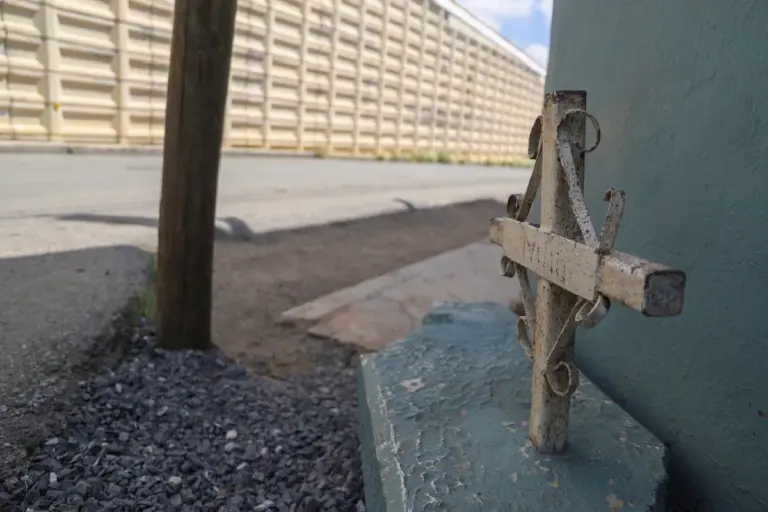
The bridge has a grim history; bodies had been left there before. On July 18, a food vendor said that the bodies had been hanging there since 4 in the morning.
The scene also recalls the worst years of violence in Mexico, when the so-called “war on drugs” began in 2006 and criminal groups displayed bodies on bridges, highways, and public spaces to intimidate their rivals and authorities.
“Structural Violence”
Academic Cristela Trejo explained, however, that this new outbreak of violence cannot be understood solely as a dispute between cartels. Instead, she described it as a collusion involving state institutions, organized crime, and even private actors.
“This is what maintains and sustains this structural violence,” she stated.
Following the July massacre, Zacatecas became another major security concern for the government of President Claudia Sheinbaum, who has promised to bring those responsible to justice.
Sheinbaum changed the “hugs, not bullets” strategy of her predecessor and political mentor, left-wing president Andrés Manuel López Obrador, and has increased drug seizures and arrests throughout the country. She has also deployed troops to violent states such as Sinaloa and Michoacán, amid threats from U.S. President Donald Trump to take action against drug trafficking on his own.

Source: grupoanimal