
The so-called Tabasco Group is the term used in political and journalistic circles to identify a network of leaders, officials, and political operators from Tabasco who built relationships around Andrés Manuel López Obrador during his time in the Democratic Revolution Party (PRD) and later held important positions in Morena and the federal government.
Its history helps explain how a regional political structure went from opposition mobilizations in Tabasco to occupying positions in the federal government, Congress, and Morena. Names associated with this trajectory include Adán Augusto López Hernández, Javier May Rodríguez, Octavio Romero Oropeza, José Ramiro López Obrador, Rosalinda López Hernández, Rafael Marín Mollinedo, and Víctor Lamoyi Bocanegra.
The network has also expanded beyond Tabasco. In 2023, during Morena’s internal process to define its presidential candidate, Adán Augusto López deployed political operators in the State of Mexico, while in 2026 his political activity once again acquired a national dimension through territorial work assigned within Morena ahead of the 2027 elections.
From Electoral Resistance to National Power
One of the starting points of this history can be found in the political mobilizations in Tabasco during the late 1980s and 1990s. López Obrador built a political platform in his home state that later allowed him to project himself nationally.
Adán Augusto López Hernández, Javier May Rodríguez, and Octavio Romero Oropeza belong to different generations of this process. Their careers initially coincided within the PRD and later in Morena. Their relationship did not always mean political agreement: over time, different factions and disputes over control of Tabasco emerged.
A symbolic date is 1988, when Adán Augusto López participated in activities linked to the National Democratic Front. By 1996, his closeness to López Obrador was already documented in the context of the mobilizations against Pemex in Tabasco. From then on, the Tabasco lawyer became one of the politicians who accompanied the current former president during different stages of his career.
Another decisive moment occurred in 2006, when López Hernández coordinated López Obrador’s presidential campaign. He later served in the Chamber of Deputies and the Senate before becoming one of the political figures involved in the construction of Morena.
Adán Augusto López, the Central Operator
Adán Augusto López Hernández was born on September 24, 1963, in Paraíso, Tabasco. He studied Law at the Juárez Autonomous University of Tabasco (UJAT), completed studies in Comparative Law in Paris, earned a master’s degree in Political Science at the University of Paris II, and obtained a diploma in Notarial Law from the National Autonomous University of Mexico (UNAM). He also worked as a public notary in Villahermosa.
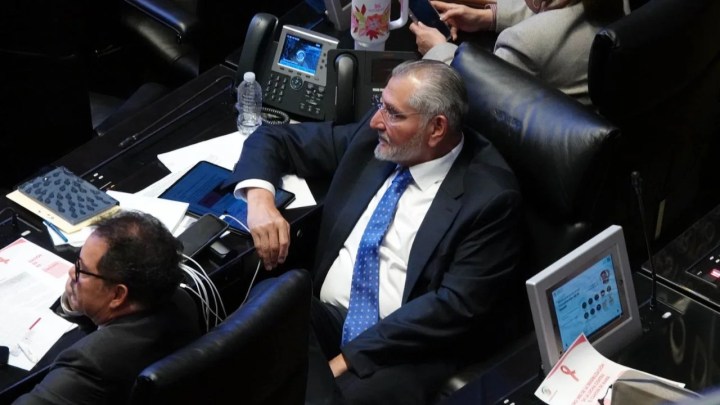
His party career began in the PRI. He served as the party’s secretary general in Tabasco and participated in Manuel Andrade Díaz’s campaign for governor in 2000. He later joined the PRD and held legislative positions, eventually becoming one of the Tabasco politicians closest to López Obrador. In 2014, he joined Morena.
In 2016, he became Morena’s state leader in Tabasco. Two years later, he was the party’s candidate for governor and won the 2018 election. He took office on January 1, 2019.
The governorship represented the first major institutional leap for the Adancista faction. During his administration, López Hernández placed close political allies in strategic positions and consolidated a structure that survived his departure from state government.
On August 26, 2021, he requested a leave of absence to join the federal government as Secretary of the Interior. The position in Tabasco was taken over by Carlos Manuel Merino Campos, who had been López Hernández’s substitute in different positions and was considered part of his political circle.
Interior Ministry: Tabasco’s Leap to the Center of Power
Adán Augusto López’s arrival at the Ministry of the Interior represented a change in the political dimension of the group.
It was no longer simply a network with influence in Tabasco. From the agency responsible for domestic political affairs, López Hernández participated in negotiations with governors, legislators, political parties, and institutional actors.
López Obrador himself described him as a close associate, fellow countryman, and longtime collaborator. From the Interior Ministry, Adán Augusto acquired a central role in the federal government’s political negotiations and in building legislative agreements.
His time at the Interior Ministry also turned him into one of Morena’s presidential hopefuls for 2024. In 2023, he participated in the party’s internal process, which was ultimately won by Claudia Sheinbaum.
The Senate and Adán Augusto’s Second Stage
After the presidential contest, López Hernández returned to Congress. In September 2024, he became coordinator of Morena’s Parliamentary Group in the Senate and president of the Political Coordination Board.
From that position, he became one of the ruling party’s main legislative operators. His participation was particularly visible during negotiations over constitutional reforms and the construction of qualified majorities.
On February 1, 2026, he stepped down as Morena’s Senate coordinator and as president of the Political Coordination Board, but retained his Senate seat. He explained that his decision was due to the need to focus on territorial work and political organization ahead of the 2027 elections.
He later stated that his work within Morena would be connected to the Fourth Electoral Circumscription, made up of Mexico City, Guerrero, Hidalgo, Morelos, Puebla, and Tlaxcala.
That move once again placed the Tabasco politician in a national party-operation position, although without the institutional power he had held as Interior Secretary or parliamentary coordinator.
The Names Behind the Tabasco Group
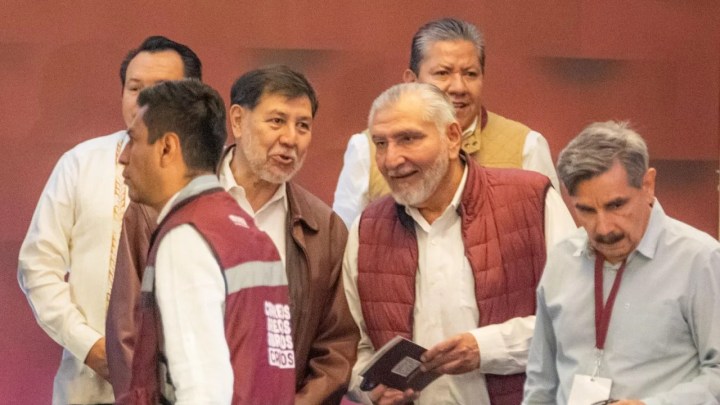
The network has had different members and allies depending on the period.
Octavio Romero Oropeza represents one of its clearest historical links. An agricultural engineer, he was a mathematics teacher and professor of Algebra and Statistics at UJAT. His political career developed within the PRD and later Morena. He served as chief administrative officer of the Mexico City government during López Obrador’s administration and headed Petróleos Mexicanos (Pemex) from 2018 to 2024. Since October 2024, he has headed the Institute of the National Workers’ Housing Fund (Infonavit).
Javier May Rodríguez represents another branch of the network. Originally from Comalcalco, he began his political activity in movements linked to López Obrador and the PRD. He served as a local congressman, mayor of Comalcalco, Morena state leader, senator, Secretary of Welfare, and director general of the National Tourism Development Fund (Fonatur). In 2024, he won the governorship of Tabasco and currently heads the state government.
However, May and Adán Augusto eventually stopped representing a single political faction. The dispute over Morena’s gubernatorial candidacy in 2024 exposed a division. López Hernández supported Yolanda Osuna, while May ultimately prevailed in the internal process.
José Ramiro López Obrador, Andrés Manuel López Obrador’s brother, is another name linked to the Tabasco political network. In 2024, he served as general coordinator of Javier May’s gubernatorial campaign and currently holds the position of Secretary of Government of Tabasco. His position once again places him at the center of state politics.
Rosalinda López Hernández, Adán Augusto’s sister, was another important figure in the network. She was a member of the PRD and later Morena; she served as a local and federal congresswoman, senator, and official at the Tax Administration Service (SAT). She died on June 5, 2024, shortly after being elected senator for Tabasco. She was married to Rutilio Escandón Cadenas, who served as governor of Chiapas from 2018 to 2024.
Rafael Marín Mollinedo and Víctor Lamoyi Bocanegra also appear in various journalistic accounts of the Tabasco Group. Lamoyi, a public finance specialist, served as Tabasco’s Secretary of Planning and Finance and later held federal positions before becoming director general of Banco del Bienestar in 2021. He also has experience as a professor of Finance and Public Policy at the graduate level.
The Educational Sector Is Also Part of the Story
The educational dimension helps explain that the network was not built solely through electoral positions.
UJAT appears as an educational point of origin for several political figures. Adán Augusto López studied Law there; Rosalinda López studied Public Accounting; while Octavio Romero taught Algebra and Statistics.
Another case is Marcos Rosendo Medina Filigrana, a Tabasco politician who moved through the PRI, PRD, and later Morena. He holds a degree in Law and master’s degrees in Political Science and Constitutional Law. For years, he taught Administrative Law, Constitutional Law, and Political Theory at the Universidad Olmeca.
Medina Filigrana also held positions at the Ministry of the Interior before becoming Secretary of Government of Tabasco during Adán Augusto López’s administration, from 2019 to 2020. He later returned to the Chamber of Deputies and continued his political activity within Morena.
This is relevant because it shows a combination of legal education, academic experience, public administration, and party activism that is repeated among different members of the network.
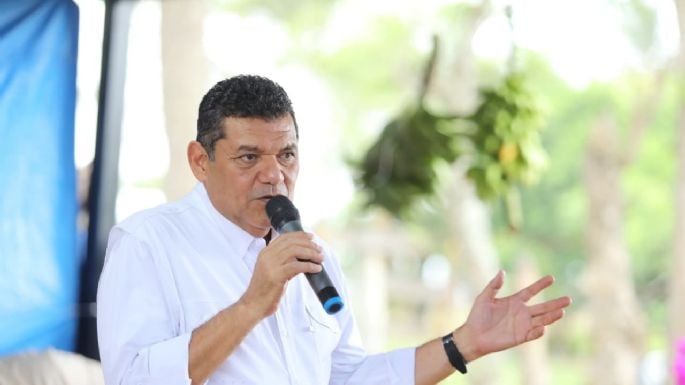
Marcos Rosendo, the Bridge Between Tabasco and the Interior Ministry
Medina Filigrana’s career represents one of the clearest bridges between Tabasco politics and the federal administration.
Before joining Adán Augusto’s cabinet, he worked at the Ministry of the Interior between 1995 and 1998. He later developed a career in the PRD, served as a federal and local congressman, and in 2019 returned to state politics as Secretary of Government.
Within Morena, he held national and state party responsibilities, including a party delegation in Puebla. His career demonstrates how some Tabasco political figures did not remain confined to local politics but moved through different territorial and national structures.
The State of Mexico: A Network Seeking to Expand Its Territory
The State of Mexico represents a different chapter.
During the 2023 presidential process, Adán Augusto López had local political operators. One of them was Samuel Ríos, identified by local media as one of those responsible for his political operation in the state. Ríos maintained links with Morena structures in the State of Mexico associated with Higinio Martínez.
The relationship with the State of Mexico took on another dimension in 2026, when reports emerged about Adán Augusto’s incorporation into Morena’s political organization efforts in the state. The move generated criticism from Higinio Martínez, who defended the role of local political figures. However, López Hernández himself explained that his territorial responsibility corresponded to the Fourth Electoral Circumscription, meaning the situation in the State of Mexico should be distinguished from his formal party assignment.
The importance of the State of Mexico in this story lies in another fact: it is one of the country’s largest electoral territories and an area where Morena’s local structures have their own identity. The involvement of outside operators shows how far national political groups seek to extend their influence.
Andrea Chávez and the New Generation

Andrea Chávez Treviño does not belong to the historical Tabasco core. She is originally from Chihuahua, and her political career developed within Morena from that state.
Her inclusion in the history of the Tabasco Group stems from a later stage: her political alliance with Adán Augusto López during Morena’s 2023 internal contest and her subsequent activity as a senator. The relationship became particularly visible during 2025 and 2026, when López Hernández publicly supported her political project in Chihuahua.
Therefore, rather than presenting her as an original member of the Tabasco Group, it is more accurate to identify her as a political ally of the faction led by Adán Augusto.
The distinction is important: the Tabasco Group emerged from territorial, family, and political relationships built over decades in Tabasco; later alliances represent the national expansion of that faction.
The Dispute Over Control of Morena
The history of the Tabasco Group is also a history of divisions. During López Obrador’s presidency, several Tabasco politicians occupied strategic positions in the federal government. But Claudia Sheinbaum’s rise changed Morena’s internal balance of power.
Javier May aligned himself with Sheinbaum during the 2023 internal contest, while Adán Augusto sought to become the presidential candidate. Later, the dispute over the Tabasco governorship indirectly brought the two factions into conflict. May won the candidacy and subsequently the constitutional election.
The result was the fragmentation of a network that for years had been identified as a relatively unified political bloc.
Today, there are at least two interpretations of the former Tabasco Group: one considers it a structure that remains active around Adán Augusto and other national political figures; another argues that it lost cohesion with the arrival of new generations and the shift of political power in Tabasco toward Javier May.
A Network That Changed Shape
The history of the Tabasco Group cannot be reduced to a list of names. Its main characteristic has been its ability to transfer political relationships from one sphere to another: from the PRD to Morena; from local mobilizations to the federal government; from municipal governments to the Senate; from the governorship to the Interior Ministry; and from state structures to national political operations.
Adán Augusto López embodies this evolution. He moved from Tabasco party politics to Congress, from there to the governorship, then to the Interior Ministry, and finally to the Senate. In 2026, he left the parliamentary leadership to return to Morena’s territorial work.
The so-called Tabasco Group, therefore, is not static. Its members have changed, some have died, others have politically separated, and others have built alliances outside the state. What remains is a network of political relationships that emerged in Tabasco during López Obrador’s long journey toward national power.
Its next test will be 2027: the ability of Adán Augusto and the political figures linked to his faction to maintain territorial influence while Javier May controls the governorship of Tabasco and Morena faces a new struggle over candidacies and positions of power.

Source: sociedad.noticias