
The historic decline in the water levels of Lakes Powell and Mead has once again placed Baja California’s water vulnerability at the center of discussion and highlighted the need to take action in a scenario shaped by drought, climate change, urban growth, and dependence on the Colorado River.
The water crisis in Baja California is not a distant scenario. The recent decline in the levels of Lakes Powell and Mead, two of the main reservoirs in the Colorado River system in the United States, represents a new warning sign for a region that shares the same watershed and faces growing pressure on its water resources.
Dr. Marisela Martínez Quiroz, an academic in Renewable Energy Engineering at CETYS University, Tijuana Campus, emphasized that this situation is highly relevant for Baja California because the Colorado River is the state’s main source of water supply. Therefore, what is currently happening in the major U.S. reservoirs cannot be understood solely as a problem on the American side, but rather as part of a binational water reality that directly affects communities, economic activities, and ecosystems on both sides of the border.
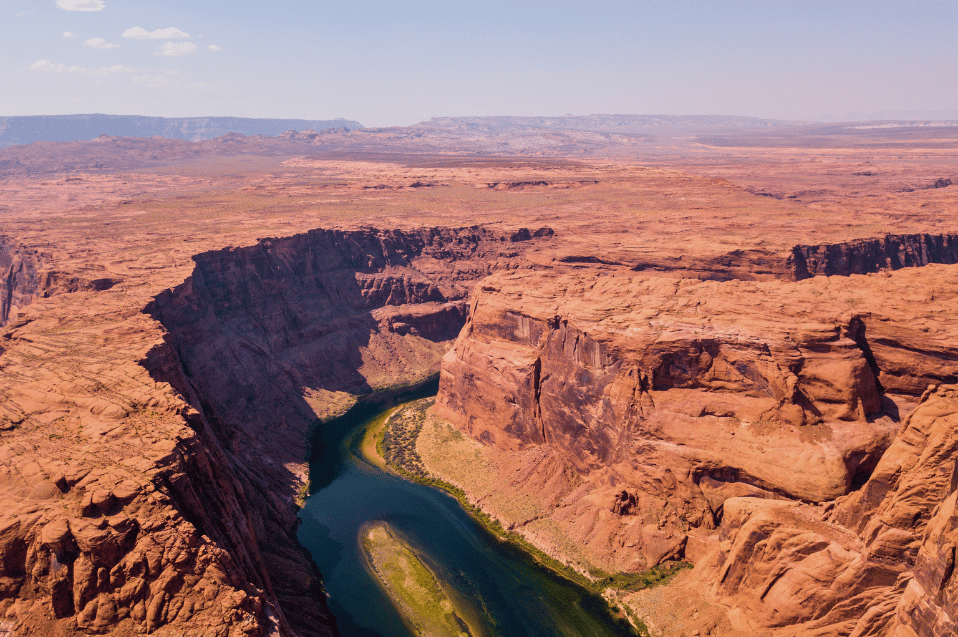
According to information published by national and international media, Lake Powell, located on the Colorado River between Arizona and Utah, fell approximately 1.1 meters during the last month and reached levels considered low and concerning for water and energy supplies. Meanwhile, Lake Mead, the largest reservoir in the United States and also supplied by the Colorado River, stood at approximately 1,039 feet, seven meters below the level recorded at the beginning of 2026.
Together, both reservoirs reached levels not seen in decades, amid an exceptional drought in the western and southwestern United States.
A Warning Baja California Has Known for Years
Since 2021, Dr. Marisela Martínez Quiroz, a researcher and academic at CETYS University in Tijuana, has warned of the need to recognize the water problem as a shared responsibility among citizens, businesses, civil society organizations, and governments.
“The increase in consumption associated with population growth, together with the reduction in water deliveries from the United States, makes the situation more difficult for Baja California. Given this scenario, comprehensive actions are required, along with the promotion of rational water consumption,” she said.
A year later, in July 2022, the academic warned that Baja California could face a situation similar to or even worse than the water crisis experienced by Nuevo León at that time. The combination of insufficient rainfall, low storage levels, population growth, and an inadequate culture of water conservation could create an increasingly complex situation for the state.
Urban Growth Increases the Problem
Water scarcity does not depend exclusively on the amount of rainfall or reservoir levels. Another challenge for Baja California is urban growth.
In 2022, the CETYS Tijuana academic noted that while cities such as Tijuana continue to grow, the amount of available water does not increase at the same rate. The city’s vertical growth, the construction of new residential and commercial developments, and population growth are creating additional demand on a water system already facing significant infrastructure challenges.
“In different sectors of the cities, there are facilities that were built several decades ago and require maintenance and modernization. Added to this are constant leaks, which represent water losses that could otherwise be used to meet other needs. Therefore, we have less water available, but we continue increasing demand.”
The water problem in Baja California also cannot be addressed separately from California and the other states that depend on the Colorado River. This means that any significant reduction in storage levels could generate a chain reaction: increased pressure on water distribution, the need to implement conservation measures, the search for alternative sources, and potential economic and social impacts.
For Baja California, the situation represents an additional warning because of its dependence on this watershed.
Dr. Martínez Quiroz has pointed out that the future of Mexico’s share of Colorado River water depends on several factors, including climate change, negotiations between Mexico and the United States, and conservation agreements. Planning water supplies as is currently done is no longer sufficient. Cities and institutions responsible for managing the resource need to consider scenarios of greater uncertainty and prepare for prolonged periods of scarcity.
For this reason, binational cooperation will become increasingly important.
Source: cetys