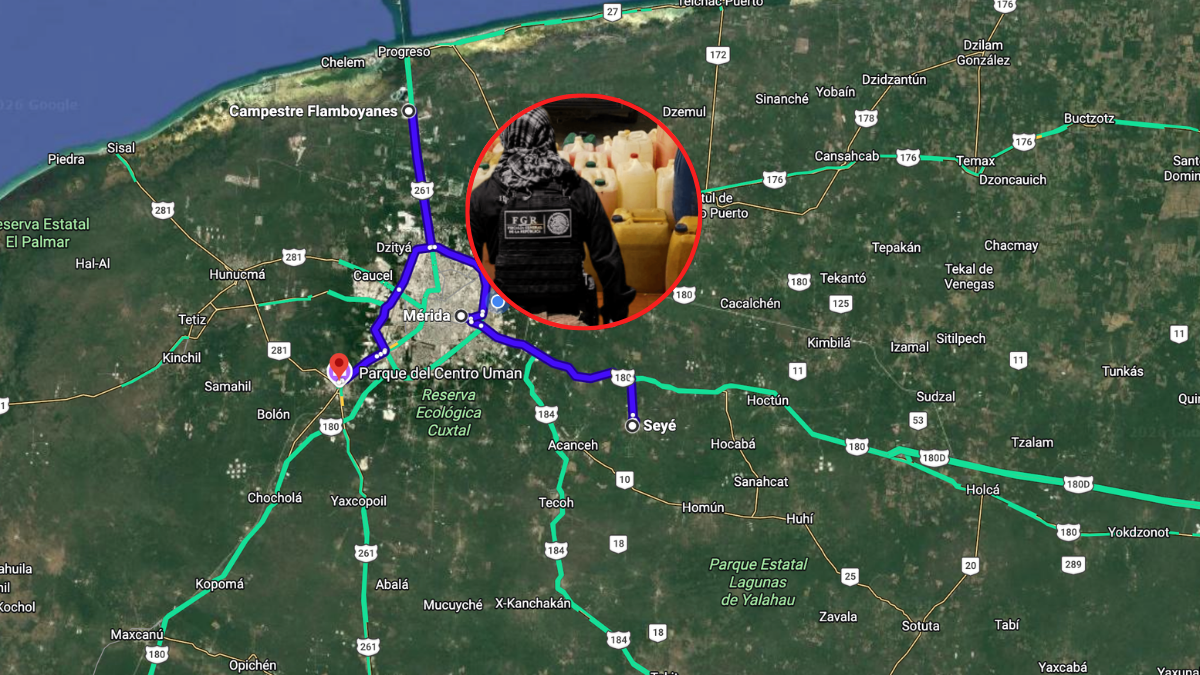

Yucatán has experienced a significant increase in investigations related to fuel theft, despite the state’s traditionally low levels of crime involving hydrocarbons.
According to figures attributed to the Attorney General’s Office (FGR), Yucatán recorded 20 investigations for crimes involving hydrocarbons during 2025, compared with just two cases in 2024, representing an increase of 900%.
The increase made Yucatán the state with the largest year-over-year growth in this type of crime during 2025. In 2023, the state had recorded six investigation files, meaning that the number of cases more than tripled between 2023 and 2025.
Fuel Seizures in Yucatán
The increase in investigations has also been accompanied by significant fuel seizures.
During 2024, authorities seized more than one million liters of fuel in Yucatán, placing the state in first place nationally in seized hydrocarbons that year.
In 2025, authorities reported the seizure of at least 588,000 liters of fuel.
During the first months of 2026, federal authorities had already seized more than 400,000 liters of fuel in the state.
The seizures demonstrate that the problem is no longer limited to isolated incidents and that authorities have identified a growing movement of illegally obtained or transported fuel in the state.
A Crime That Has Changed
The fight against huachicol has become more complex because fuel-related criminal activity encompasses more than the traditional theft of gasoline or diesel through illegal taps in Pemex pipelines.
The broader phenomenon includes the illegal extraction, transportation, storage, distribution and commercialization of hydrocarbons, as well as more sophisticated schemes involving fuel imports and tax evasion.
At the national level, authorities have identified fuel theft as one of the principal operational and financial risks affecting the country’s energy sector.
National Context
The increase in Yucatán occurs while federal authorities have intensified operations against fuel theft throughout Mexico.
At the national level, Pemex reported that losses caused by traditional fuel theft fell during the first quarter of 2026.
Between January and March 2026, losses associated with the illegal extraction of fuel through clandestine taps amounted to approximately 3.812 billion pesos, compared with 5.417 billion pesos during the same period of 2025, representing a reduction of around 30%.
However, specialists have warned that the reduction in losses does not necessarily mean that the phenomenon has disappeared. Criminal networks have adapted their methods, while authorities continue confronting both traditional fuel theft and fiscal fuel smuggling.
Yucatán Faces a New Security Challenge
The figures indicate that Yucatán, traditionally characterized by comparatively low levels of violent crime, is facing a growing challenge related to hydrocarbon-related crimes.
The increase from two investigations in 2024 to 20 in 2025, combined with the seizure of hundreds of thousands of liters of fuel during 2025 and 2026, has placed greater attention on the state’s role in the movement and commercialization of illegally obtained hydrocarbons.
The evolution of the crime also means that authorities must monitor not only pipeline theft, but also the transportation, storage and commercialization networks that allow illegally obtained fuel to reach consumers.
Source: yucatan