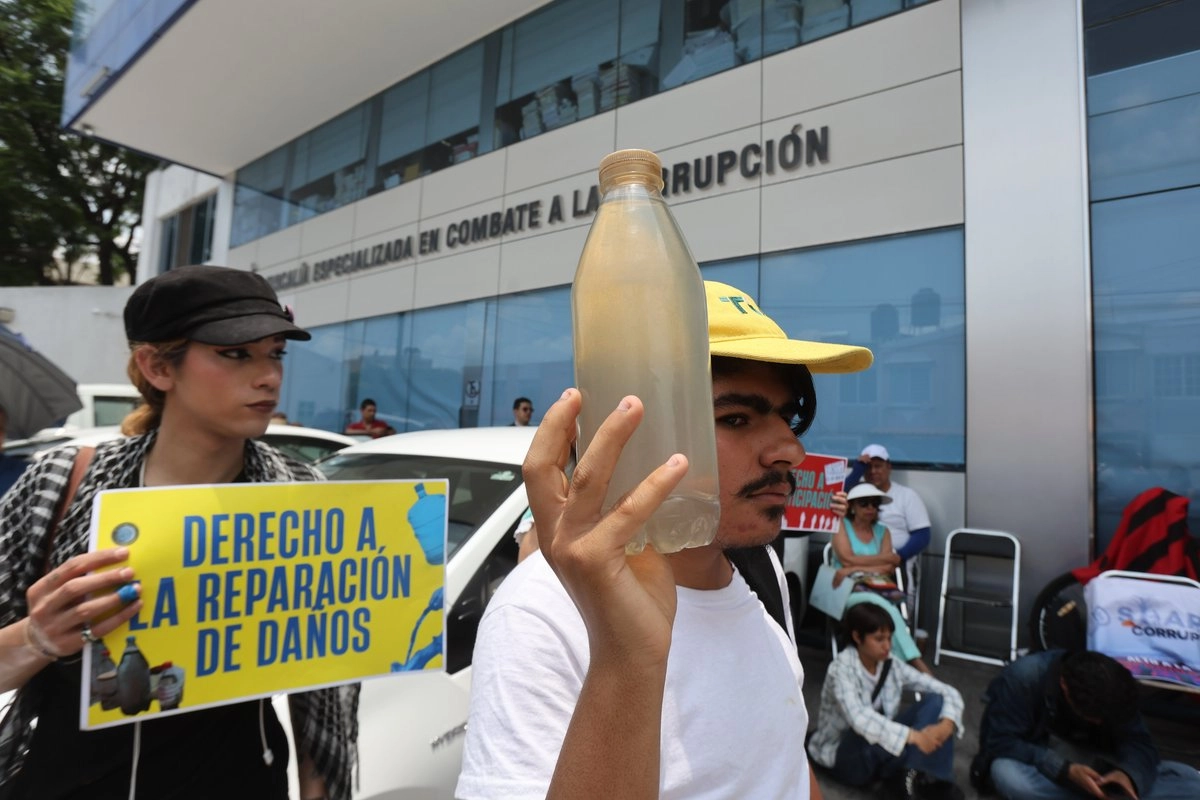

The Jalisco State Human Rights Commission (CEDHJ) delivered to the state Congress a list of 103 neighborhoods corresponding to 211 complaints regarding a lack of water supply and poor water quality distributed by the Intermunicipal System of Potable Water and Sewerage Services (SIAPA).
This is a second report, bringing the number of affected sectors to 302. It adds to the previous records requested by the local Legislature to incorporate them into the registry of settlements that will receive an 80 percent discount on the service rate, a benefit that has still not taken effect.
The CEDHJ submitted data on complaints regarding shortages and deficiencies in the quality of drinking water in areas of the municipalities of Guadalajara, Tlaquepaque, Tonalá, and Zapopan, which are connected to the SIAPA distribution network.
During the period from August 1 to 31 of this year, the human rights organization received the 211 complaints regarding these service failures, ten of which correspond to collective cases.
Originally, the CEDHJ stated that there were complaints about poor water quality or lack of supply in at least 600 neighborhoods in the metropolitan area. However, the state government reduced that figure and established that only 203 of them met the criteria to receive the benefit, a position that ultimately prevailed in Congress and among the decision-making authorities.
On August 7, the members of the SIAPA governing board approved, with 18 votes in favor and two abstentions, the application of the 80 percent discount for this latter number of sectors, out of a total of 243 that the CEDHJ had previously proposed.
Despite these agreements and the publication of the corresponding decree, users in the 302 neighborhoods that now make up the consolidated list are still waiting for the reduction to be applied to their bills.
The CEDHJ clarified that the information it sent to the local Congress is strictly informational in nature and responds to the mandate of the state decree. Therefore, it “does not represent a technical opinion or an administrative determination,” since the commission does not have the legal authority to certify the operational conditions of the drinking water service or to validate eligibility for the tax benefits.
The technical and legal evaluation of the data falls exclusively under the responsibility of the competent authorities in charge of implementing the resolution.
Source: jornada