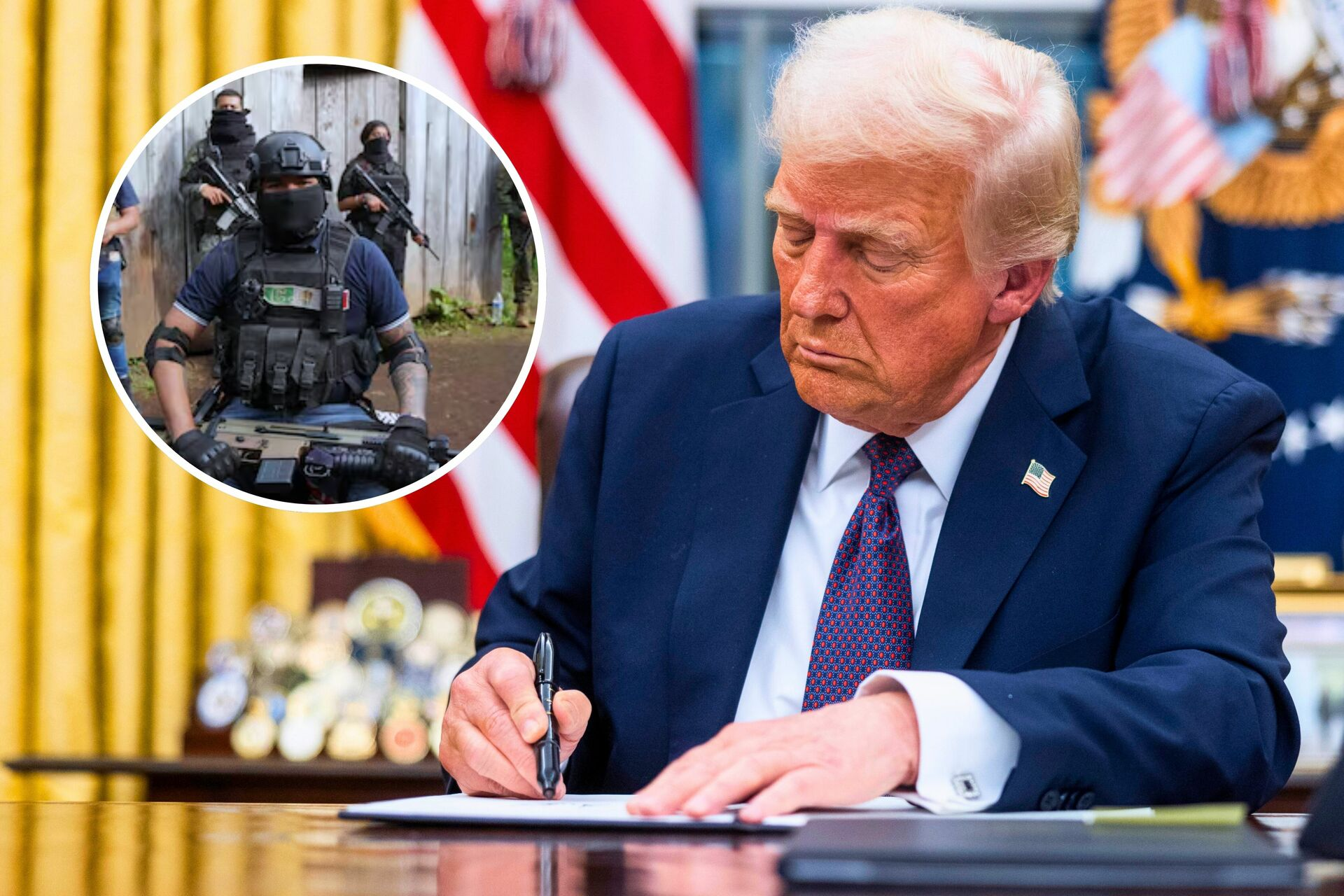

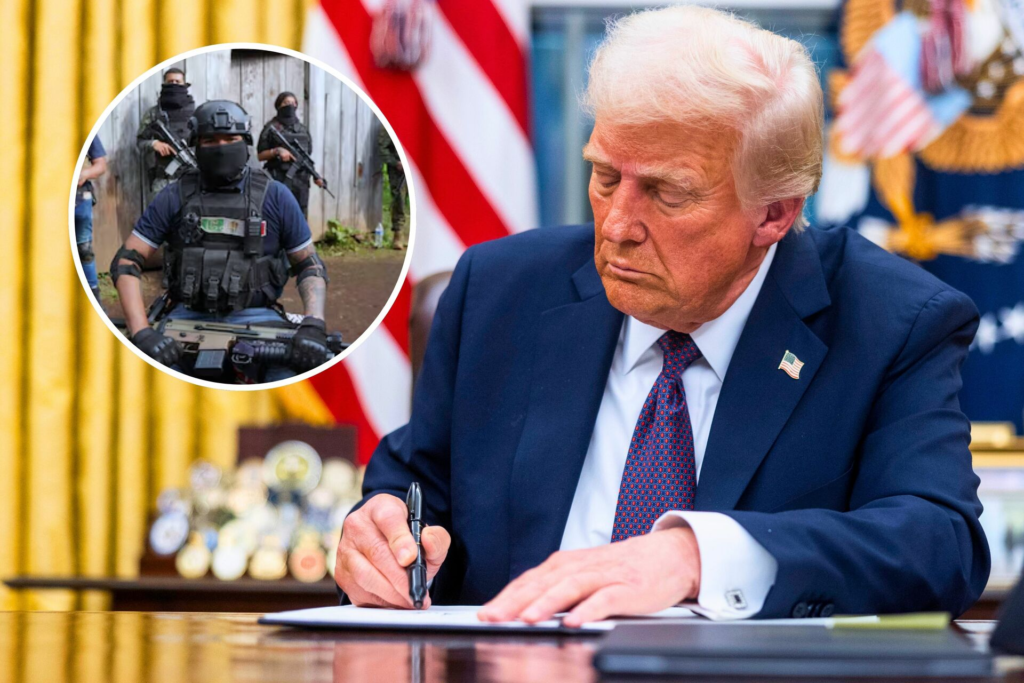
The Donald Trump administration has designated 21 criminal groups from Latin America and the Caribbean as “foreign terrorist organizations” since taking office, the latest this week coinciding with Secretary of State Marco Rubio’s tour of allied countries in the region—Colombia, Ecuador, and Peru—to consolidate their support for the U.S. strategy against drug trafficking.
This designation was traditionally reserved for groups such as the Islamic State or Al Qaeda, which use violence for political purposes, and not for cartels and other criminal networks focused on making money. However, Trump’s objective was to increase pressure on these groups and anyone who, in his view, provides them with support.
The strategy began in February 2025. It served as a pretext for the capture of Venezuelan leader Nicolás Maduro almost a year later, as well as for dozens of attacks against alleged “narcoterrorist” vessels that have resulted in more than 200 deaths. It also led Latin American countries such as Guatemala and Argentina to take similar measures against certain groups, and countries such as Ecuador to launch joint operations with Washington on Ecuadorian territory.
Mexico is the country with the most groups on the list (eight) and is under greater pressure from Washington, while its government attempts to prevent any unilateral military action by Trump’s United States against the cartels, particularly following formal accusations against senior officials in the state of Sinaloa.
But Trump’s strategy has also exposed contradictions. Former Honduran President Juan Orlando Hernández, who was sentenced to 45 years for drug trafficking and accused during his trial of protecting the Sinaloa Cartel, was pardoned by the United States last year and is now living freely in his country.
Below is a look at the 21 Latin American and Caribbean groups designated as terrorists during the current U.S. administration.
MEXICO
- The Main Targets: The Sinaloa Cartel and the Jalisco Cartel
The Sinaloa Cartel and the Jalisco New Generation Cartel (CJNG), named after the states that serve as their strongholds in northwestern Mexico, are multinational criminal groups and the largest traffickers of fentanyl into the United States.
The Sinaloa Cartel, Mexico’s oldest cartel, which emerged in the 1970s, is a criminal conglomerate that moves all types of drugs across continents using boats, aircraft, migrants, and cross-border tunnels. A former security secretary was convicted of helping them.
It controls the western portion of the border with the United States, although the arrest of Ismael “El Mayo” Zambada triggered an internal power struggle and weakened the group.
The CJNG, established in the early 2010s, is an extremely violent group that has used rocket launchers, explosive-laden drones, and homemade mines against authorities and in 2020 organized a spectacular attack against the then head of Mexico City’s police force—now Mexico’s Secretary of Security—in the heart of the capital.
The DEA says it distributes tons of cocaine, methamphetamine, and fentanyl across all 50 U.S. states and has maintained its power despite the death of its leader, Nemesio Oseguera, “El Mencho,” in February, and the numerous arrests that followed.
- Control of the Texas Border: The Gulf, Northeast, and Juárez Cartels
The Gulf Cartel and the Northeast Cartel operate in the far eastern region, moving drugs, migrants, weapons, and money along the most direct route into the United States from Central and South America.
Former Gulf Cartel leader Osiel Cárdenas Guillén—now imprisoned in Mexico after serving a sentence in the United States—recruited military personnel for his protection who later formed their own feared cartel: Los Zetas. The Northeast Cartel is a remnant of Los Zetas and is based in Nuevo Laredo, the busiest commercial port on the Mexico-U.S. border.
The Juárez Cartel has controlled a key point in the center of the border for decades: Ciudad Juárez, across from El Paso, Texas. Both its founder, Amado Carrillo Fuentes, and the brothers and sons who succeeded him turned the trafficking of tons of drugs into a multimillion-dollar business. Despite the arrests of many of its leaders, the cartel and allied groups maintained control over a vast infrastructure for bringing illegal shipments into the United States.
- Local Cartels in Michoacán: La Familia, Cárteles Unidos, and Los Viagras
All of these criminal groups operate in the western state of Michoacán, produce synthetic drugs, and have consolidated their regional control through extortion and shifting loyalties over the years.
La Familia Michoacana, now renamed the “Nueva Familia Michoacana,” is the oldest. The other two, former allies, emerged after the 2013 armed uprising by self-defense groups that managed to drive out older cartels, only to see them replaced by others.
Their extortion affects all economic sectors, including a key export product to the United States: avocados.
CENTRAL AMERICA
- Barrio 18 and Mara Salvatrucha (MS-13)
The two violent groups operate mainly in El Salvador, Guatemala, and Honduras. They originated in Los Angeles as street gangs created by Salvadoran immigrants. When many of their members were deported to El Salvador, these groups expanded and gained power throughout Central America, where they continue to terrorize communities.
In recent years, both groups have suffered a major blow from President Nayib Bukele, who launched a controversial war against gangs and imprisoned more than 80,000 people.
Guatemala also designated both groups as terrorists in October and tightened laws against them.
COLOMBIA
- Clan del Golfo
With an estimated 9,000 combatants, Clan del Golfo is one of Colombia’s most powerful armed groups. Also known by its Spanish acronym, AGC, it evolved from right-wing paramilitary squads that fought Colombia’s Marxist guerrillas during the 1990s and 2000s.
According to a report by the Ombudsman’s Office, the AGC is present in approximately one-third of Colombia’s 1,103 municipalities, where it extorts local businesses.
Clan del Golfo participated in peace talks with the Colombian government last year, a dialogue that ended with Abelardo de la Espriella coming to power, a major Trump ally in the region.
VENEZUELA
- Tren de Aragua
This group emerged from a prison in central Venezuela more than a decade ago. In recent years, it expanded from Chile to the United States, taking advantage of the exodus of approximately 8 million Venezuelans who fled the country’s political and economic crises.
Although its origins are in drug trafficking, its main businesses are the illicit trafficking of migrants, human trafficking, sexual exploitation, and forced labor. It is known for extreme violence, including decapitations and burying victims alive.
- Cartel of the Suns
The entity that Washington alleges was led by Maduro is not technically a cartel, but it was designated as such less than six weeks before Maduro was captured in January.
Venezuelans began using the term Cartel of the Suns in the 1990s to refer to high-ranking military officers who had become wealthy through drug trafficking. As corruption expanded, its use was broadened imprecisely to include police officers and government officials, as well as activities such as illegal mining and fuel smuggling. The term “suns” refers to the insignia worn by high-ranking military officers. In 2020, it began to be considered a group led by Maduro when the United States announced formal charges against him.
ECUADOR
- Los Lobos, Los Choneros, The Chone Killers, and Los Tiguerones
Los Lobos, Los Choneros, The Chone Killers, and Los Tiguerones are gangs blamed for much of the violence that began during the COVID-19 pandemic. All are involved in contract killings, extortion, and drug trafficking and sales.
Los Tiguerones was formed in Guayaquil in 2019 as the armed wing of Los Choneros, the parent organization of most Ecuadorian gangs.
Authorities have held these groups responsible for the increase in violence in the country as they compete over drug-trafficking routes toward the Pacific and control of territory, including inside prisons, where hundreds of inmates have been killed since 2021.
All of them are among the 22 criminal gangs designated as “terrorists” by Ecuador in 2024.
BRAZIL
- Comando Vermelho and Primeiro Comando da Capital
Comando Vermelho and Primeiro Comando da Capital are two of Brazil’s most violent criminal organizations. They work with around 50 smaller gangs throughout the country and, collectively, command thousands of members and have orchestrated brutal attacks against Brazilian police officers, public officials, and civilians.
Their influence and illicit networks extend far beyond Brazil’s borders.
HAITI
- The Viv Ansanm and Gran Grif Gangs
The two Haitian groups are primarily linked to arms trafficking, kidnappings, murders, extortion, and, to a lesser extent, drug trafficking.
The Viv Ansanm coalition is known for launching a series of attacks beginning in February 2024 that shut down Haiti’s main international airport, freed hundreds of prisoners from the country’s two largest prisons, and ultimately forced then-Prime Minister Ariel Henry to resign. It controls at least 85% of the capital, forcing civil society organizations to negotiate with gangs in order to deliver aid to communities.
Gran Grif has attacked several cities and towns in central Haiti. In October, the gang was blamed for killing more than 70 people in Pont-Sondé.
Source: telemundochicago