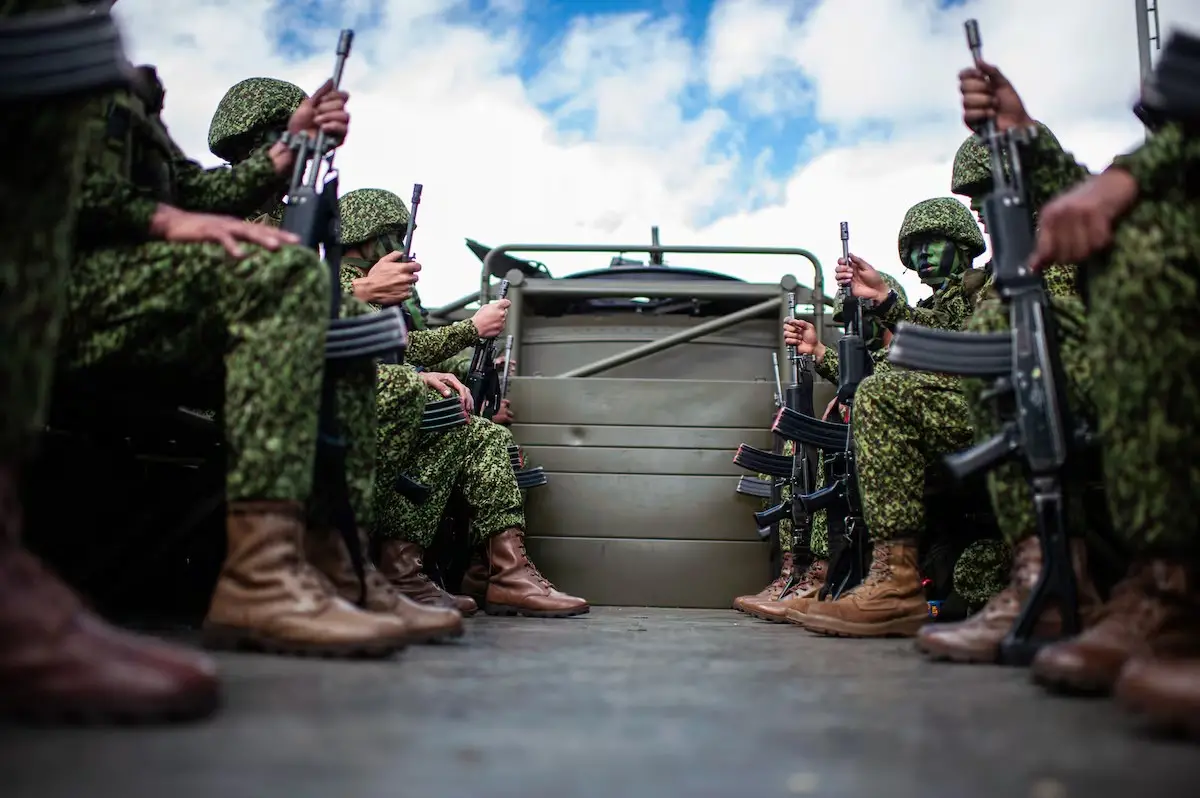

Somewhere in the depths of Mexico, a man recounts his life in the service of the “four letters,” a nickname he uses to refer to the Jalisco New Generation Cartel (CJNG), one of the largest criminal enterprises in Latin America. The former Colombian soldier, whose identity has been withheld, claims that other compatriots have been recruited into the gang, “pure commandos and special forces,” although he is also a colleague of “ex-guerrillas.” The man speaks for a few minutes about the details of his work: his pay and vacation time, as if it were an ordinary job and not a direct ticket to jail or the grave.
The growing presence of former Colombian soldiers in Mexico has authorities on edge. Last week, Claudia Sheinbaum’s government reported the arrest of 12 citizens of the South American country, linked to the death of eight soldiers from an antipersonnel mine in Michoacán, in the center of the country. Nine of those captured are former military personnel, while the other three had received military training. This case adds to other recent ones in the region, where authorities have linked Colombian citizens to drone bomb attacks. In Guanajuato, local police say they have identified “Colombian paramilitaries, lancers, and explosives experts [experts in handling explosives].”
The trend worries Mexican authorities. Hundreds of former Colombian soldiers leave their country each year to fight in foreign conflicts, such as the war in Ukraine, lured by high salaries. “To put this into perspective, in 2008, in Latin America alone, there were 12,000 mercenaries, and by 2018, the number was estimated at 2.4 million,” says Paloma Mendoza Cortés, a professor and expert in national security at ITAM, one of Mexico’s most prestigious universities. “Most of them are of Colombian origin, and for many years the government denied their existence. It’s a surprising phenomenon, one that has a decisive influence that helps explain the increase in organized crime’s firepower,” he adds.
In Mexico, the CJNG and other groups offer large sums to mercenaries to fight in an extremely violent context. In each of the last eight years, the North American country has recorded more than 30,000 murders, most of them committed with firearms. Drug trafficking to the United States, the illegal flow of weapons to the south, and the mafia-like practices of criminal groups, immersed in thousands of battles to control entire regions, exacerbate the violence.
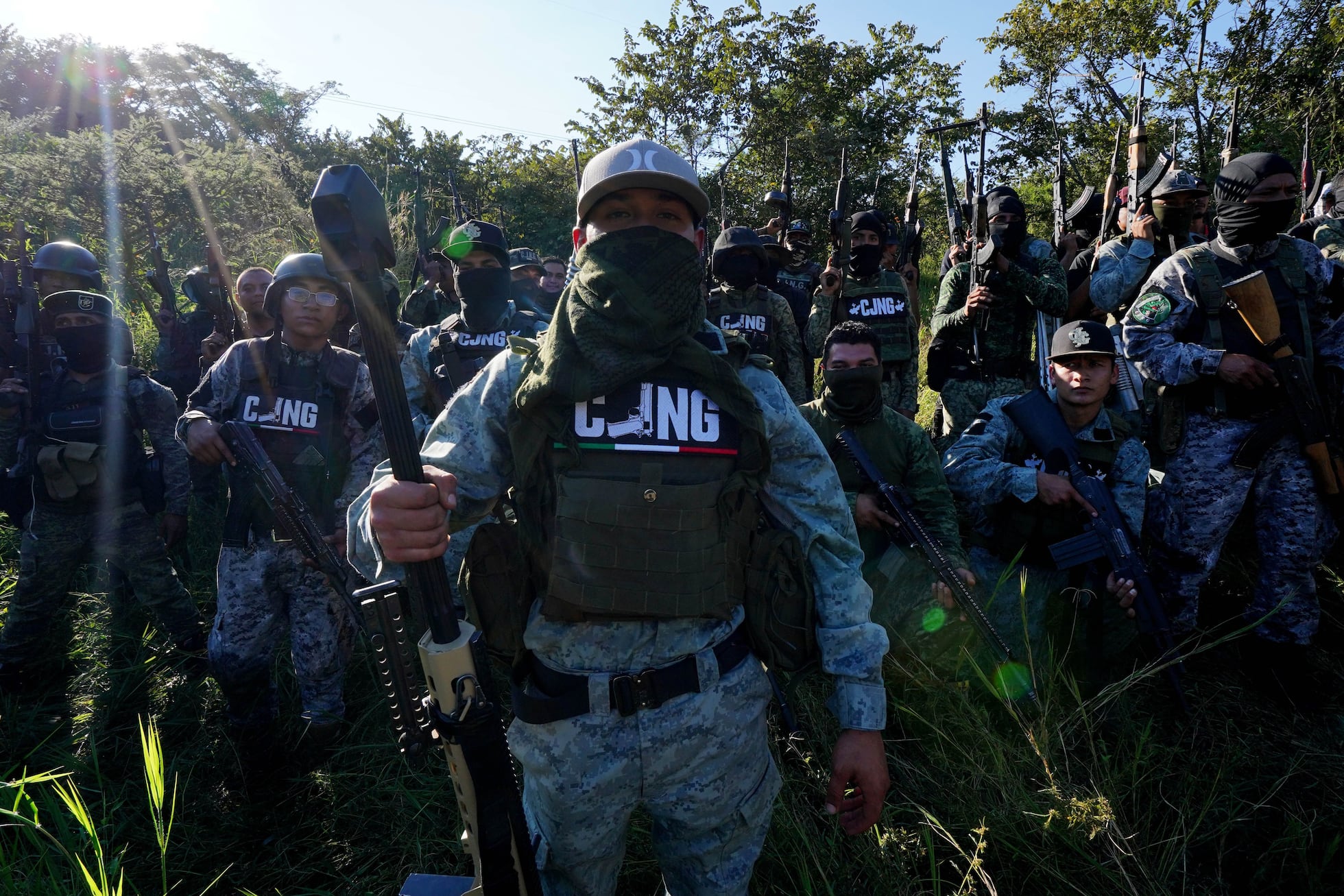
“We’re from the Jalisco Cartel. We have an alliance with Sinaloa and Los Viagras,” the former Colombian soldier says in two WhatsApp audios obtained by EL PAÍS. He’s referring to the Sinaloa Cartel, the country’s other major criminal enterprise, and Los Viagras, a long-standing network of extortionists and drug traffickers from Michoacán. “Other cartels like the Knights Templar are contras [enemies], but they’re smaller. Here we often fight with them too. We’ve killed a huge number of them. And we also fight with the government,” he asserts. “The job is permanent,” he adds.
The person receiving the audios is Juan, another former Colombian soldier who uses a fabricated name for fear of reprisals. Mexican criminal groups, he maintains, seek out people who, like him, have experience in other conflicts. “I was in Ukraine for a few months. Many of us created TikTok accounts where we showed our daily lives. The cartels contact you through them,” says this 31-year-old retired soldier. The offer his colleague on the other end of the line is very attractive: $2,000 a month, with weekly cash payments. The cartels, he explains, offered him and other colleagues the option of traveling directly from Warsaw, Poland, to Mexico. “Leaving from Colombia is more difficult. You have to cross the Darién River with false passports, and now, with the security imposed by Panama, it makes you even more hesitant,” he notes.
Colombians are highly valued in the military contractor market abroad. Andrés Macías, a member of the UN Working Group on Mercenaries, explains that this is due to the “extensive experience” they have had in counterinsurgency combat. “The level of training of the Colombian Public Force is very high and almost comparable to that of the United States. In addition, a regular soldier can retire at 40. That is, being young, people can accumulate up to 20 years of military experience in one of the most highly trained militaries in the world,” he points out.
The most common reason former military personnel give for becoming mercenaries—in more than a dozen countries such as Ukraine, Russia, Yemen, the United Arab Emirates, among others—is the meager retirement pay they receive as veterans. Offers from security companies, foreign militaries, and now also cartels push many to fight in foreign conflicts.
The lure of earning up to five times more has led many to fall into traps, as several Colombian groups have denounced, such as those who fought with paramilitaries in Sudan or those currently facing prosecution for the assassination of Jovenel Moïse in Haiti. “Many are offered a contract to perform specific activities and are forced to do others. This is what is called predatory recruitment,” explains Macías. Being in an unfamiliar country, often without their own money or documentation, recruits are vulnerable to falling entirely into the hands of these mercenary networks.
Colombian President Gustavo Petro, with his administration, has promoted a law against mercenarism to prohibit an activity that “exploits retired military personnel.” Those involved in the business blame the Colombian government for failing to protect veterans so they can adapt to civilian life.
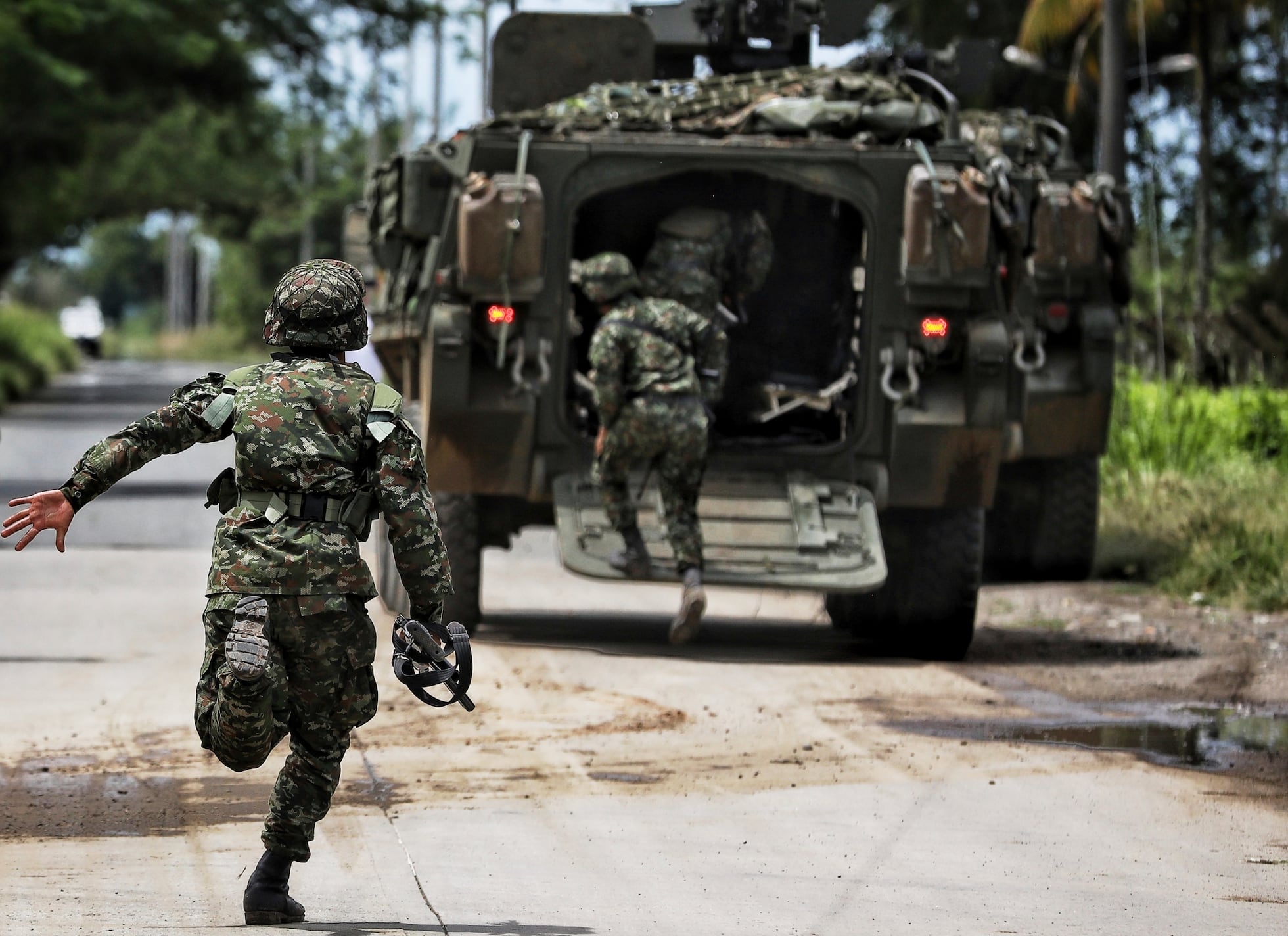
An activity that has been going on for several years
Although Mexican authorities did not provide details about the ties to the 12 detainees in Michoacán, Petro stated that they were linked to the Reyes Cartel, part of the criminal umbrella of Carteles Unidos, a regional criminal organization. It is still unclear how this group arrived in the area. What is clear to the administrations of both countries is that the Colombia-Michoacán route has been operating for years.
Several Mexican Army intelligence documents leaked by the cyberactivist group Guacamaya show the movements of Colombian mercenary troops in Michoacán since late 2021. That same year, the National Intelligence Fusion Center (CENIF) reported that alias Kamoni, then a member of the Tepalcatepec Cartel, also under the umbrella of Carteles Unidos, had “26 Colombians employed in the ongoing struggle with the CJNG, claiming to be used as ‘guerrillas.'”
In January 2022, according to these documents, the Carteles Unidos plaza boss in the municipality of Los Reyes, alias Quiringua, told a person that “his doctor had treated 18 Colombians” who were “ready to be sent to work.” The military report added: “Quiringua has stated on multiple occasions that he sends Colombian citizens to confront the CJNG.”
These cases show that cartels have been familiar with the use of Colombian mercenaries and foreign recruits for several years. Two decades ago, the expansion of Los Zetas, the armed wing of the Gulf Cartel, was reported with the arrival in Mexico of Kaibiles, elite members of the Guatemalan Army. As now, it was never clear how many were recruited, nor what exact role they played. In some regions, agricultural or industrial producers have also hired mercenary groups to combat crime.
“This phenomenon must be taken very seriously and included in both strategic planning and the implementation and evaluation of public security policies in Mexico,” says expert Mendoza Cortés. “It is urgent to address the situation of retired military personnel, who are highly vulnerable to recruitment by these types of organizations, primarily due to their attractive salaries compared to military pensions,” she concludes.
Source: elpais