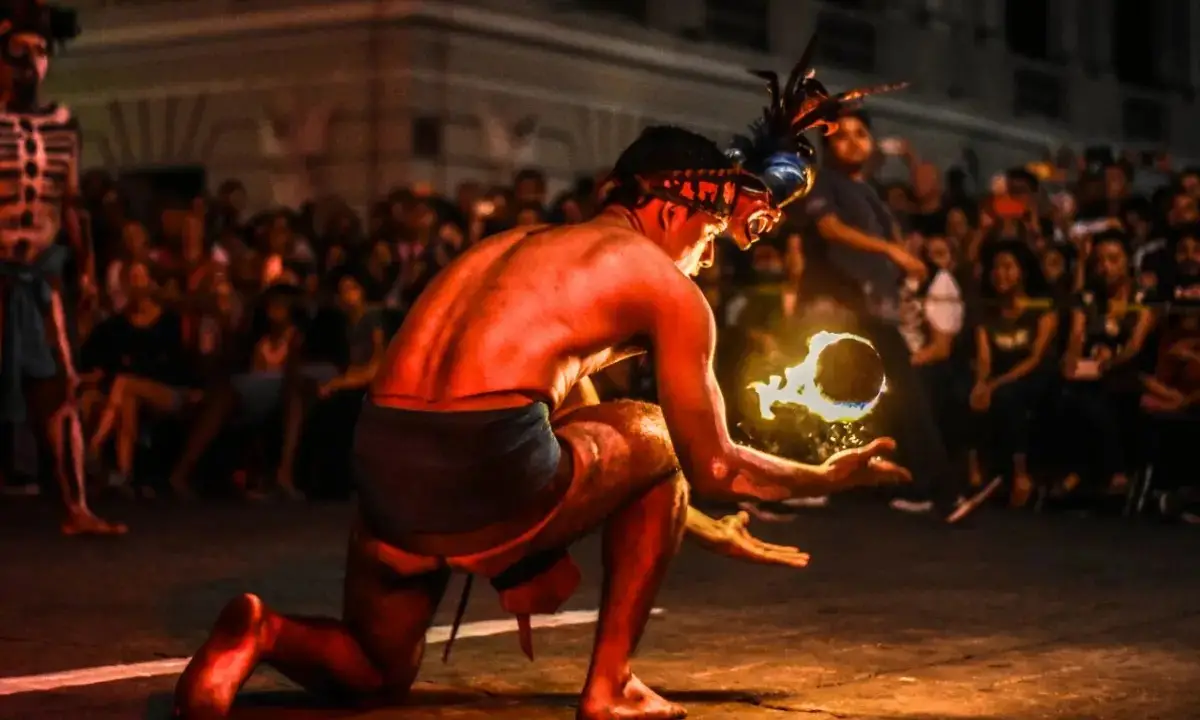

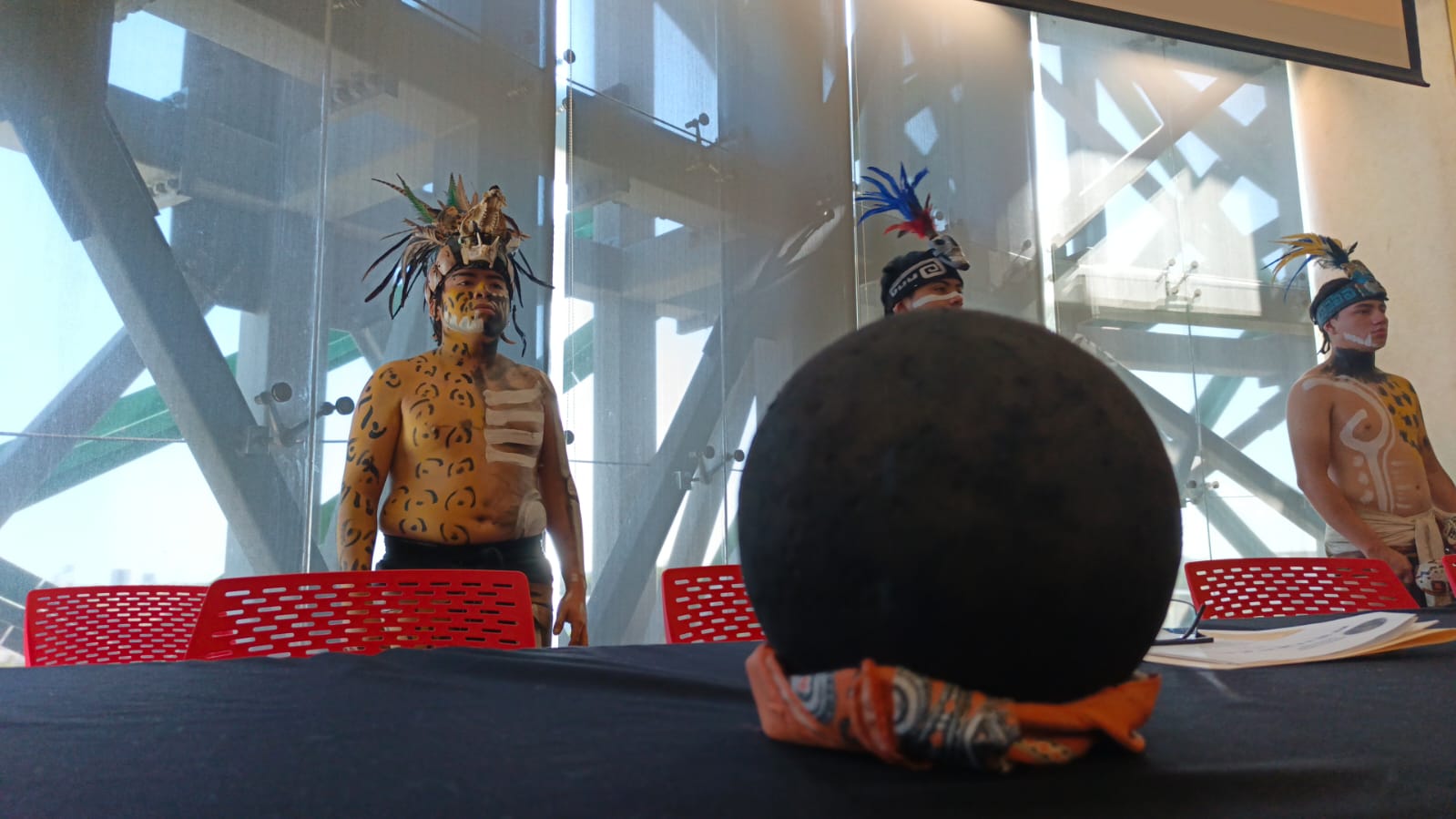
The creation of the International Federation of the Ancestral Mayan Ballgame was presented at the Gran Museo del Mundo Maya (Great Museum of the Mayan World) in Mérida as the result of an organized process that has unfolded over nearly two decades and has involved players, cultural promoters, and associations from various countries.
José de Jesús Manrique Esquivel, president of the organization, explained the background, the composition of the board of directors, and the objectives of this new federation, which emerged after the transformation of a regional association into an international entity dedicated to promoting the Mayan ballgame, also known as Pok Ta Pok.
How did the International Federation of the Ancestral Mayan Ballgame come about?
According to Manrique, the origin of the current organization dates back to the work begun in 2006 with the establishment of the Association of Indigenous and Traditional Games and Sports of Yucatán, whose central objective was the revival of the Mayan ballgame.
“Since I started this in 2006… I’ve taken on the task, along with two friends, of promoting the ballgames,” he stated during his opening remarks.
Over the years, the local effort evolved into a regional network, culminating in the formation of a Central American association in 2015, spurred by the first World Cup of Maya Ballgame, held in Tinún, Yucatán. Subsequently, the organization expanded its territorial reach, incorporating more countries.
“We started in 2015 with three countries… then we reached seven,” the president explained.
Administrative differences and the need for international representation led to a reevaluation of the legal structure. During an assembly held in Copán, Honduras, on September 10 of this year, the association’s transformation into an International Federation was approved.
“It is approved that our association become an International Federation. This is how this new federation was born at a global level,” Manrique stated when formally announcing the change.
Who are the members of the board of directors and which countries participate?
The International Federation of the Ancestral Mayan Ballgame is comprised of representatives from seven countries. During the presentation, the participation of delegates from El Salvador, Panama, the United States, Puerto Rico, Guatemala, Belize, Honduras, and Mexico was mentioned, in addition to collaborators with specific roles within the board of directors.
Manrique explained that the organization has a board made up of individuals involved in the cultural, educational, and sporting development of Pok Ta Pok. “It is the board of directors, comprised of representatives from various countries, colleagues, and brothers who are promoting our beloved organization,” he stated.
These individuals include coaches, cultural promoters, teachers, and administrators who have participated in organizing world cups, training players, and promoting the sport in communities and schools.
It was also emphasized that the federation intends to continue expanding its international presence. “We have every intention of… continuing to increase the number of participating countries,” said Manrique, mentioning recent experiences in Colombia and the existence of teams even in Europe.
What are the objectives and scope of the new international organization?
The federation president emphasized that the main objective is the dissemination and promotion of the Mayan ballgame worldwide, with an emphasis on its cultural and social value. “Our mission is for the whole world to know about the revival of our Mayan ballgame,” he stated.
Among the proposed goals is the democratization of the sport, making it accessible to children, youth, and adults, as well as its integration into educational settings. “To democratize Pok Ta Pok with children, youth, students, adults, with everyone,” Manrique summarized.
During his closing remarks, he stressed that the federation does not see Pok Ta Pok merely as a sport, but as a living expression of Mayan heritage. “It is not just a game… it is the living representation of the past in the present and a projection for the future,” he noted.
With this approach, the International Federation of the Ancestral Mayan Ball Sport presents itself as an international coordination space aimed at preserving, organizing and disseminating an ancestral sport from a cultural and community perspective.
Source: posta